



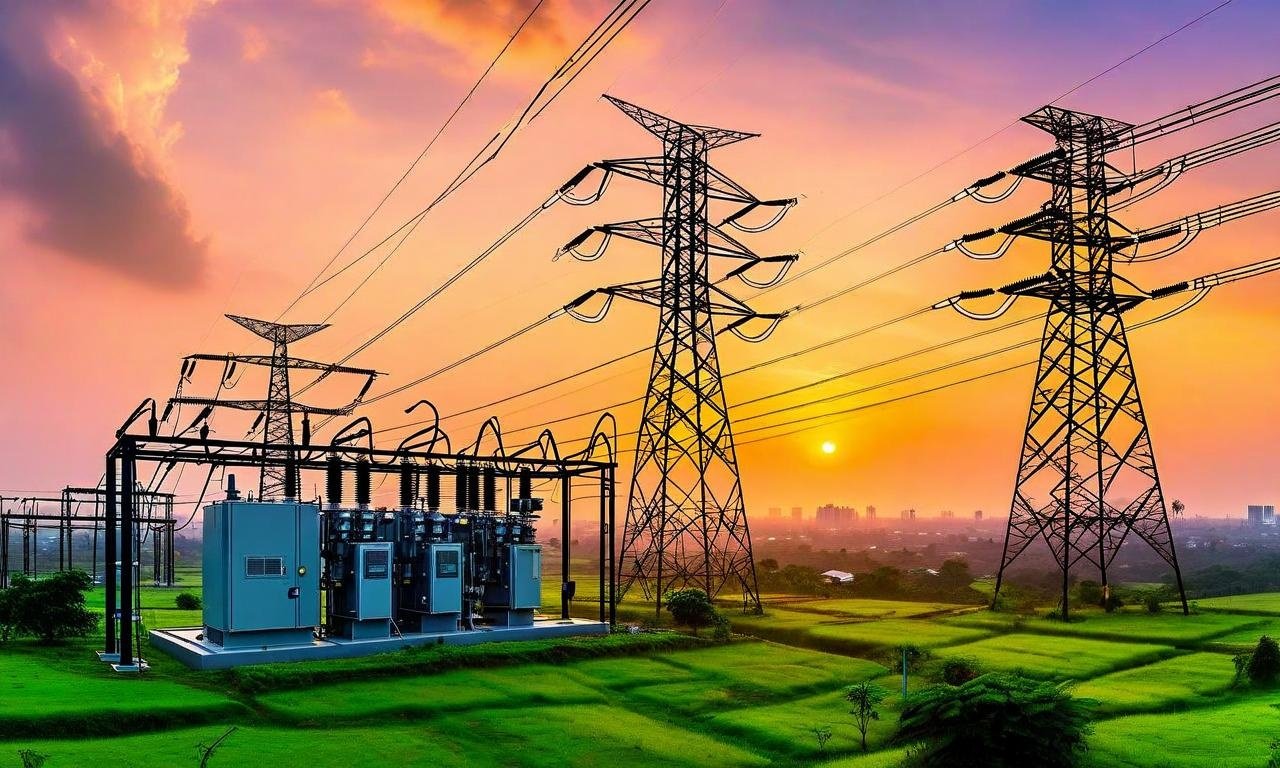
NEW DELHI — In a major move to scale up its power infrastructure footprint, The Tata Power Company Limited has received a formal Letter of Intent (LoI) from REC Power Development and Consultancy Limited (RECPDCL).
The agreement grants Tata Power the right to acquire the project special purpose vehicle (SPV) Ryapte Power Transmission Limited to build a critical interstate transmission network in Karnataka. The project outlines fixed annual transmission charges of ₹521.07 crore.
Contract Framework and Timeline
-
Project Model: The energy transmission network will be developed via the Build-Own-Operate-Transfer (BOOT) model.
-
Service Tenure: The concession agreement secures transmission service operations for a long-term duration of 35 years starting from its operational date.
-
Target Completion: The Scheduled Commercial Operation Date (SCOD) is set for 30 months following the final sign-off and transfer of the project SPV.
Engineering & Network Scope
The multi-district grid expansion includes the construction of approximately 250 kilometers of transmission infrastructure, high-capacity greenfield substations, and hybrid cabling configurations.
1. Core Transmission Links
-
400 kV High-Voltage Corridors: Construction of a 400 kV double-circuit (D/C) line between the new Ryapte Air Insulated Substation (AIS) and the proposed Doddathaggalli Gas Insulated Substation (GIS), plus an additional 400 kV D/C line connecting the existing Kolar Substation to the Doddathaggalli hub.
-
220 kV Distribution Lines: Setup of 220 kV D/C overhead lines and modern underground cable connections linking Doddathaggalli to vital regional nodes at Ekarajapura, Hosakote, and Sarjapura.
2. Substation Infrastructure
-
Ryapte AIS (Tumakuru District): Establishment of a 5×500 MVA, 400/220 kV Air Insulated Substation equipped with two 125 MVAr 400 kV bus reactors to regulate voltage fluctuations.
-
Doddathaggalli GIS (Near Hoskote): Delivery of a high-efficiency 3×500 MVA, 400/220 kV Gas Insulated Substation outfitted with two 125 MVAr bus reactors to manage local load demands.
