



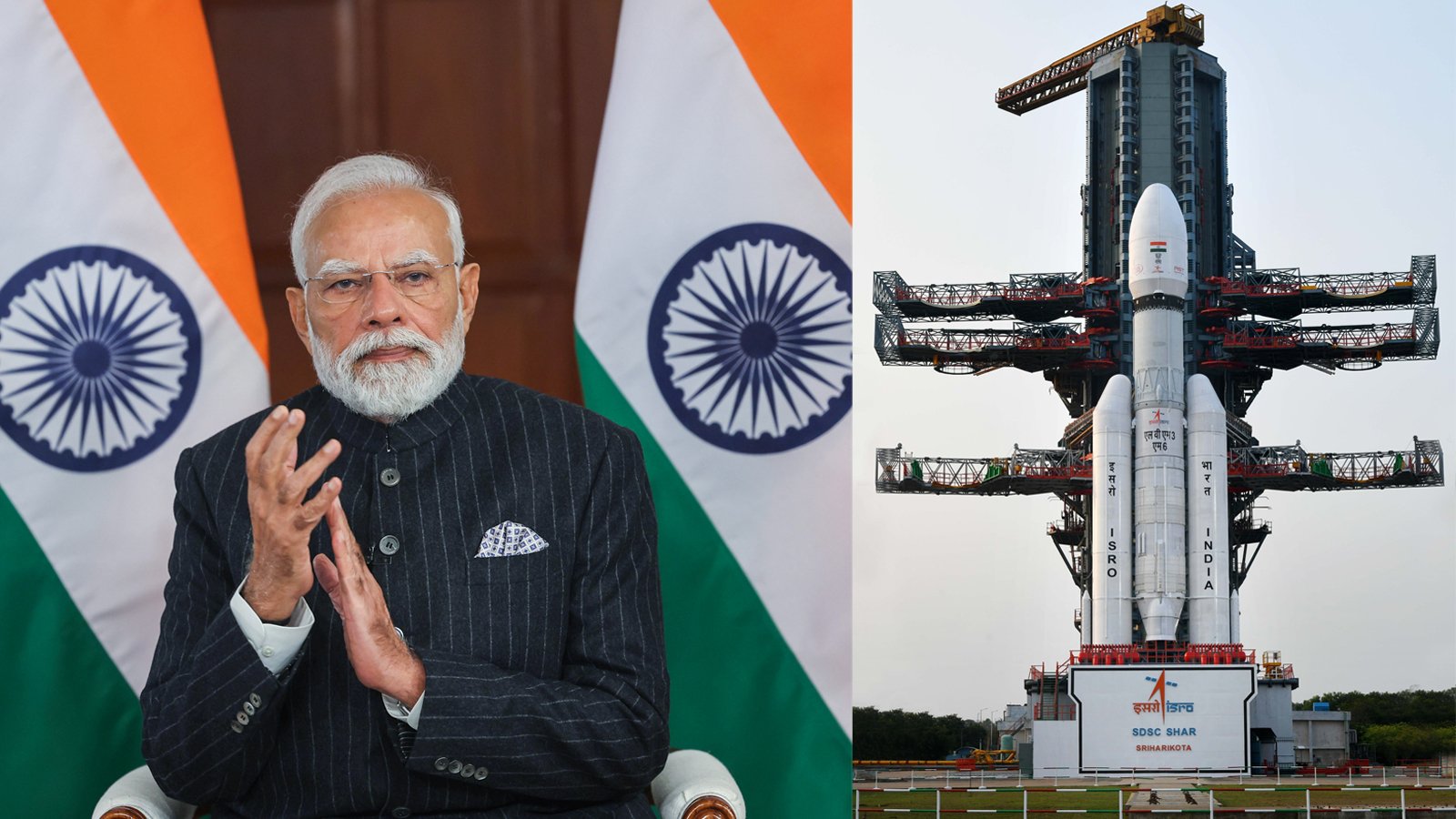
SRIHARIKOTA — Prime Minister Narendra Modi commended the Indian Space Research Organisation (ISRO) following the successful pre-dawn launch of the GSLV-F17 rocket from the Satish Dhawan Space Centre at 2:55 AM IST on September 4, 2026.
The launch vehicle precisely injected the EOS-05 spacecraft—India’s inaugural Earth imaging satellite stationed in a geosynchronous orbit—into its intended sub-geosynchronous transfer orbit, marking a major technological leap for the national space program.
Technical Features & Mission Execution
-
Launch Vehicle Architecture: Standing 51.7 meters tall with a liftoff weight of 420.5 tonnes, the GSLV-F17 completed the 19th operational flight for the GSLV launch system.
-
Payload Milestone: EOS-05 represents the heaviest payload (2,367 kg) ever deployed by a GSLV variant into a sub-geosynchronous transfer orbit.
-
Imaging Capabilities: Configured with advanced sensor payloads spanning visible, infrared, multispectral, and hyperspectral bands to capture continuous, near-real-time imaging from an altitude of roughly 36,000 km.
Strategic Oversight & Executive Statements
-
PM Narendra Modi Highlights: Termed the mission an outstanding achievement, noting that the growing partnership between ISRO and domestic industry partners is expanding India’s operational scale across the space ecosystem.
-
Strategic Application: Provides continuous wide-area surveillance over the Indian subcontinent, directly benefiting national security, disaster management, agriculture, and high-frequency environmental monitoring.
-
Mission Leadership: ISRO Chairman Dr. V. Narayanan and Mission Director Thomas Kurian confirmed nominal vehicle performance and precise orbital injection, while Science & Technology Minister Dr. Jitendra Singh emphasized the satellite’s state-of-the-art multi-band payload capability.
