



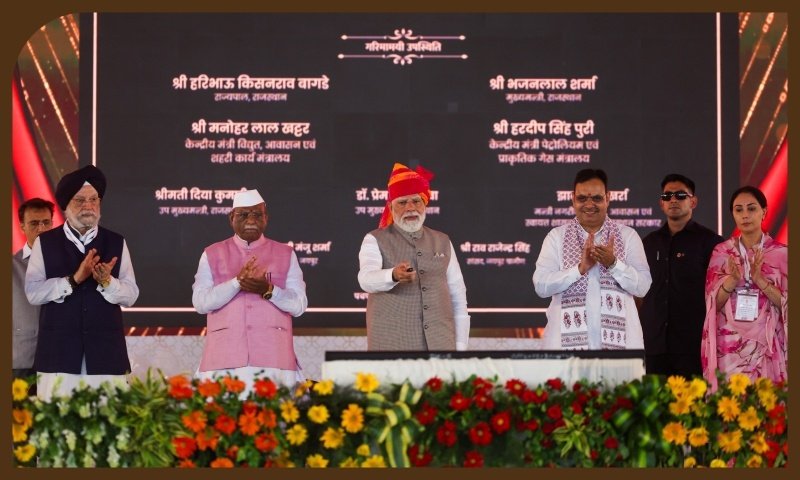
BALOTRA (RAJASTHAN) — Unveiling a massive blueprint for economic growth and regional connectivity, Prime Minister Narendra Modi has launched a series of high-impact development projects worth ₹1.06 lakh crore centered in Balotra, Rajasthan. The mega-package introduces transformative upgrades to India’s energy map, solves decades-old inter-state water disputes, and modernizes mass transit networks.
Core Infrastructure Rollouts
The Rajasthan Refinery Dedicated
The Prime Minister officially commissioned the massive Rajasthan Refinery, dedicating it as a cornerstone of India’s energy independence strategy.
-
Global Standing: This addition solidifies India’s position as the holder of the fourth-largest refining capacity in the world, contrasting sharply with stagnating refining outputs in Western markets.
-
Resilient Execution: Despite historical coordination delays prior to 2024 and an unexpected operational setback at the site two months ago, fast-tracked engineering efforts brought the mega-facility online at record speed.
Historic ₹34,000 Crore Water Pipeline Network
Ending years of political deadlock, a milestone ₹34,000 crore bilateral agreement between Rajasthan and Haryana has been operationalized to address chronic water scarcity.
-
The Blueprint: A massive underground pipeline infrastructure will be laid to draw water from the Hathnikund Barrage in Haryana.
-
Target Areas: The project will bring continuous water supply to the arid Shekhawati belt, radically altering the agricultural and living conditions in Sikar, Churu, and Jhunjhunu.
Aviation and Metro Upgrades
-
Marwar Transit Hub: The newly inaugurated passenger terminal at Jodhpur Airport is set to supercharge the Marwar region’s commercial trading, tourism economy, and logistics sectors.
-
Jaipur Metro Phase-2: The Prime Minister laid the foundation stone for the metro network’s second phase, which will push Jaipur’s total track length beyond 50 kilometers and seamlessly bridge the city’s primary transit corridors.
Countering the West Asian Energy Crisis
PM Modi used the platform to break down the economic and diplomatic strategy used by the Union government to cushion Indian households against the severe global energy shock caused by the war in West Asia:
-
Emergency LPG Diversion: With India relying on imports for 60% of its LPG—nearly all of it originating from the volatile Gulf region—the government reconfigured domestic refineries within a single week. By re-routing gas originally earmarked for heavy industry into domestic cooking supply, national output jumped from 35,000 to 54,000 metric tonnes.
-
Aggressive Fiscal Cushioning: To shield citizens from crude oil prices spiking from $70 to $120 per barrel, the government absorbed a staggering financial hit of over ₹75,000 crore between April and June alone. It simultaneously cut excise duties by ₹10 per liter and strictly capped household cylinder prices below ₹950 (and under ₹650 for Ujjwala accounts).
-
Strategic Fuel Diplomacy: India aggressively diversified its global energy supply lines, expanding its import portfolio from 25 countries to over 40 nations.
Sustainability, Farming, and Public Employment
The administrative rollout balanced heavy industrial projects with eco-conservation frameworks and youth employment drives:
-
Solar & Water Security: Over 1.5 lakh households have been brought under the PM Surya Ghar rooftop solar plan, while 65,000 solar pumps were handed over to farmers via the PM Kusum scheme. Additionally, 1.25 lakh soak pits have been dug across Rajasthan to restore regional groundwater levels.
-
Mass Employment Drive: The event marked a major milestone for the local workforce, concluding with the formal handover of government job appointment letters to 54,000 young candidates joining the state’s public administration.
