



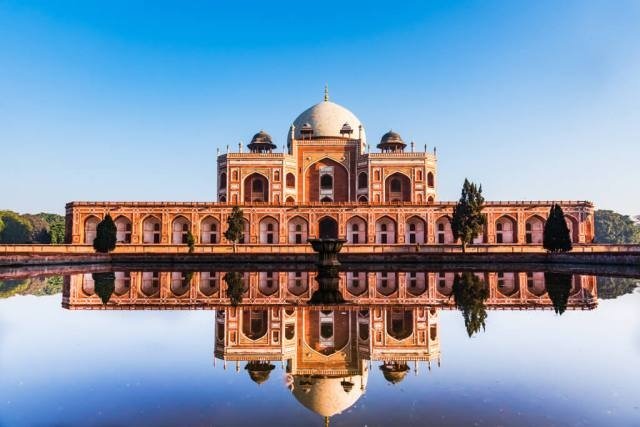
NEW DELHI – In a written reply to the Lok Sabha today, Union Minister for Culture and Tourism Shri Gajendra Singh Shekhawat detailed the government’s ongoing commitment to the preservation of India’s diverse cultural fabric.
There are currently 3,686 centrally protected monuments under the jurisdiction of the Archaeological Survey of India (ASI). This includes a significant number of minority heritage sites, places of worship, and pilgrimage destinations across the country.
Funding and Strategy
The conservation of these sites is guided by the National Policy for Conservation, 2014, and is executed based on site-specific requirements and resource availability.
Key Financial Trends (2020–2025):
Based on the data provided (Annexure-I), there has been a noticeable increase in fund allocation across several key circles over the last five years, peaking in many regions during the 2023-24 period.
| State/UT | Major Circle | 2020-21 (₹ Cr) | 2023-24 (₹ Cr) | 2024-25 (₹ Cr) |
| Delhi | Delhi Circle | 20.82 | 36.14 | 24.95 |
| Uttar Pradesh | Agra Circle | 13.00 | 23.52 | 15.90 |
| Maharashtra | Aurangabad | 3.16 | 26.80 | 8.60 |
| Karnataka | Bangalore | 5.27 | 17.34 | 8.55 |
| Madhya Pradesh | Bhopal | 11.50 | 17.22 | 12.30 |
Notable Regional Insights
-
Delhi & Agra: These circles consistently receive the highest allocations due to the density of iconic heritage sites, including major minority and religious landmarks.
-
Expansion in Maharashtra: The Aurangabad circle (home to UNESCO sites and significant religious architecture) saw a massive surge in funding, rising from roughly ₹3.16 crore in 2020 to ₹26.80 crore in 2023-24.
-
Infrastructure Growth: Beyond basic repairs, the funds are utilized for “development,” which includes improving visitor amenities and accessibility at pilgrimage sites.
Conservation Process
The ASI follows a regular cycle of:
-
Preservation: Maintaining the current state of the structure.
-
Restoration: Carefully repairing damaged sections using historically accurate materials.
-
Promotion: Enhancing the cultural visibility of the sites to encourage tourism and research.
