



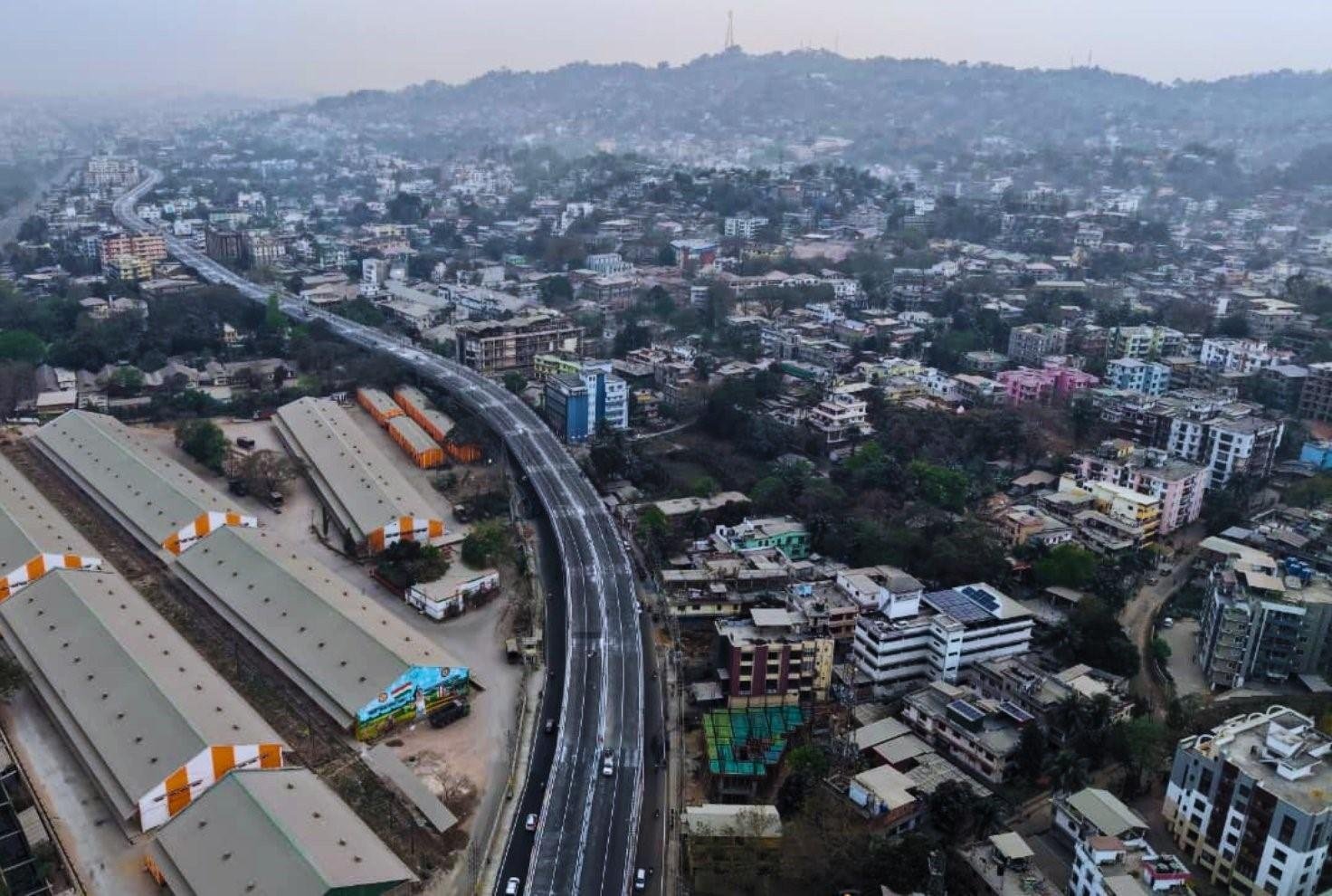
NEW DELHI – In a comprehensive update to the Lok Sabha today, April 1, 2026, the Ministry of Development of North Eastern Region (MDoNER) highlighted the transformative impact of the Act East Policy and a “Whole of Government” approach. With a cumulative expenditure of ₹6.11 lakh crore between 2014 and 2025, the region is undergoing a massive infrastructural overhaul designed to integrate it with national and international value chains.
Multimodal Connectivity Milestones
The government has prioritized physical and digital infrastructure to unlock the economic potential of the NER:
-
Roads: National Highway (NH) length in the region grew from 10,905 km in 2014 to 16,207 km by March 2025. Additionally, 46,296 km of rural roads were constructed under PMGSY.
-
Railways: Annual budget allocation surged from ₹2,122 crore (2009-14) to ₹10,440 crore for FY 2025-26. Key ongoing projects include the Bhairabi-Sairang (51 km) and Agartala-Akhaura (5 km) lines.
-
Aviation: Under the UDAN scheme, 90 routes have been operationalized, with significant developments at airports such as Hollongi, Pakyong, and Tezu.
-
Inland Waterways: The number of National Waterways in the NER has increased from 1 to 20, with an investment of ₹1,040 crore to boost riverine trade.
Digital and Energy Infrastructure
-
Telecom: As of December 2025, 6,355 Gram Panchayats are service-ready for high-speed internet, supported by 3,718 newly commissioned mobile towers covering over 5,300 villages.
-
Power: Hydroelectric projects with a total capacity of 5,796 MW are underway, including the Subansiri Lower (2000 MW) and Dibang (2880 MW) projects. Over ₹15,800 crore has been sanctioned for strengthening intra-state transmission systems across the region.
Economic Integration and the Act East Policy
The MDoNER evaluation report notes tangible gains in trade volumes and border logistics. By developing border trade points, the region is being positioned as India’s gateway to Southeast Asia. These developments are not merely local improvements but are viewed as essential for the economic integration of remote regions into the Indo-Pacific strategic framework.
Sustainability and Ecological Sensitivity
Acknowledging the region’s unique biodiversity, the government has integrated a “Sustainability Lens” into project approvals:
-
Climate Resilience: The Focused Development Component (FDC) supports eco-restoration and climate-resilient infrastructure.
-
Participatory Governance: Initiatives include watershed management and afforestation to ensure development does not come at the cost of ecological integrity or community displacement.
Dr. Sukanta Majumdar, Minister of State for MDoNER, emphasized that these infrastructural and institutional advancements are creating the necessary conditions for long-term progress, empowering local communities while protecting the region’s cultural heritage for the 2026-27 fiscal year and beyond.
