



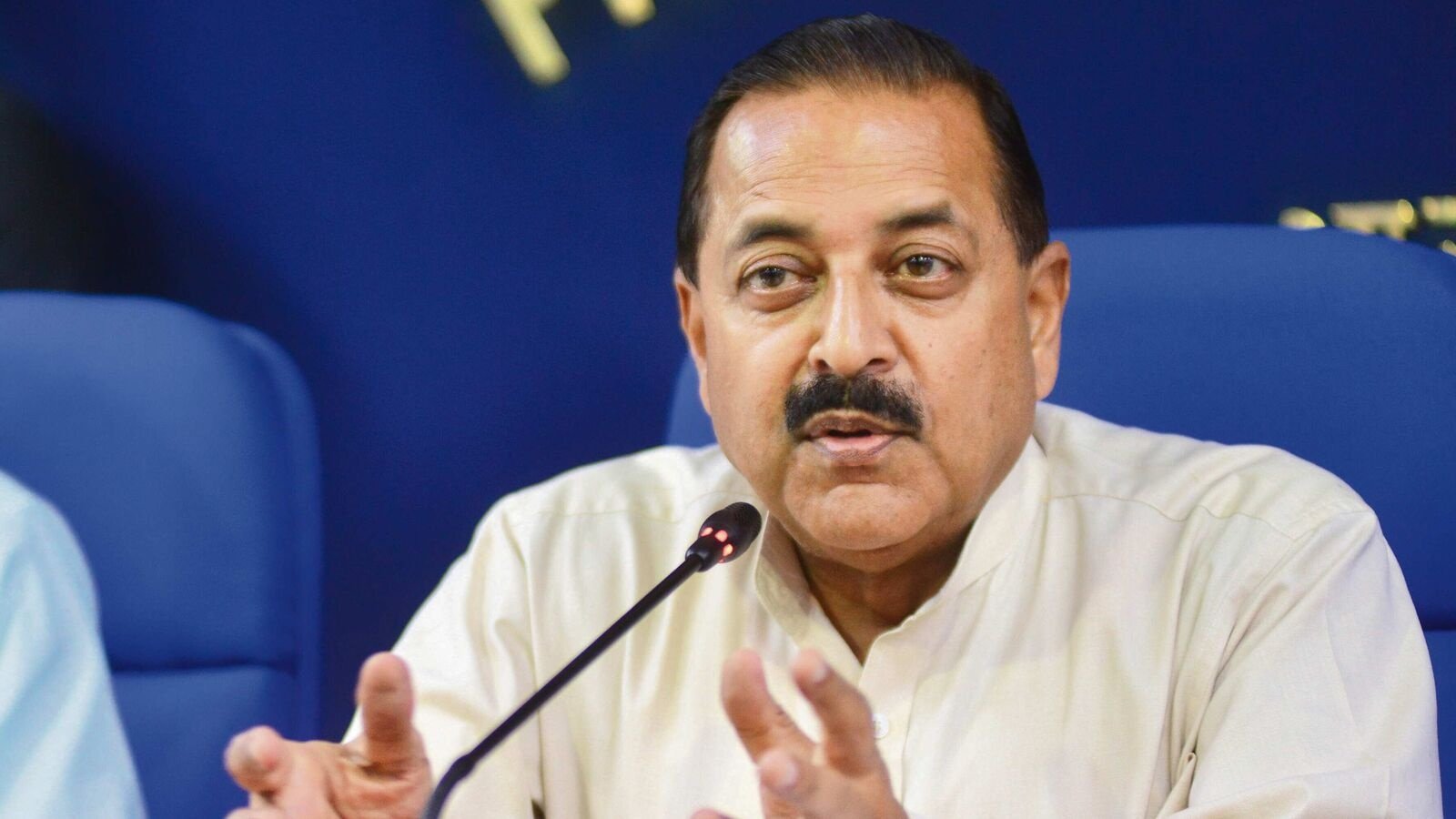
JAMMU: In a major institutional overhaul to strengthen disaster preparedness across the western Himalayas, Union Minister for Science & Technology and Earth Sciences Dr. Jitendra Singh inaugurated the country’s seventh Regional Meteorological Centre (RMC) in Jammu. The facility will serve as the dedicated operational hub for Jammu & Kashmir, Ladakh, and Himachal Pradesh, shifting weather and climate management for these territories away from the RMC in New Delhi.
The Minister also announced that the India Meteorological Department (IMD) will soon establish an eighth RMC in Lucknow to exclusively manage weather networks for Uttar Pradesh and Uttarakhand.
Specialized Forecasting and Sectoral Benefits
The newly established RMC Jammu is engineered to deliver highly localized climate services tailored to the complex, multi-terrain geography of the Himalayan region. Its core operational mandate includes:
-
Targeted Advisories: Deploying district-level forecasts, city-specific updates, separate mountain weather modules, and dedicated tourist advisories.
-
Disaster Early-Warnings: Providing real-time monitoring and timely warnings for severe weather hazards, including flash floods, cloudbursts, avalanches, heavy snowfall, thunderstorms, and landslides.
-
Key Beneficiaries: Serving critical end-users such as farmers, transport operators, defense forces operating in high-altitude terrains, hydropower project developers, and regional disaster management bodies. The specialized forecasts will also safeguard pilgrims undertaking the annual Amarnath and Vaishno Devi yatras.
Decadal Expansion of Observational Hardware
Highlighting a decade of intensive infrastructure scaling across Jammu & Kashmir and Ladakh, Dr. Jitendra Singh contrasted current capabilities against the baseline of 2014:
-
Doppler Weather Radars: While the region lacked any Doppler radar systems in 2014, four are now fully operational at Jammu, Srinagar, Leh, and Banihal Top. Under the central government’s Mission Mausam, five additional Doppler installations have been proposed for Anantnag, Rajouri, Baramulla, Kishtwar, and Doda.
-
Surface Observatories: The observational grid has grown to 56 active installations, comprising 15 manual stations, 25 Automatic Weather Stations (AWSs), and 16 Automatic Rain Gauges (ARGs)—up from just 13 AWSs and 14 ARGs in 2014. AWS networks were recently deployed at high-priority sites including Kargil, Ukhral (Ramban district), and the Mata Vaishno Devi Bhawan.
-
Expanded Projections: The ministry plans to add eight more AWSs and five ARGs during the current financial year. Concurrently, the Daily Rainfall Monitoring Scheme has expanded its footprint from 30 stations in 2014 to 85 at present.
Seismological Modernization and Scientific Alliances
Beyond atmospheric modeling, the Union Ministry has driven structural upgrades to the region’s earthquake monitoring and research capabilities:
-
Seismic Upgrades: Stations across Jammu and Kashmir have transitioned completely to digital transmission systems, with five operational stations currently feeding real-time telemetry to the National Centre for Seismology. Following last year’s disaster in Kishtwar, the government has mandated the setup of a new seismology centre and an AWS in the district, alongside an active observatory upgrade in Udhampur.
-
Research Collaborations: To foster local capacity-building, the Meteorological Centre at Srinagar has signed formal research pacts with the Islamic University of Science and Technology, SKUAST-Jammu, and SKUAST-Kashmir. Furthermore, a specialized High-Altitude Cloud Physics Laboratory has been operationalized at Patnitop in tandem with Swiss scientific institutions to advance cloud and aerosol research.
-
WMO Recognition: The Minister concluded by noting that the Srinagar Meteorological Observatory, which has been functioning for over a century, has formally been recognized as a Centennial Observing Station by the World Meteorological Organization (WMO).
