



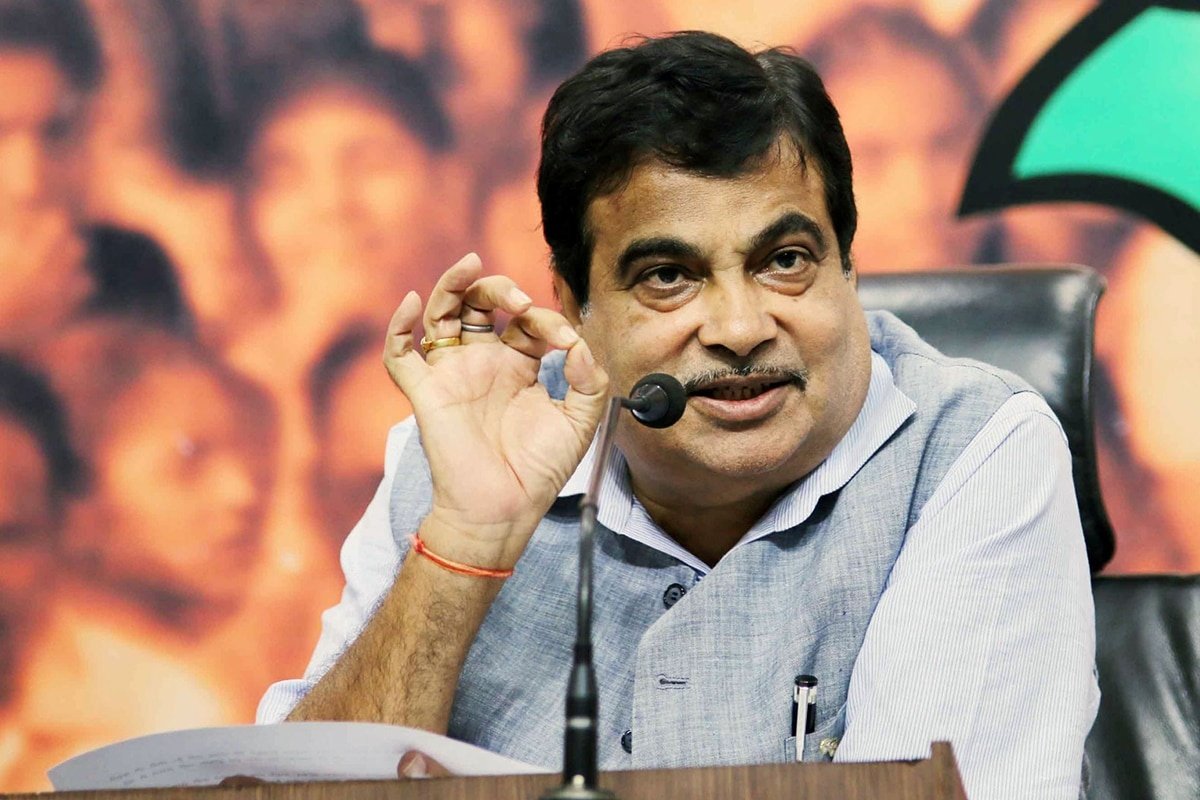
NEW DELHI — In a direct intervention to address critical highway design and safety lapses, Union Road Transport and Highways Minister Nitin Gadkari has launched an extensive road-bound inspection across the Delhi-Mumbai Expressway.
The ministerial intervention follows a tragic July 1 accident in Rajasthan’s Dausa district that claimed eight lives and injured 28 others, exposing severe operational and engineering vulnerabilities along the National Highways Authority of India’s (NHAI) flagship greenfield corridor.
1. On-Site Technical and Engineering Review
Bypassing routine aerial surveys to evaluate the expressway from a driver’s perspective, Gadkari is traversing the corridor by road to inspect high-risk packages across Rajasthan, Madhya Pradesh, and Gujarat:
-
Dausa Junction Audit: The Minister is evaluating the design layout at the Dhanawda village “Zero Point,” the site where a passenger bus collided with a decelerating trailer truck and caught fire.
-
Mukundara Hills Progress: The itinerary includes a structural review of the Dara Tunnel project near Kota to inspect safety contingencies and the alignment of ongoing construction.
-
Multi-State Alignment Inspection: The deployment stretches into subsequent packages across Madhya Pradesh and Gujarat to standardize maintenance protocols and enforce strict infrastructure parameters.
2. Infrastructure Deficiencies and Safety Blind Spots
Local administration data highlights a severe safety crisis on the Dausa stretch of the expressway. The section recorded 33 accidents and 35 deaths in 2025, while the first six months of 2026 have already seen 24 crashes resulting in 26 fatalities.
An active eight-member probe committee, established under Dausa District Collector Soumya Jha, identified major structural and operational design flaws:
-
Ambiguous Wayfinding: A lack of explicit directional arrows or clear markers at major interchanges—such as the Jaipur 4C Link—causes motorists to miss exits, leading to sudden deceleration or highly dangerous reversals.
-
Improper Signage Scaling: Though advance notification signboards are placed nearly two kilometers ahead of exits, the lettering and directional arrows are too small to be safely read at high highway speeds.
-
Defunct Emergency Systems: Physical audits revealed that a substantial number of the emergency roadside SOS phone boxes installed along the route are completely non-operational.
-
Enforcement Deficits: The committee noted significant lapses in automated speed monitoring and a lack of strict checking for lane violations by heavy commercial vehicles.
3. Administrative Interventions and Enforcement Drives
Preliminary evidence from the July 1 tragedy indicates that the cargo truck involved slowed down abruptly after overshooting the unmarked Jaipur-Ajmer exit, leaving the high-speed Haridwar-Indore bus behind it with zero reaction time.
Following the accident, the Rajasthan Chief Secretary held emergency coordination meetings to fast-track safety rectifications. Concurrently, regional police forces led by IG Rahul Prakash cleared out all unauthorized temporary commercial encroachments from Alwar to Dausa to maximize peripheral visibility. Gadkari’s direct ground evaluation is expected to mandate immediate structural upgrades and automated electronic speed monitoring across all operational national expressways.
