



NEW DELHI — In a major move to streamline air travel and eliminate airport congestion, the Union Government has announced a sweeping set of technological and structural upgrades for India’s aviation hubs.
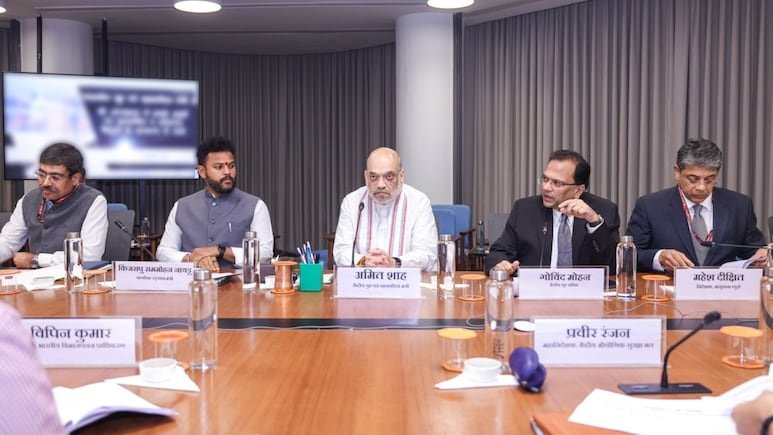
The decisions were finalized during a high-level review meeting co-chaired by Union Home Minister Amit Shah and Union Civil Aviation Minister Ram Mohan Naidu Kinjarapu. The meeting included top officials from the Ministry of Home Affairs (MHA), Ministry of Civil Aviation (MoCA), Central Industrial Security Force (CISF), Bureau of Civil Aviation Security (BCAS), and the Intelligence Bureau (IB).
1. Technological Security Upgrades: Phased ATRS Rollout
To systematically lower waiting times at security checkpoints and optimize workforce deployment, the government is executing a major tech integration:
-
Automatic Tray Retrieval System (ATRS): The Centre will roll out ATRS in a phased manner across all operational airports nationwide. Furthermore, the Home Minister mandated that all future, newly developed airports must incorporate ATRS as a built-in blueprint standard.
-
X-Ray Screening Standards: To ensure no compromise on national security, Shah instructed that the educational and technical qualification standards for CISF personnel handling X-ray baggage screening must be strictly maintained. Only appropriately certified officers will be assigned to these screening desks.
2. Targeted Airport Construction & Capacity Expansion
The MHA has laid down an ambitious infrastructure timeline to keep pace with soaring passenger volumes:
-
Priority Development: Authorities have been ordered to prioritize the completion of 21 airports currently under construction.
-
Traffic-Linked Upgrades: An additional 41 airports have been earmarked for expansion and modernization based on localized passenger traffic data and BCAS security requirements.
-
Aerobridges & Baggage Infrastructure: MoCA will establish strict mandatory norms for the minimum number of aerobridges required per airport relative to aircraft traffic. Additionally, self-baggage drop systems—currently limited to 16 major hubs—will be aggressively expanded to all high-traffic international airports.
3. Nationwide Immigration Overhaul and FTI-TTP Drive
Immigration services are set for a major decentralized expansion to support international travellers and tighten border management:
-
State-Capital FRRO Network: The Home Ministry has directed that a Foreigners Regional Registration Office (FRRO) be fully operationalized at the headquarters of every single state by 2027.
-
New Immigration Check Posts: Authorized immigration checkpoints will be fast-tracked for early operationalization at the upcoming Noida International Airport (Jewar) and in Agartala.
-
FTI-TTP Promotion via Airlines: To popularize the Fast Track Immigration – Trusted Travellers’ Programme (FTI-TTP), airlines will be brought on board to send automated WhatsApp prompts to international passengers at the time of ticket booking, urging them to pre-register for accelerated biometric clearance.
4. Operational Audits and Congestion Frameworks
To move away from ad-hoc crisis management, the government has prepared a unified, end-to-end framework monitoring every critical passenger touchpoint—from entry gates and check-in counters to terminal exits.
To maintain these standards, the Home Minister directed MoCA and the CISF to jointly commission independent, third-party operational studies during peak travel seasons to scientifically isolate bottlenecks and dynamically improve terminal transit speeds.
