



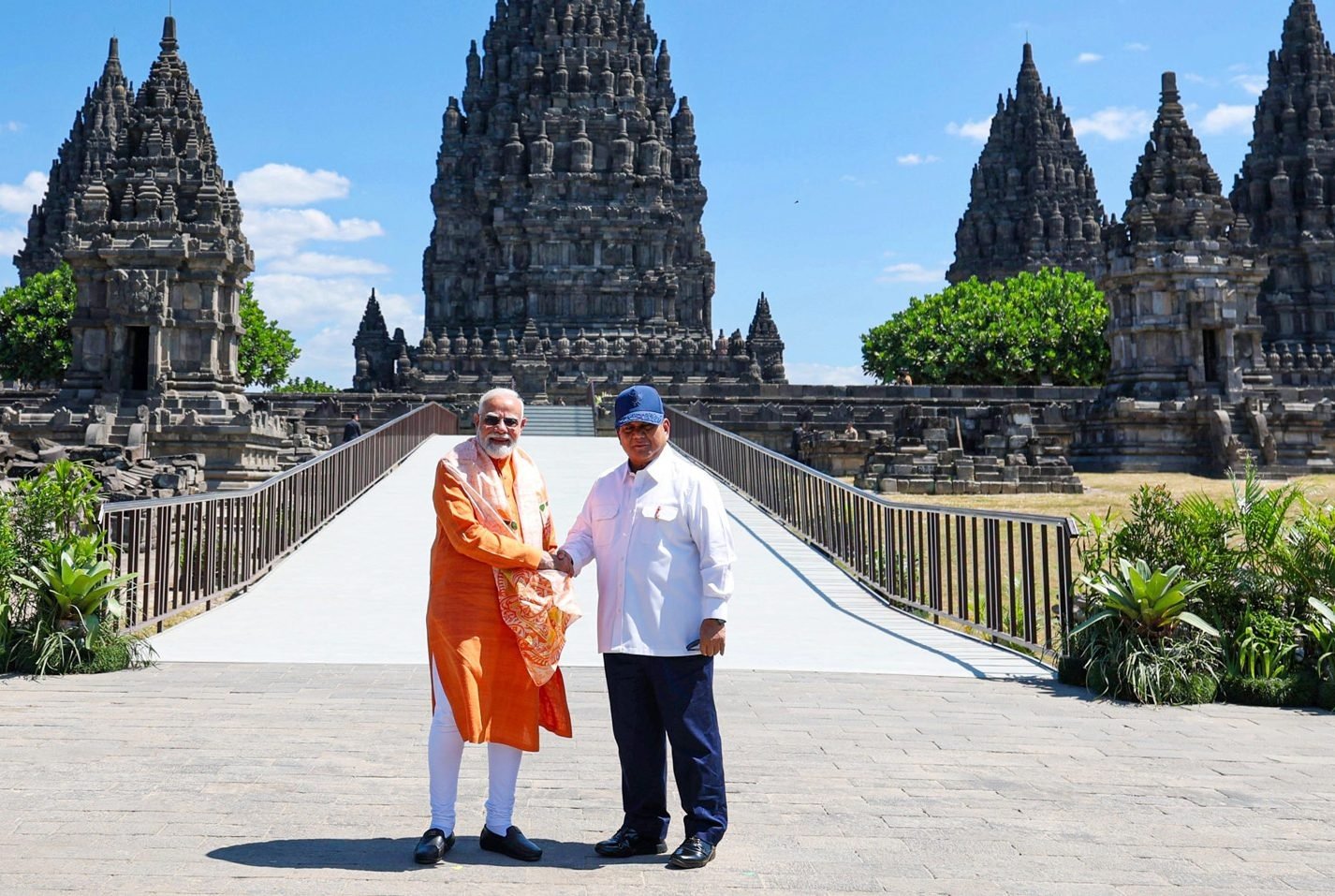
YOGYAKARTA — In a major milestone for bilateral cultural diplomacy, Prime Minister Shri Narendra Modi visited the iconic 9th-century Prambanan Temple Complex, a UNESCO World Heritage site in Yogyakarta, Indonesia.
In a significant diplomatic gesture, the President of Indonesia, H.E. Mr. Prabowo Subianto, personally accompanied the Prime Minister during the tour. Together, the two leaders unveiled a commemorative plaque to mark the official commencement of the Archaeological Survey of India’s (ASI) conservation and restoration project at the historical site.
1. Preserving Shared Civilizational Heritage
The Prambanan Temple Complex is the largest temple compound in Indonesia dedicated to the Trimurti—Lord Brahma, Lord Vishnu, and Lord Shiva. Its architecture stands as a historic testament to the ancient maritime, cultural, and spiritual ties that have connected India and Southeast Asia for over a millennium.
The launch of the ASI project fulfills a bilateral agreement reached during President Prabowo’s State Visit to India in 2025, where both nations resolved to leverage Indian expertise to preserve the structural integrity of the complex.
2. ASI’s Footprint in Southeast Asia
The execution of the Prambanan project underscores India’s specialized expertise in global heritage preservation, building on decades of successful interventions in the region:
-
Regional Track Record: The ASI has previously managed high-profile restoration and conservation projects at several globally recognized World Heritage Sites across Southeast Asia.
-
Indonesian Precedent: Prior to this project, the ASI carried out extensive digital and architectural documentation of the famous Borobudur Temple Compounds in Indonesia.
3. Diplomatic and Strategic Alignment
Beyond its historical and cultural value, the joint visit emphasizes the strengthening strategic partnership between New Delhi and Jakarta. By collaborating on the restoration of a major civilizational monument, both governments are reinforcing their contemporary diplomatic ties through shared cultural stewardship and institutional cooperation.
