



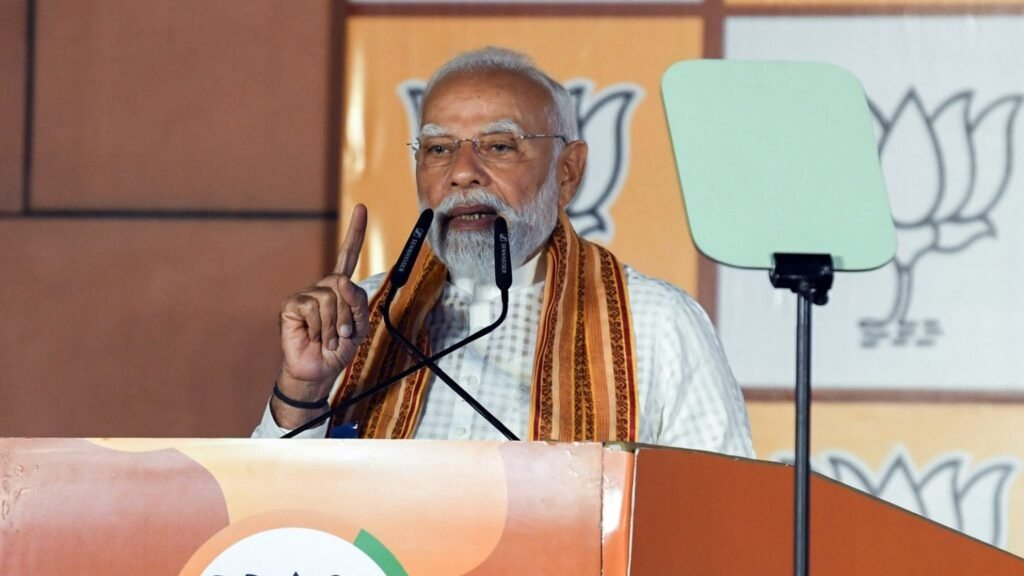
NEW DELHI — Highlighting India’s expanding role in global energy diplomacy, Prime Minister Shri Narendra Modi shared a prominent op-ed authored by Union Minister Shri Manohar Lal Khattar. The piece outlines India’s vision to place the Global South at the absolute center of a secure, resilient, equitable, and sustainable global energy future.
The announcement coincided with India officially assuming the BRICS Chairship for 2026, positioning the nation to spearhead multilateral policy discussions on energy transitions, grid stability, and resource equity for developing economies.
Driving Resilience Through International Alliances
In his post on the social media platform X, Prime Minister Modi emphasized that energy security cannot be achieved in isolation, highlighting the critical link between domestic execution and global cooperation.
“As India takes up the BRICS Chairship in 2026, Union Minister Shri @mlkhattar writes that India seeks to place the Global South at the centre of a secure, resilient, equitable and sustainable global energy future. He highlights India’s belief that resilient energy systems are built not only through strong domestic policies but also through stronger international partnerships.” — Narendra Modi, Prime Minister
India’s Energy Agenda for BRICS 2026
The article by Union Minister Khattar underscores India’s dual-track approach to energy management, serving as a template for other emerging markets in the Global South:
-
Strong Domestic Policies: Showcasing India’s aggressive deployment of renewable energy capacity, large-scale solar integration agreements, and investments in green hydrogen technology to decrease fossil fuel reliance.
-
Stronger International Partnerships: Utilizing the BRICS framework to facilitate cross-border technology transfers, establish robust clean-energy supply chains, and secure concessionary financing models for developing countries.
-
Equitable Transition: Advocating for an inclusive shift to green power that protects the economic development and energy security requirements of the Global South, preventing resource vulnerabilities.
