



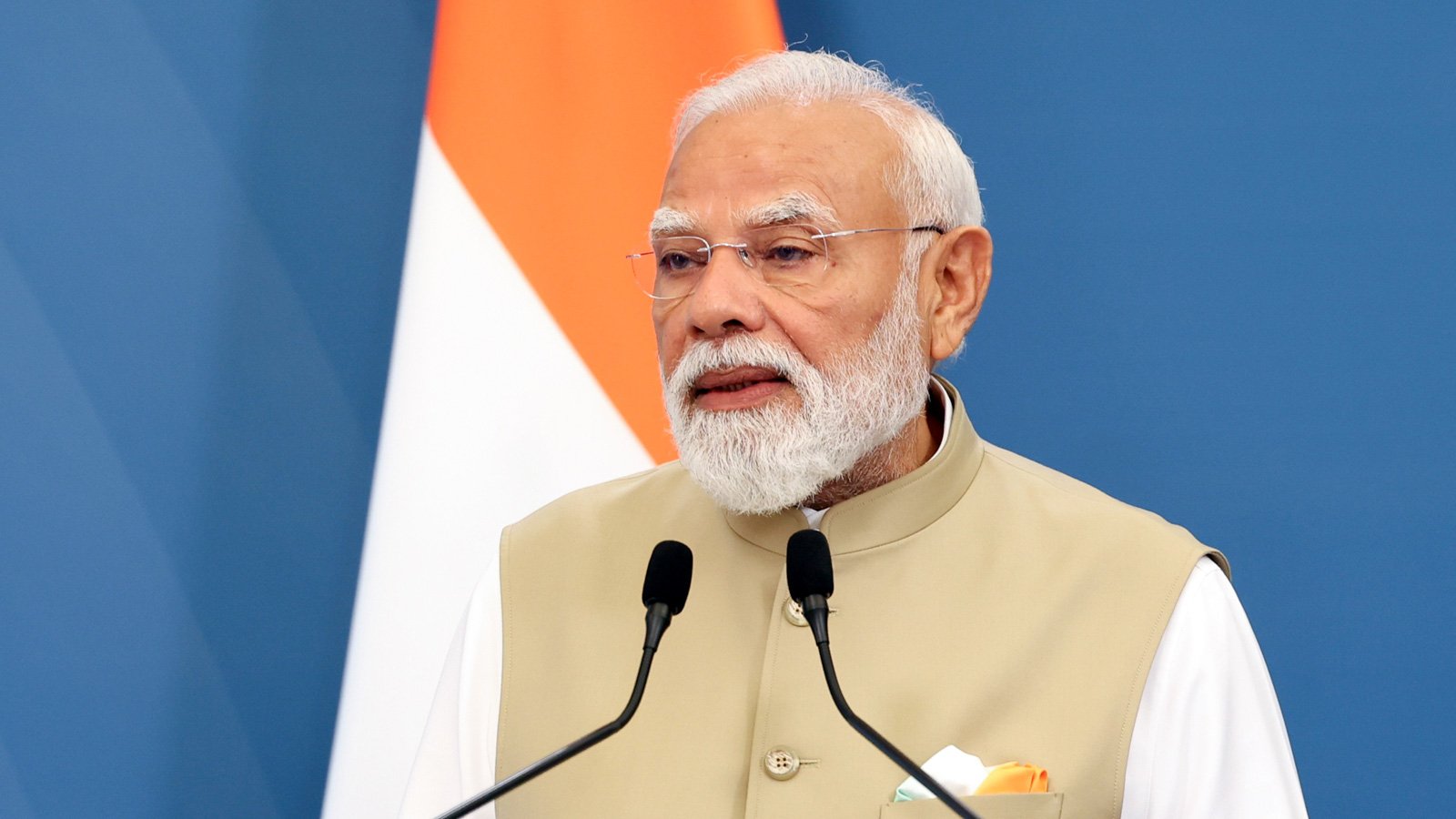
NEW DELHI — Addressing state ministers and senior administrators at the conclusion of the National Departmental Summit on Water, Prime Minister Narendra Modi articulated a comprehensive strategy to transform national water management from a administrative obligation into a technology-backed public movement.
Organized by the Ministry of Jal Shakti, the summit served as the inaugural session for a new series of departmental forums aimed at strengthening cooperative federalism and establishing time-bound execution targets between the Centre and States.
Strategic Directives and Technological Integration
The Prime Minister emphasized that long-term water resilience requires combining high-tech monitoring with active grassroots participation (Jan Bhagidari).
-
Artificial Intelligence & Data Integration: Mandated the adoption of AI analytics and standardized data collection formats to consolidate national water metrics, supporting predictive planning and real-time drought management.
-
“Jal Utsav” Civic Mobilization: Proposed launching “Jal Utsav” cultural and awareness campaigns across states to build public ownership around local water bodies and rainwater harvesting.
-
Inter-State Knowledge Sharing: Directed structured study tours for farmers, local representatives, and officials to inspect and adapt successful regional frameworks, citing initiatives like Chhattisgarh’s water conservation model.
-
Target of 2 Crore Conservation Units: Reaffirmed the objective to establish 2 crore new rainwater harvesting structures by May 31, 2027, following the foundational principle of catching rainwater where it falls.
Primary Objectives for Jal Jeevan Mission 2.0
Union Jal Shakti Minister C R Patil summarized the summit’s primary actionable outcomes, which focus on four critical pillars of water governance:
-
Infrastructure Execution: Streamlining approvals and accelerating completion dates for major water supply and storage projects.
-
Rural Supply Durability: Institutionalizing robust Operation & Maintenance (O&M) protocols and source sustainability safeguards under Jal Jeevan Mission 2.0.
-
Circular Resource Reuse: Expanding the industrial and agricultural application of treated wastewater to reduce stress on freshwater aquifers.
-
Standardized Operations & Maintenance: Creating uniform guidelines for dam safety, reservoir de-silting ahead of monsoons, and incorporating water literacy into educational curricula.
Policy Significance
The summit marks a deliberate shift from traditional administrative silos toward a collaborative “Team India” framework. By pairing AI-driven data governance with community-led conservation, the strategy seeks to prepare both rural communities and Urban Local Bodies (ULBs) for long-term climate resilience and industrial water demand.
