



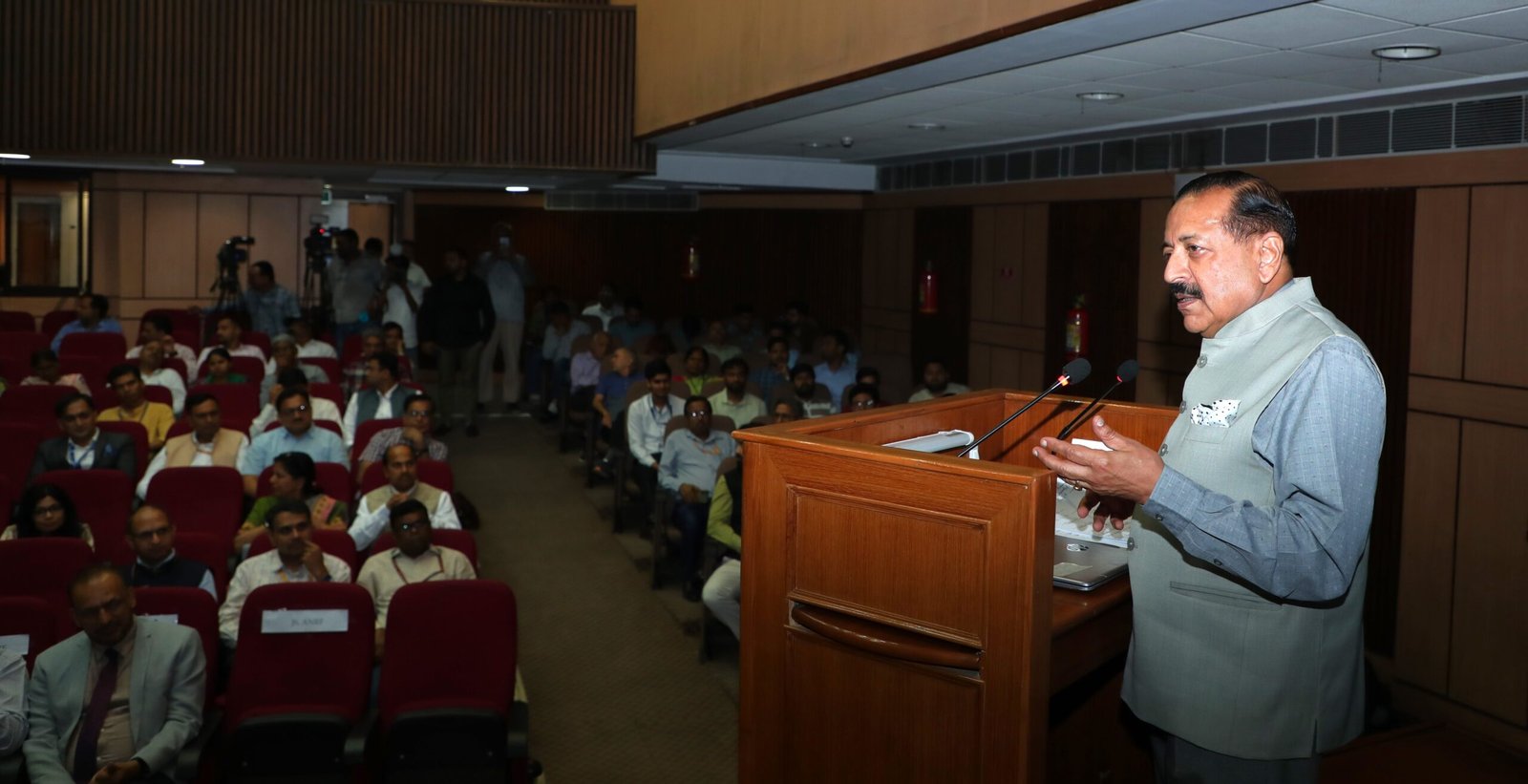
NEW DELHI — On the 56th Foundation Day of the Department of Science and Technology (DST), Union Minister Dr. Jitendra Singh declared that technology-driven innovation has become the primary engine of India’s economic growth. Addressing a gathering of the nation’s top scientists and academicians at the Indian National Science Academy (INSA), the Minister emphasized a strategic shift in policy: moving science “from laboratories to markets and from ideas to impact.”
A Decade of Transformation
Dr. Singh highlighted that the last ten years have seen a fundamental shift in India’s scientific landscape, moving away from isolated research toward an integrated economic model.
-
Sector Liberalization: Strategic decisions to open Space and Nuclear Energy to the private sector have acted as catalysts for unprecedented growth.
-
Startup Surge: India’s startup ecosystem has exploded from just a few hundred a decade ago to over two lakh (200,000) today.
-
Global Standing: India is now producing a significantly higher share of “highly cited” research publications, signaling a rise in both the quality and global influence of Indian scientists.
The Triple Helix: Government, Academia, and Industry
The Minister stressed that scientific isolation is a relic of the past. For India to achieve its economic goals, a “Triple Helix” of collaboration is essential:
-
Government: Providing policy frameworks like the Anusandhan National Research Foundation (ANRF) and the National Quantum Mission.
-
Academia: Focusing on indigenous research and high-quality talent development.
-
Industry: Taking lead roles in commercializing technology and funding large-scale R&D through initiatives like the RDI Fund.
Key Growth Areas
The Minister and DST Secretary Prof. Abhay Karandikar identified several “frontier” domains that will define the next decade of Indian innovation:
-
Quantum Technology: Aiming for global leadership in secure communications and computing.
-
Space Tech: Leveraging private startups for satellite technologies and national preparedness.
-
Pharmaceuticals: Shifting toward indigenous drug development and critical technology self-reliance.
Administrative Reforms
To support this “renaissance,” Dr. Singh noted that the government is restructuring legacy systems to improve efficiency. These reforms focus on decentralized decision-making and a merit-based ecosystem designed to guide young innovators with realistic goals and transparent support.
The Vision: “No country can advance in science by remaining isolated from the private sector,” Dr. Singh concluded, calling for a culture of Jan Bhagidari (people’s participation) in science to ensure that technological breakthroughs translate into societal benefits and global leadership.
