



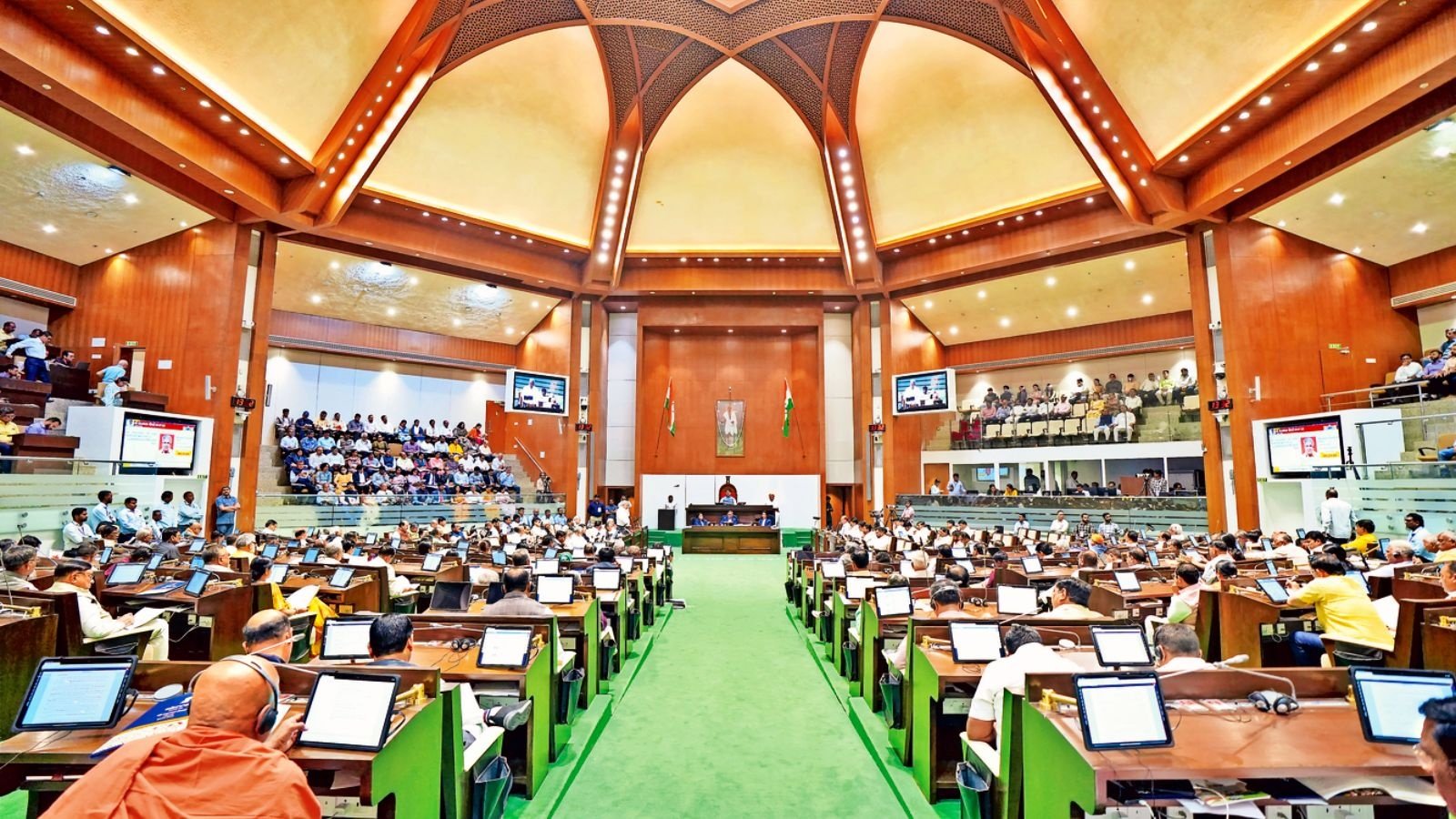
GANDHINAGAR — In a landmark legislative development, Chief Minister Bhupendra Patel has successfully steered the Gujarat Uniform Civil Code (UCC) Bill, 2026 through the State Assembly. Following an intensive seven-hour debate, Gujarat officially becomes the second state in India, after Uttarakhand, to implement a common legal framework for all citizens.
The new code replaces various religious personal laws with a unified set of regulations governing marriage, divorce, inheritance, and live-in relationships. While the ruling government defines the move as a fulfillment of Article 44 of the Constitution, opposition parties—including the Congress and AAP—have raised concerns regarding its impact on fundamental rights and religious practices.
Key Provisions of the Gujarat UCC
-
Universal Jurisdiction: Applies to all Gujarat residents, including those living abroad, while specifically excluding Scheduled Tribes (STs).
-
Marriage Regulations: Strictly prohibits bigamy; a marriage is only legally valid if neither party has a living spouse at the time of the union.
-
Live-in Relationships: Introduces a mandatory requirement for the formal registration of live-in partnerships and official declarations for their termination.
-
Equality Framework: Designed to ensure “equal justice” across all communities, aligning with the principles of Article 14.
Political Context
During the tabling of the bill, CM Bhupendra Patel advocated for a unified legal structure, stating that “justice must be one” regardless of religious diversity. In contrast, opposition leaders characterized the legislation as a strategic move ahead of the 2027 assembly elections and formally requested that the bill be referred to a select committee for more detailed scrutiny.
