



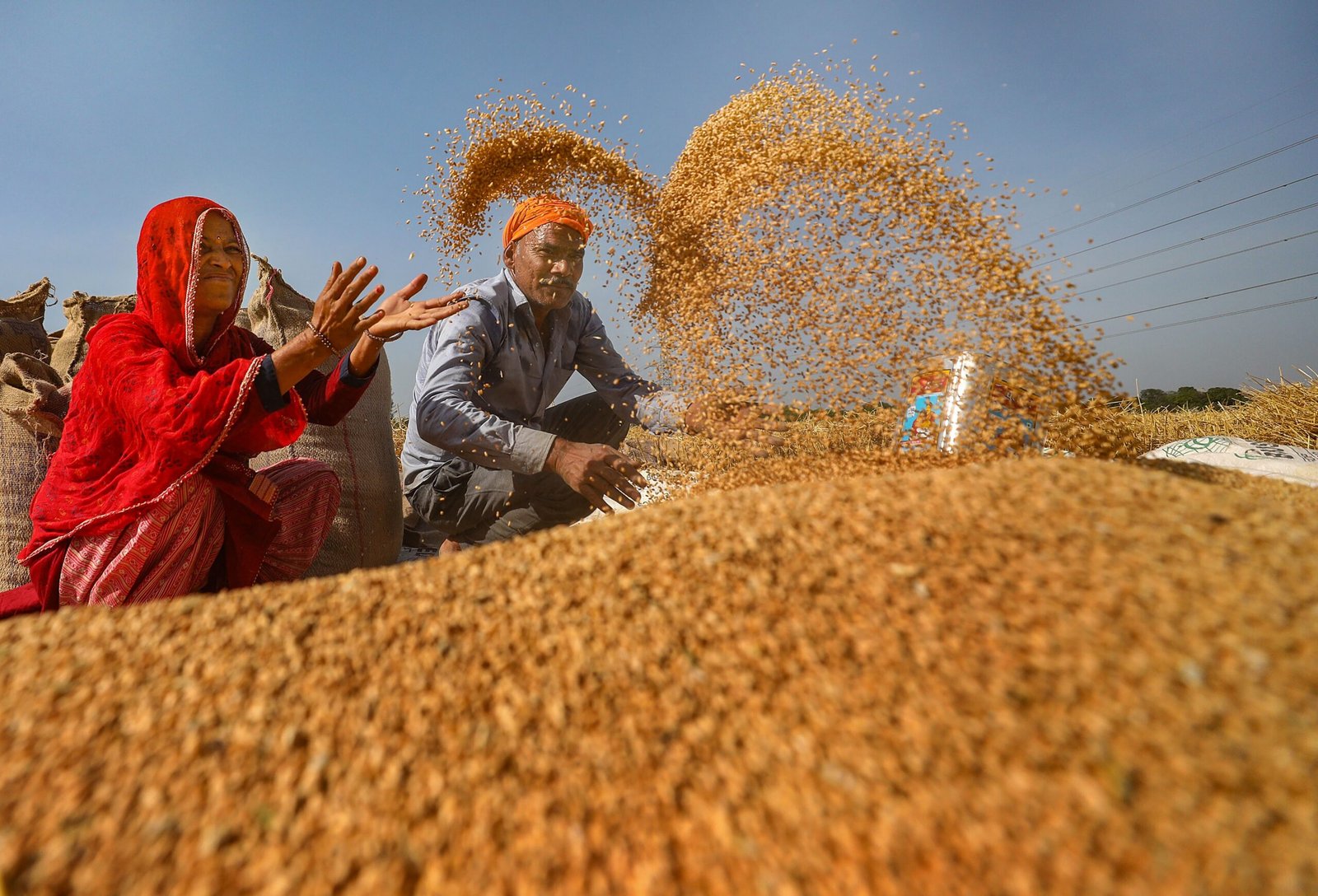
NEW DELHI – The Government of India has sanctioned the export of an additional 25 Lakh Metric Tonnes (LMT) of wheat. This strategic move aims to provide remunerative returns to farmers and manage domestic stock levels following a period of record-breaking production.
The decision was finalized after a comprehensive review of the Rabi 2026 season, which saw wheat acreage climb to 334.17 lakh hectares, up from 328.04 lakh hectares in the previous year.
Production Outlook and Export Totals
The Department of Agriculture’s latest estimates suggest a highly comfortable supply position:
-
Estimated Production (2025–26): 1202 LMT, according to the Second Advance Estimates.
-
Cumulative Exports: With this latest approval, the government has now authorized a total of 50 LMT of wheat and 10 LMT of wheat products for export in the current cycle.
-
Previous Tranches: This follows approvals of 5 LMT of wheat products in January, and a combined 30 LMT of wheat and wheat products in February 2026.
Strategic Objectives
The Ministry highlighted several key reasons for opening up the export window:
-
Market Liquidity: Enhancing the flow of commodities during the peak arrival season to prevent a domestic glut.
-
Price Stabilization: Preventing “distress sales” by farmers by providing access to international markets, thereby keeping domestic prices steady.
-
Stock Management: Facilitating efficient storage management as new harvests arrive in state and private granaries.
Food Security Safeguards
While leaning into exports, the government reiterated that India’s food security remains a top priority. The calibrated release of stocks is designed to balance the needs of domestic consumers with the necessity of ensuring that farmers receive competitive prices for their surplus produce.
