



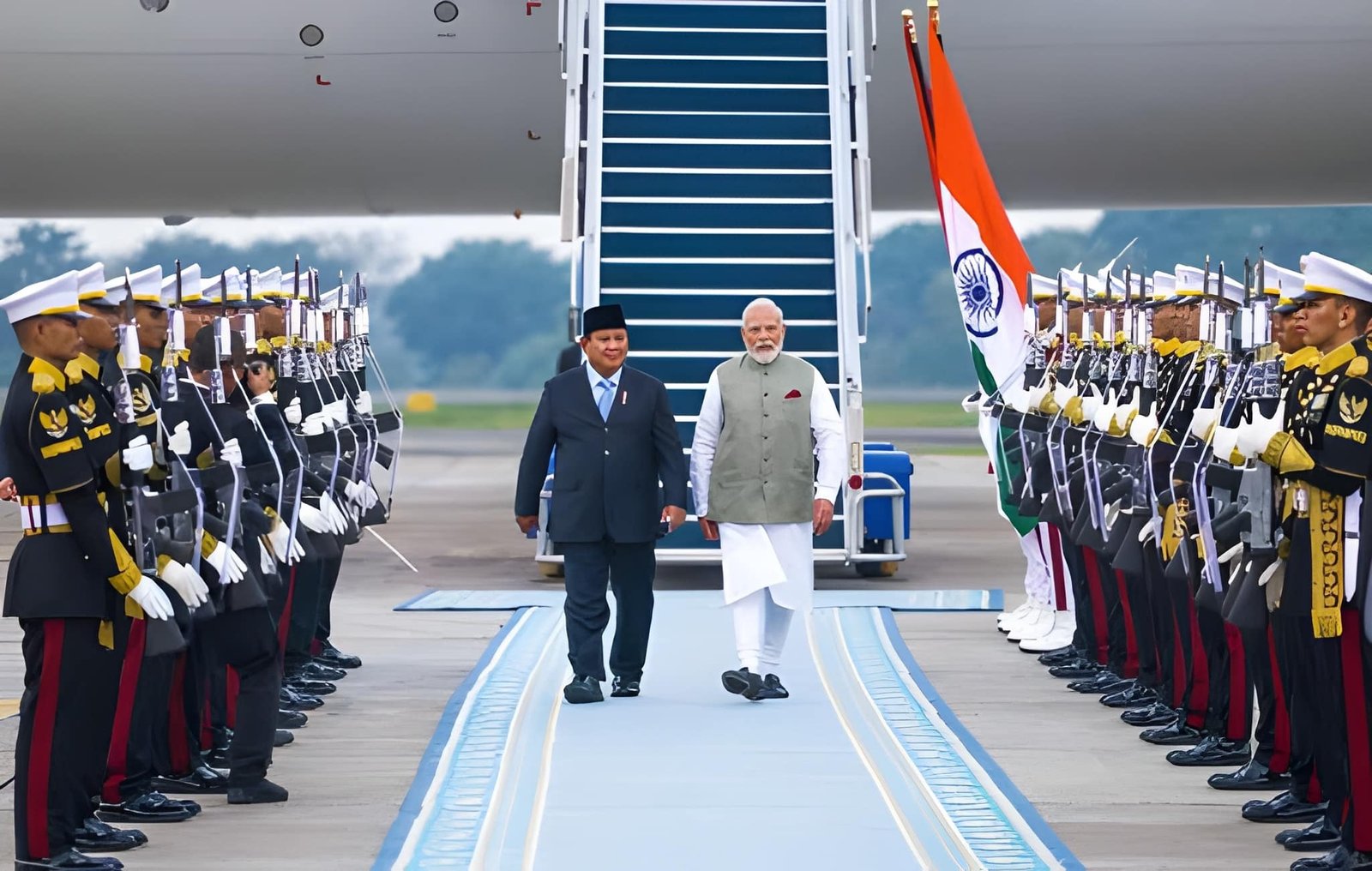
JAKARTA — Prime Minister Narendra Modi’s arrival in Indonesia marks the launch of a high-priority three-nation diplomatic tour designed to reshape India’s economic, trade, and maritime security footprint across the Indo-Pacific. The strategic tour shifts sequentially from bilateral talks in Indonesia to prime ministerial summits in Australia and a historic final stop in New Zealand.
Direct Engagement at the Merdeka Palace
The first leg of the mission anchors India’s long-standing “Act East” framework through direct high-protocol engagement in Jakarta:
-
Sovereign Defenses: Demonstrating the geopolitical weight of the visit, the Prime Minister’s aircraft received an airspace escort from Indonesian Air Force fighter jets.
-
Reciprocal Diplomatic Protocol: Indonesian President Prabowo Subianto personally greeted PM Modi on the tarmac, matching the diplomatic protocol of his own state visit to India as the honored Chief Guest for the January 2025 Republic Day celebrations.
-
Civilizational Architecture: Alongside formal trade and defense negotiations, the leaders will visit the 9th-century Prambanan Temple complex in Yogyakarta, highlighting ancient maritime and cultural linkages.
Expanding the Strategic and Economic Footprint
The comprehensive tour will move rapidly over the coming days to cement critical trade and defense frameworks with key partners in Oceania:
-
Australia (July 8–10): PM Modi will fly to Melbourne for the Australia-India Annual Leaders’ Summit at the invitation of Prime Minister Anthony Albanese. Key agendas include the India-Australia CEOs Forum, deepening the Comprehensive Strategic Partnership, and expanding joint military and technological cooperation across the world’s fourth-largest economy.
-
New Zealand (July 10–11): The final leg in Auckland marks a historic milestone—the first official visit by an Indian Prime Minister to New Zealand in 40 years. Announced by PM Christopher Luxon, the visit centers on leveraging the newly signed New Zealand-India Free Trade Agreement (FTA), which is set to eliminate tariffs on 95% of New Zealand’s exports and unlock massive investment pipelines.
