



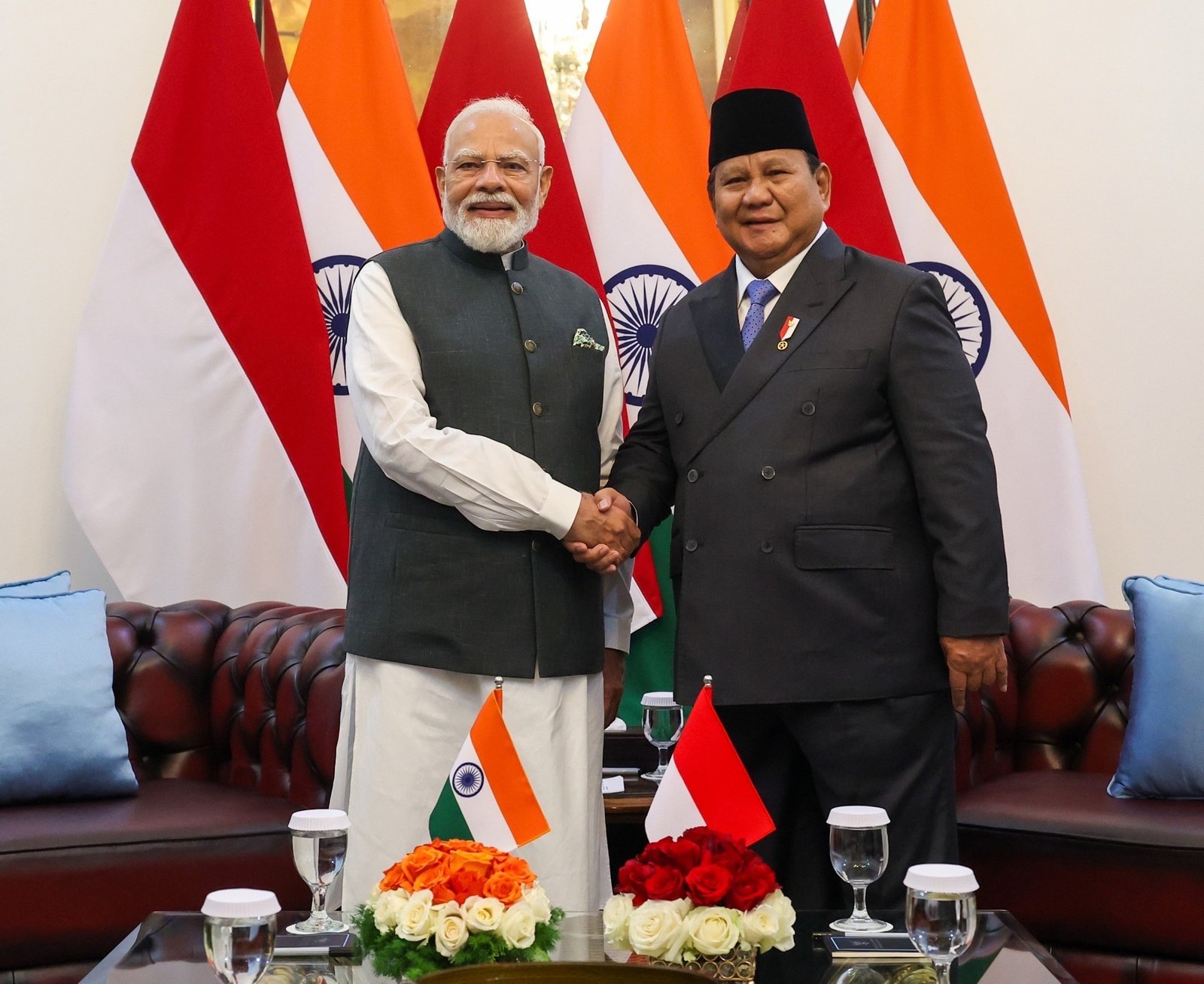
JAKARTA / NEW DELHI — The state visit of Prime Minister Narendra Modi to Indonesia from July 6 to 8, 2026, has yielded a profound structural shift in the strategic architecture of the two largest Indian Ocean economies.
Building on the diplomatic foundation laid during President Prabowo Subianto’s 2025 visit to New Delhi, the summit systematically converges India’s ‘Viksit Bharat 2047’ objectives with the ‘Indonesia Emas 2045’ national growth strategy.
1. Deep-Tech Defense and Joint Maritime Surveillance
The summit marks a decisive transition from a traditional security dialogue into a high-level technical and industrial defense alliance:
-
Advanced Missile Integration: Production frameworks were finalized under the BrahMos Missile System agreement, alongside a newly executed Air-to-Air Missile Cooperation Agreement targeting joint aerial defense capabilities.
-
Tactical Domain Awareness: Indonesia will station a permanent Liaison Officer at India’s Information Fusion Centre-Indian Ocean Region (IFC-IOR) in Gurugram. This is reinforced by an operational implementing arrangement between BAKAMLA RI (Indonesia’s Maritime Security Agency) and the Indian Coast Guard.
-
Security & Counter-Terror Mandate: The nations established a comprehensive pipeline for joint military shipbuilding, specialized Maintenance, Repair, and Overhaul (MRO) hubs, and a soon-to-be-signed MoU on Counter Terrorism aimed at disabling online radicalization networks and terror-financing channels.
2. Supply Chain Sovereignization, Metallurgy, and Fintech Deployment
The bilateral economic framework introduces a major emphasis on technology transfers, domestic manufacturing security, and the export of digital public infrastructure:
-
Rare Earth Alliances: A trilateral MoU was inked between India’s NFTDC, Midwest Ltd., and Indonesia’s state-backed PT PERMINAS to pioneer the research and development of Rare Earth Magnets, securing vital inputs for the domestic electric vehicle and electronics sectors.
-
Industrial Steel Hub: The Steel Authority of India Ltd. (SAIL) and PT Krakatau Steel initiated a Strategic Joint Venture to construct a high-capacity Stainless-Steel Slab production plant in Indonesia.
-
Decentralized Digital Commerce: In a major push for economic digitization, the leaders launched the Indonesia Open Network (ION). Modeled entirely on India’s open-source ONDC architecture, the platform connects MSMEs directly to the digital economy. This operates alongside an interoperable Cross-Border QR Payment Linkage designed to settle trade in local currencies, minimizing dependence on external clearing currencies.
3. High-Value Infrastructure: Space Ports, Sabang, and Healthcare
-
Sabang Maritime Gateway: President Prabowo welcomed comprehensive Indian investment to build out the Sabang Port complex. The integrated blueprint outlines high-tech ship-repair yards, marine-tourism terminals, and logistics bases supporting offshore energy exploration in the Andaman Sea.
-
Space Port & Gaganyaan Support: Expanding on the ISRO-BRIN aerospace framework, the two countries extended their peaceful outer space exploration treaty. Indonesia will continue providing tracking assistance for India’s manned Gaganyaan Mission via the Biak Telemetry Facility, while President Prabowo explicitly invited Indian partnership in developing a new commercial space port project in Indonesia.
-
Biomedical Standards: A fresh Implementation Arrangement on Professional Health Workforce Development opens a pipeline for advanced clinical fellowships, matched with an MoU between India’s CDSCO and Indonesia’s BPOM to standardize pharmaceutical regulation and medical product supply chains.
4. Multilateral Sovereignty and Soft-Power Centenaries
-
UNSC and Global Governance: Indonesia affirmed its total support for India’s 2026 BRICS Chairship. Both leaders demanded urgent, text-based structural expansions of the United Nations Security Council (UNSC) to rebalance global institutional power in favor of the Global South.
-
The Tagore-Dewantara Mandate: To mark the 100-year anniversary of Rabindranath Tagore’s historic 1927 voyage to Indonesia, the period 2026–2027 has been designated as the “Tagore–Dewantara Year of India–Indonesia Cultural and Educational Diplomacy,” launching a year-long schedule of academic, historical, and student exchange programs.
