



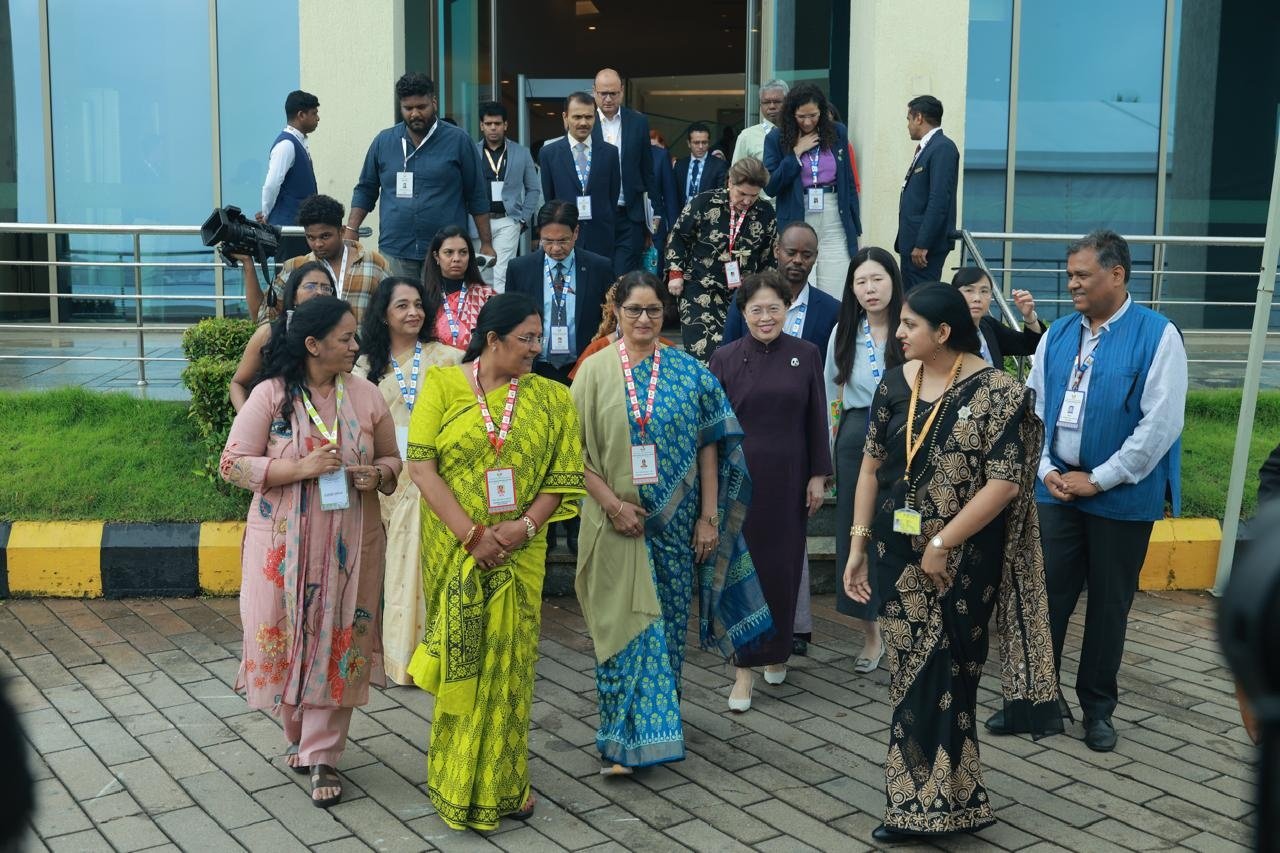
KOCHI — Highlighting India’s commitment to women-led development, the Ministry of Rural Development (MoRD) has launched a massive showcase of women-led rural enterprises at the BRICS Women Ministerial Meeting in Kochi, Kerala.
The two-day event (July 8–9, 2026), held under India’s BRICS Chairship, spotlights the economic transformation triggered by the Deendayal Antyodaya Yojana–National Rural Livelihoods Mission (DAY-NRLM), which connects over 10 crore rural women across the nation.
1. High-Profile Inauguration and Global Outreach
The dedicated MoRD pavilion was officially inaugurated by Union Minister for Women and Child Development Ms. Annapurna Devi, alongside Minister of State Smt. Savitri Thakur.
-
Global Briefing: The ministerial delegation was received by Dr. Molishree, Director at the Ministry of Rural Development, who detailed the evolutionary scale of India’s collective Self-Help Group (SHG) models.
-
International Footprint: Senior delegates and ministers from across the expanded BRICS bloc—including Brazil, Russia, China, South Africa, Egypt, Ethiopia, Iran, Saudi Arabia, the United Arab Emirates, and Indonesia—visited the stalls to interact directly with the rural artisans.
2. Infrastructure of the Pavilion: National Saras Aajeevika Gallery
The expansive exhibition layout features 21 dedicated State and Union Territory stalls, integrated alongside a premium curated center:
-
Market-Ready Innovation: At the pavilion’s forefront, the National Saras Aajeevika Gallery demonstrates how grassroots products have been elevated through professional design interventions, advanced packaging, strict quality assurance, and direct market linkages.
-
The Saras Shakti Collection: The gallery highlights DAY-NRLM’s premium gifting initiative, which curates high-quality, handcrafted rural products into branded institutional gift collections. This structural shift allows rural SHGs to directly bid for and access corporate and high-value government procurement markets.
3. Preserving India’s Artisanal Heritage
The exhibition serves as a live archive of India’s diverse and geographically protected cultural crafts, all sustained by rural women entrepreneurs. Major traditional arts featured include:
-
Fine Arts & Metalware: Madhubani paintings, Dokra, and Bell Metal crafts.
-
Textiles & Embroidery: Pen Kalamkari, Phulkari embroidery, Toda embroidery, Kantha work, and traditional Kutchi crafts.
-
Handicrafts & Regional Arts: Channapatna toys and Uttarakhand’s Aipan art, alongside natural organic foods and sustainable lifestyle goods.
4. The Macro Picture: Grassroots Economic Shift
By presenting these rural products on an international platform, the MoRD is positioning traditional SHGs not merely as local welfare units, but as globally competitive niche enterprises. The initiative showcases how collective rural institutions successfully preserve ancestral knowledge systems while driving sustainable livelihoods and local GDP growth.
