



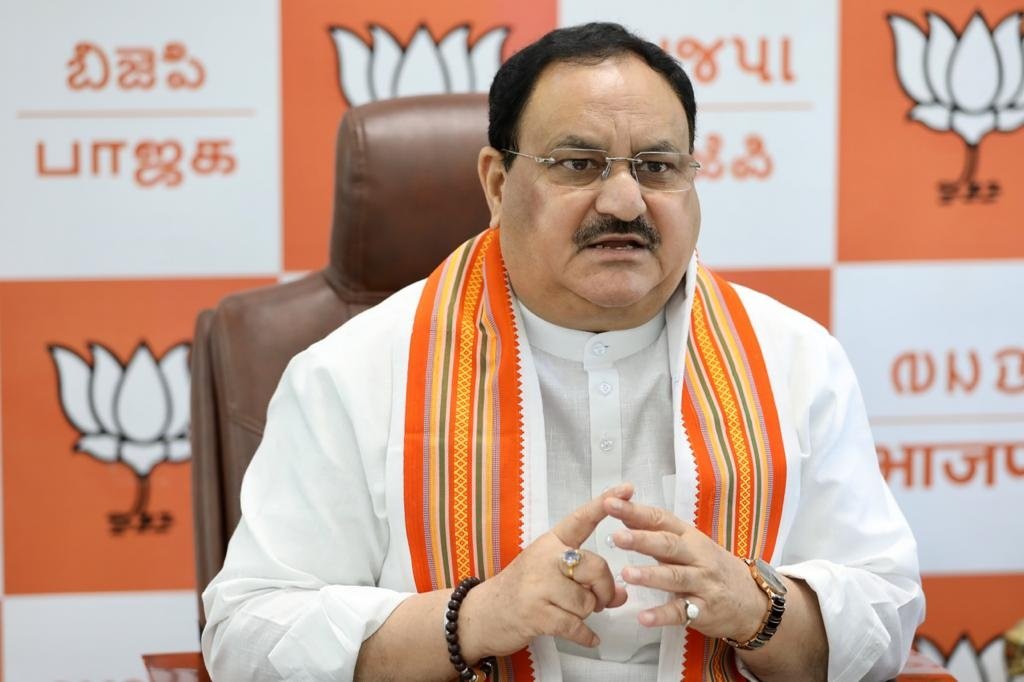
NEW DELHI — Addressing the 18th Civil Services Day, Union Health Minister Jagat Prakash Nadda declared a major offensive against Non-Communicable Diseases (NCDs), which currently contribute to 60% of India’s annual mortality.
Nadda outlined a massive infrastructural and diagnostic expansion aimed at transforming the country’s health landscape through the National Programme for Prevention and Control of NCDs.
Strengthening the Grassroots
The Minister noted that the government has successfully established a network of 1.85 lakh Ayushman Arogya Mandirs. These centers serve as the first line of defense, staffed by ASHA workers and frontline health personnel to ensure that the nation’s 1.45 billion people have immediate access to health screenings.
Scale of the Diagnostic Drive
Since the adoption of a holistic health policy in 2017, India has conducted screenings on an unprecedented scale to ensure early detection:
-
Hypertension: 41.5 crore people screened; 7.1 crore diagnosed.
-
Diabetes: 41.3 crore people screened; 4.7 crore found diabetic.
-
Cancer Care: Over 35 crore screened for oral cancer and 16.5 crore for breast cancer.
-
Expansion: The government has set up 233 cardiac care units and announced that every district will eventually house a day-care cancer center.
Closing the Knowledge Gap
While praising India’s progress in curbing communicable diseases, Nadda cautioned that NCDs require a long-term commitment. The current strategy focuses on a “multi-pronged” approach—incorporating preventive, geriatric, and palliative care—to address the knowledge gaps and logistical hurdles that previously delayed treatment.
“Our focus is on strengthening infrastructure, early diagnosis, and timely referrals to ensure a healthier India,” the Minister concluded.
