



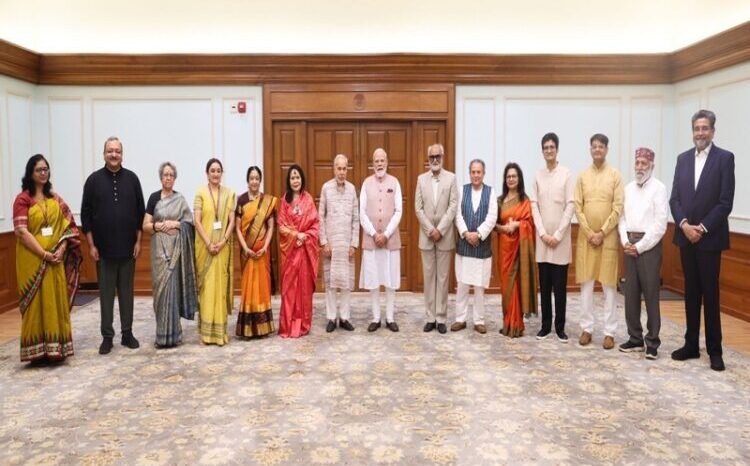
NEW DELHI — Prime Minister Narendra Modi met with the Trustees of the Indira Gandhi National Centre for the Arts (IGNCA) on March 19, 2026, to blueprint a modern roadmap for India’s cultural outreach. The high-level interaction focused on transitioning traditional heritage preservation into the digital age while maintaining strong grassroots connections.
The “Digital & Grassroots” Mandate
The Prime Minister emphasized a two-pronged approach to make Indian heritage more accessible to a global and younger audience:
-
Technological Integration: Strengthening outreach through digital initiatives, potentially including virtual museums and AI-driven archival tools to democratize access to IGNCA’s vast collections.
-
Scholar & Artist Support: A renewed commitment to providing institutional support for researchers and traditional practitioners to ensure the continuity of “living heritage.”
-
Public Participation: Exploring innovative ways to turn cultural promotion into a “people’s movement” (Jan Andolan), moving beyond elite academic circles.
Strategic Timing
The meeting comes as India prepares for its 2026 Digital Census, where cultural and linguistic mapping is expected to play a significant role. The PM later shared on X (formerly Twitter) that the discussion centered on “further popularizing India’s diverse culture” and ensuring that the journey of cultural promotion remains inclusive.
As the IGNCA prepares for its upcoming 40th Anniversary in 2027, this strategic push is seen as a move to align India’s premier arts institution with the government’s broader “Viksit Bharat” vision for cultural resurgence.
