



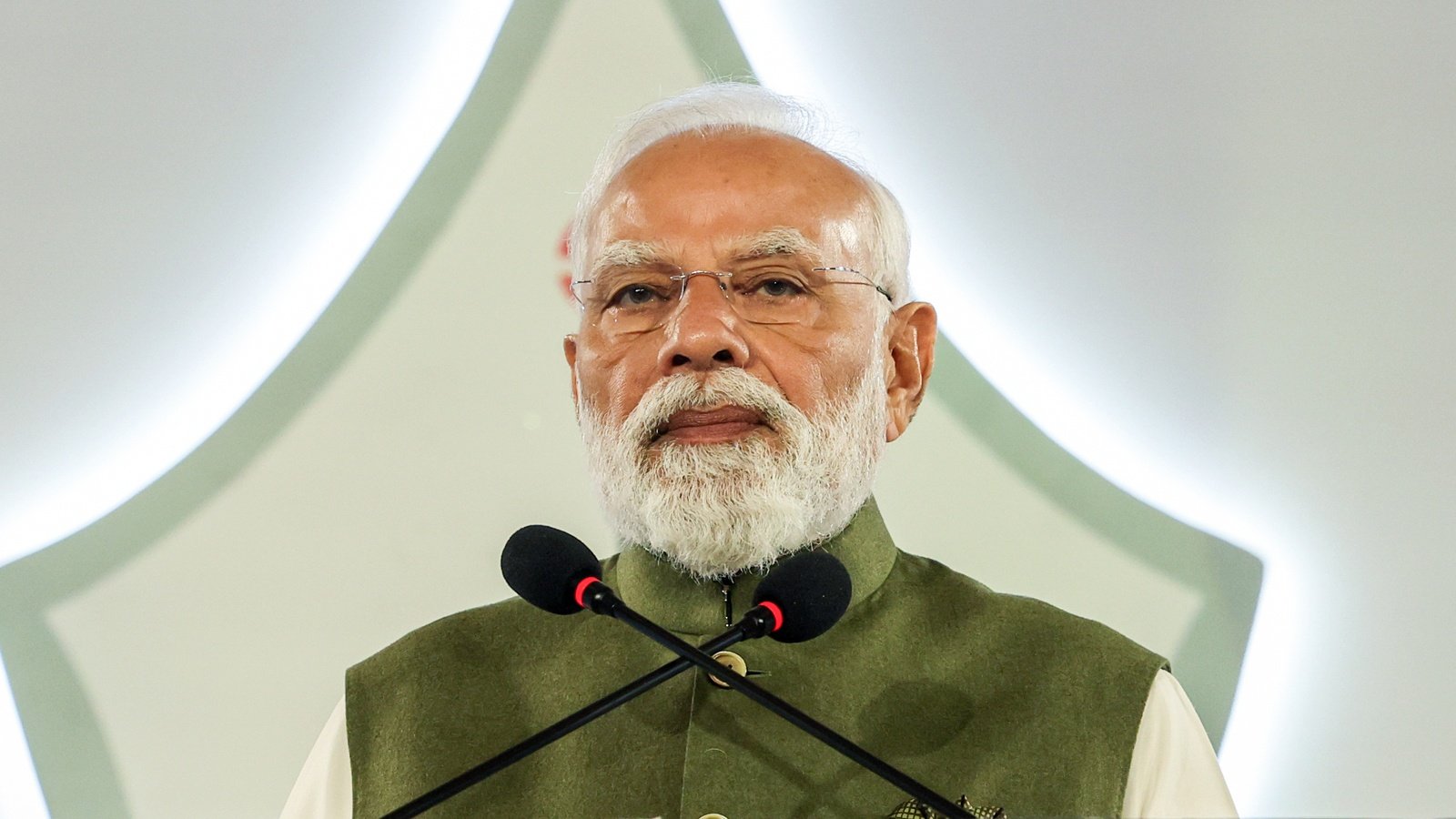
MELBOURNE — Prime Minister Narendra Modi addressed the Economic Roadmap Business Reception in Melbourne, calling on Australian corporate chiefs, infrastructure investors, and pension fund managers to capitalize on India’s rapid industrial expansion.
Speaking to a high-level delegation, PM Modi highlighted India’s structural transformation across renewable corridors, digital networks, and heavy manufacturing, while proposing a decentralized, sub-national framework to connect Australian provinces directly with Indian industrial states.
1. Trade Architecture: Transitioning from ECTA to CECA
Reviewing bilateral commercial milestones, the Prime Minister emphasized that the foundational trade agreements are acting as an economic runway for long-term corporate investments:
-
ECTA Success: Since the Economic Cooperation and Trade Agreement (ECTA) was implemented in 2022, India’s exports to Australia have doubled, significantly expanding market access for small and medium enterprises in both nations.
-
CECA Negotiations: Trade ministries are actively accelerating the conclusion of the comprehensive Comprehensive Economic Cooperation Agreement (CECA) to lift remaining cross-border regulatory and tariff barriers.
2. Energy Transitions: Clean Tech, Minerals, and the SHANTI Act
The Prime Minister invited Australian resources and capital to integrate directly with India’s long-term green transition and newly liberalized energy sectors:
-
Renewable Energy Grid: India has targeted 500 GW of renewable energy capacity by 2030, backed by aggressive domestic manufacturing ecosystems for solar modules, green hydrogen, and wind turbines.
-
Nuclear Sector Liberalization: Highlighting the recently enacted SHANTI Act, PM Modi noted that India has opened its nuclear energy sector to private enterprise, targeting 100 GW of nuclear power by 2047. He emphasized that Australia’s vast uranium reserves present a historic, mutual opportunity for long-term supply agreements.
-
Green Metallurgy: Building on strong historical partnerships in coking coal and steel, the Prime Minister invited Australian firms to collaborate on low-carbon aluminum, green iron, and clean manufacturing solutions.
3. High-Tech Missions and Asset Management
The address featured targeted pitches to Australia’s massive financial and digital infrastructure segments:
-
Sovereign Tech Funding: The Government of India has deployed over $10 billion in sovereign support across the National AI Mission, Quantum Mission, and Semiconductor Program, inviting Australian tech firms to co-develop data centers and digital public infrastructure.
-
Pension Fund Security: Acknowledging that Australian pension funds manage over $4 trillion in assets, PM Modi assured institutional investors that India offers a safe, stable, and highly sustainable growth environment, treating long-term capital with the highest institutional trust.
-
Transnational Education: Celebrating the operationalization of Australia’s Deakin and Wollongong university campuses in Gujarat’s GIFT City, the Prime Minister urged a structural shift from student mobility to long-term “talent partnerships.”
4. Sub-National Alliances: Pairing Provinces with States
In a key strategic proposal, PM Modi urged businesses to bypass centralized frameworks and establish direct state-to-state and sector-to-sector partnerships based on localized core competencies:
| Australian Province | Core Strength | Paired Indian States / Core Ecosystems |
| Western Australia | Critical Minerals & Mining Tech | Odisha & Gujarat (Advanced Manufacturing hubs) |
| Queensland & Tasmania | Clean Energy & Agritech | Punjab, Tamil Nadu & Andhra Pradesh (Food processing & renewables) |
| New South Wales & Victoria | Finance, EdTech & MedTech | Maharashtra, Karnataka & Telangana (Global digital hubs) |
| South Australia | Aerospace, Defense & Industry | Uttar Pradesh & Kerala (Defense industrial corridors) |
5. Strategic Alignment in the Indo-Pacific
Closing his address, Prime Minister Modi emphasized that the deepening economic integration between New Delhi and Canberra is anchored by a shared strategic vision for a stable, open Indo-Pacific and rooted in deep-seated democratic values, ensuring long-term institutional stability for global businesses.
