



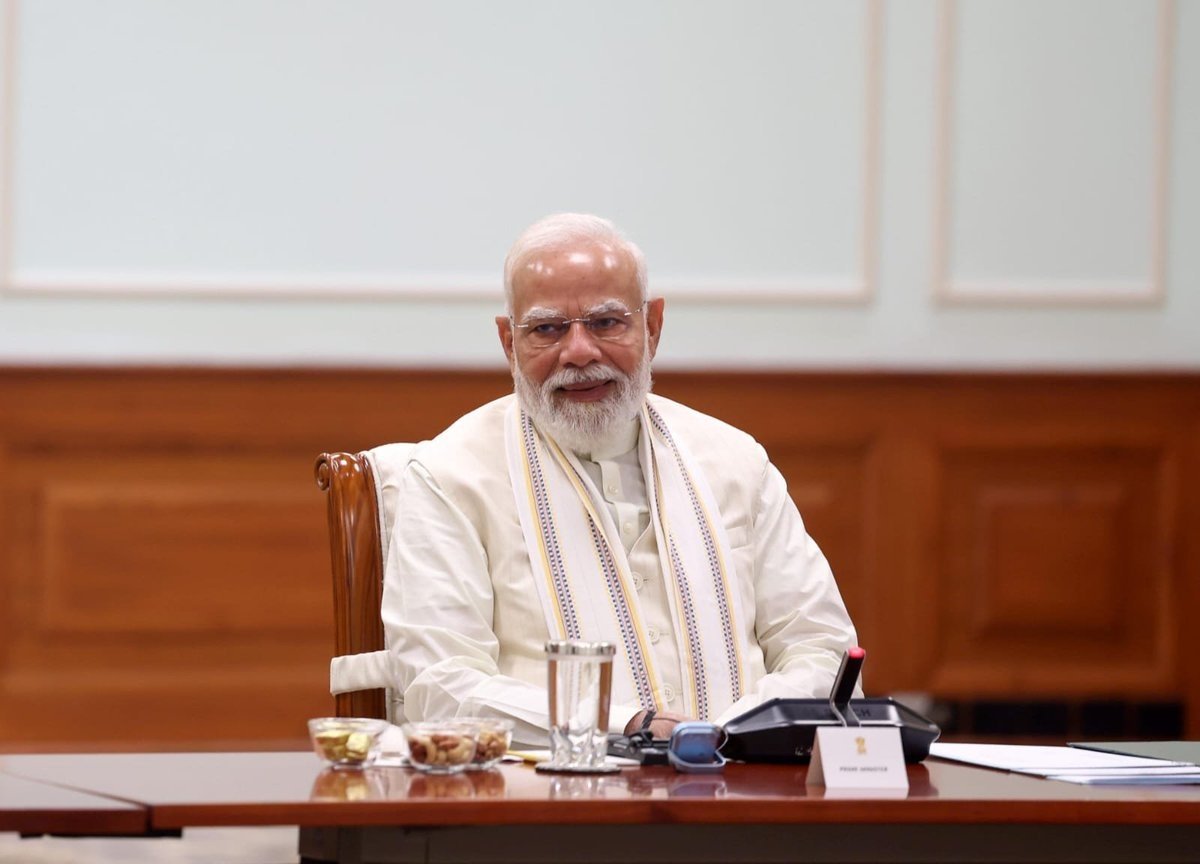
NEW DELHI: Highlighting the administration’s focus on structural growth and regulatory optimization, Prime Minister Narendra Modi chaired a high-level review meeting of the Economic Advisory Council to the Prime Minister (EAC-PM) on Saturday. The baseline deliberations centered on accelerating India’s macroeconomic transformation and fine-tuning long-term development roadmaps.
The meeting serves as a key strategic forum for institutional economists and policymakers to sync structural policy recommendations with execution frameworks across federal ministries.
Accelerating the Reform Trajectory
During the institutional review, members of the advisory council shared data-driven perspectives aimed at sustaining high GDP growth trajectories while insulating the domestic economy from global headwinds. The core policy directions outlined by the Prime Minister focused on two critical indices:
-
Ease of Doing Business: Streamlining regulatory compliances, lowering operational friction for manufacturing and service sectors, and accelerating capital-intensive infrastructure pipelines.
-
Ease of Living: Ensuring that high-growth economic paradigms translate directly to improved public utility distribution, digital financial inclusion, and grass-roots social security frameworks.
“Deliberated on a wide range of issues relating to India’s economic transformation and long-term development priorities. Also shared perspectives on adding more momentum to the reforms journey…” — Prime Minister Narendra Modi
The Advisory Mandate
The EAC-PM operates as an independent advisory body tasked with analyzing macroeconomic trends and providing fiscal policy recommendations directly to the Prime Minister.
With India navigating complex global transition matrices—including shifting supply chains, energy import dynamics, and digital infrastructure scaling—the council’s latest deliberations are expected to heavily inform upcoming fiscal policies, industrial incentives, and administrative reform packages aimed at boosting domestic productivity.
