



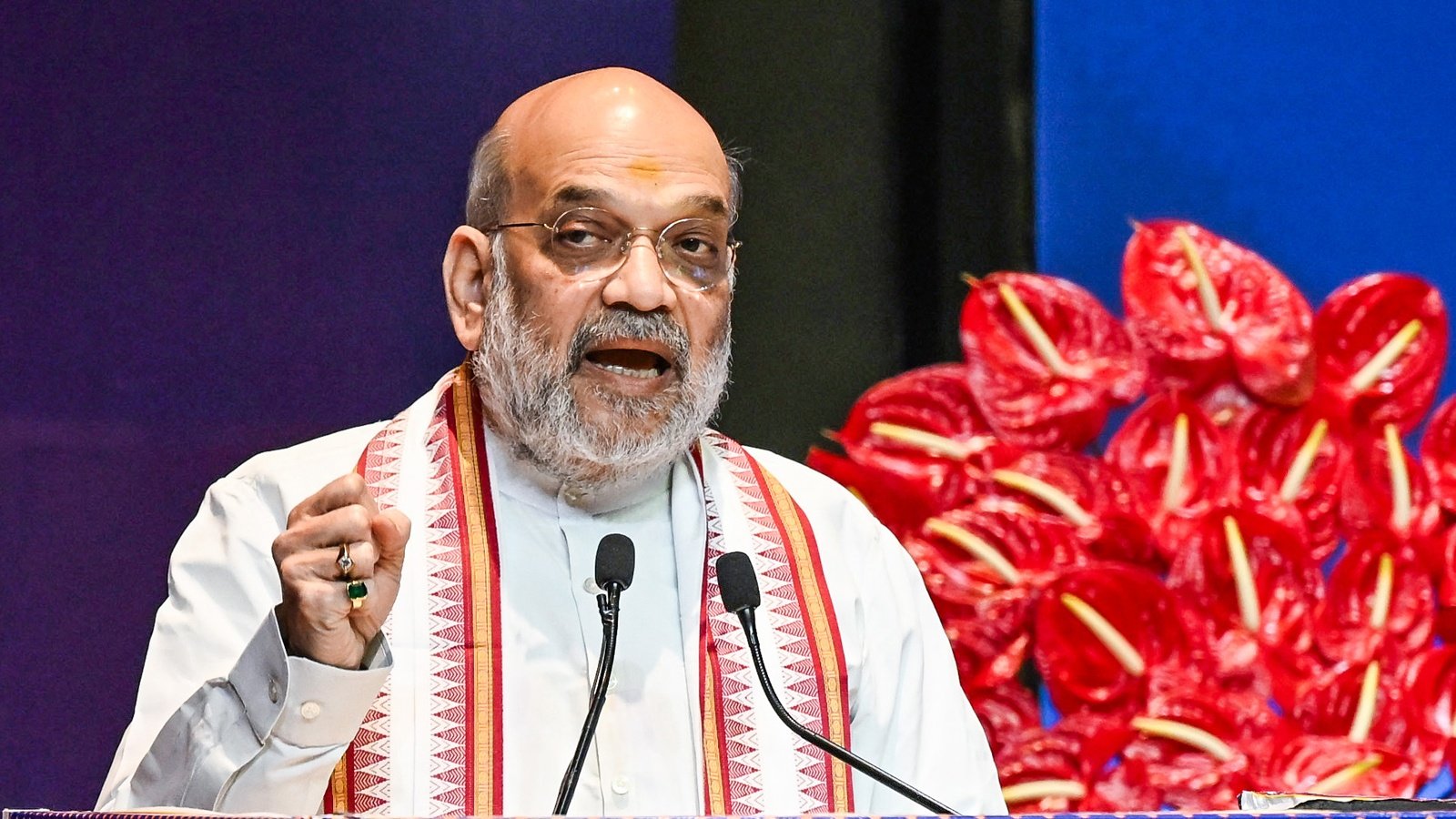
NEW DELHI: Underscoring the central pillar of the government’s governance model, Union Home Minister and Minister of Cooperation Shri Amit Shah stated that Garib Kalyan (welfare of the poor) remains the topmost priority of the Modi administration.
Reviewing the milestone of 12 Years of Garib Kalyan, the Home Minister highlighted that a massive, tech-driven financial and social inclusion drive has successfully integrated crores of marginalized citizens into the economic mainstream, establishing a robust launching pad for a Viksit Bharat (Developed India).
12 Years of Garib Kalyan: Core Welfare Pillars
Financial Inclusion: Direct integration into the formal banking system via Jan-Dhan Accounts.
Food Security: Sustained nutritional support under the flagship PM Garib Kalyan Anna Yojana.
Social Infrastructure: Mass housing allocation through PM Awas Yojana.
Grassroots Entrepreneurship: Capital deployment via Mudra Loans and PM SVANidhi for street vendors.
Integrating the Margins into the Economic Mainstream
In an official statement shared on the social media platform X, Shri Amit Shah outlined that the past 12 years of targeted welfare interventions have moved beyond traditional, passive doles. Instead, the government has focused on creating sustainable economic infrastructure, financial security, and self-employment opportunities for the country’s underprivileged segments.
“The government has connected crores of citizens to banking facilities, financial security, and self-employment opportunities through welfare schemes like the Ann Yojana, PM Awas, Jan-Dhan, Mudra Loan, and PM Swanidhi,” the Home Minister noted.
By prioritizing direct benefit transfers (DBT) via Jan-Dhan accounts and providing micro-credit facilities like Mudra and PM SVANidhi, the administration has systematically dismantled traditional middleman networks, ensuring that financial empowerment reaches the intended beneficiary without leakage.
Laying the Structural Foundation for ‘Viksit Bharat’
The Home Minister emphasized that these welfare initiatives serve a dual macroeconomic purpose. While they provide immediate social safety nets—such as dignified housing under PM Awas and comprehensive food security under the Anna Yojana—they also upgrade the overall quality of life and productivity of India’s demographic dividend.
According to the Ministry of Home Affairs, bringing basic infrastructure, robust social security, and an elevated standard of living to the grassroots level is not just a social imperative but a core economic strategy. By transforming billions of consumers and small-scale entrepreneurs into active participants in the formal economy, the government is building the structural bedrock required to propel India into a fully developed nation status over the coming decades.
