



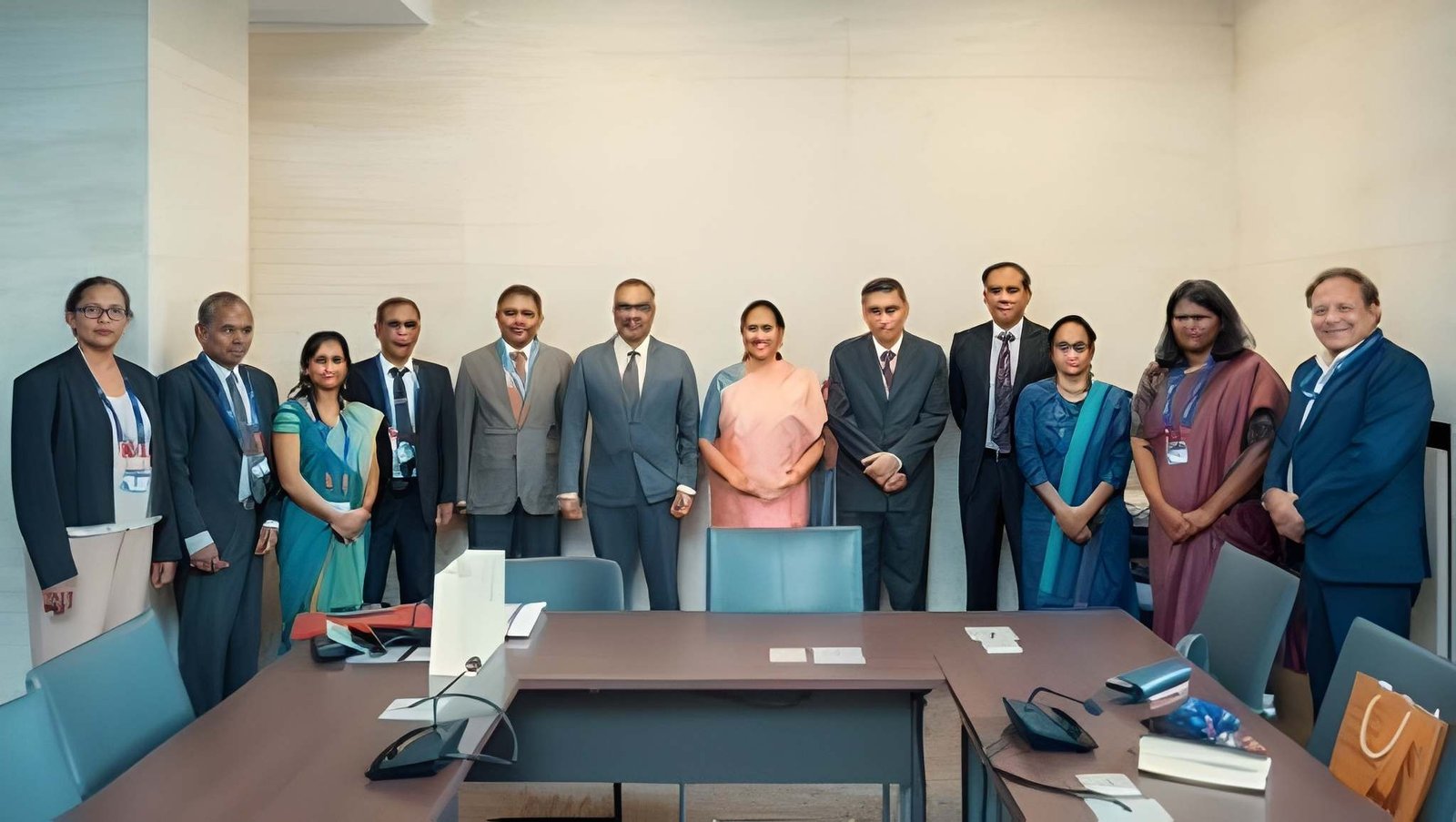
GENEVA — Union Minister of State for Labour and Employment Shobha Karandlaje led the Indian delegation at the 114th International Labour Conference (ILC) in Geneva, Switzerland on Thursday. Addressing the global plenary session, Karandlaje unveiled a series of striking data points illustrating India’s aggressive decade-long transition toward labor formalization, rising female workforce integration, and digital safety nets.
The Minister framed India’s vast legal and economic restructuring under the philosophical principle of “Antyodaya”—a commitment to uplifting the very last person at the margins of society.
Employment and Inclusion Numbers Hit Historic Highs
In her address to global delegates, the Minister presented verified timeline metrics detailing a sweeping turnaround in India’s labor market dynamics over the past decade:
-
Plunging Unemployment: India’s national unemployment rate fell significantly from 6% in 2017 down to 3.1% in 2025.
-
Youth Employability Surge: The general employability of Indian youth surged from 34% in 2014 to over 56% in 2025, driven by targeted corporate skilling partnerships.
-
Women Entering the Workforce: Female labor force participation witnessed a massive upward trajectory, jumping from 22% in 2017 to 38.8% by 2025.
Karandlaje credited these shifts to the structural consolidation of 29 historical, fragmented Central Labour Laws into just four streamlined New Labour Codes. She noted during a dedicated high-level side event that these new codes guarantee minimum wage protections, reinforce workplace safety standards, and legally extend formal healthcare and pension coverage to previously ignored gig workers and platform delivery partners.
Building an All-Inclusive Digital Safety Net
A core highlight of the summit was India’s presentation of its Digital Public Infrastructure (DPI) built specifically for informal workforce management. The central government’s e-Shram Portal—a massive digital identity registry for unorganized workers—alongside the National Career Service (NCS) Portal, were showcased as open-source, scalable blueprints for developing nations.
During a high-level bilateral meeting on the sidelines, International Labour Organization (ILO) Director-General Gilbert F. Houngbo highly commended India’s unprecedented scaling of social security.
According to internal data evaluated by the ILO, India’s total social protection coverage expanded from a meager 19% of the population in 2015 to an astonishing 64.3% in 2025.
This rapid expansion has effectively brought 940 million citizens under a centralized social security safety net within a decade. Preliminary localized data estimates indicate that total extended safety coverage across nested state and central welfare mechanisms is currently tracking close to 1.001 billion people.
Exporting India’s Labor Blueprint to Global Partners
India’s domestic successes sparked strong diplomatic interest on the sidelines of the Geneva conference, resulting in several strategic agreements:
-
Rwanda Collaboration: Rwandan Public Service & Labour Minister Christine Nkulikiyinka requested direct technical assistance and capacity-building support from India. Rwanda aims to duplicate the e-Shram architecture to transition its own workforce from informal arrangements to formal digital registration.
-
Sri Lanka Partnership: Sri Lankan Labour Minister Anil Jayantha Fernando held extensive consultations with the Indian delegation to gather legal insights on how to replicate and implement India’s four New Labour Codes to simplify corporate compliance and labor disputes.
-
Global Skill Classification: The Indian delegation confirmed it is wrapping up a collaborative feasibility study with the ILO to create an International Reference Classification of Occupations. This cross-border index will map localized Indian technical skills directly against international job requirements, paving the way for safe, orderly, and highly legal migration pathways for Indian workers abroad.
The conference concluded with the Minister reaffirming India’s dedication to working alongside the ILO to cement future-ready labor markets, ensuring that rapid industrial transitions are balanced with tight, tech-driven worker protections.
