



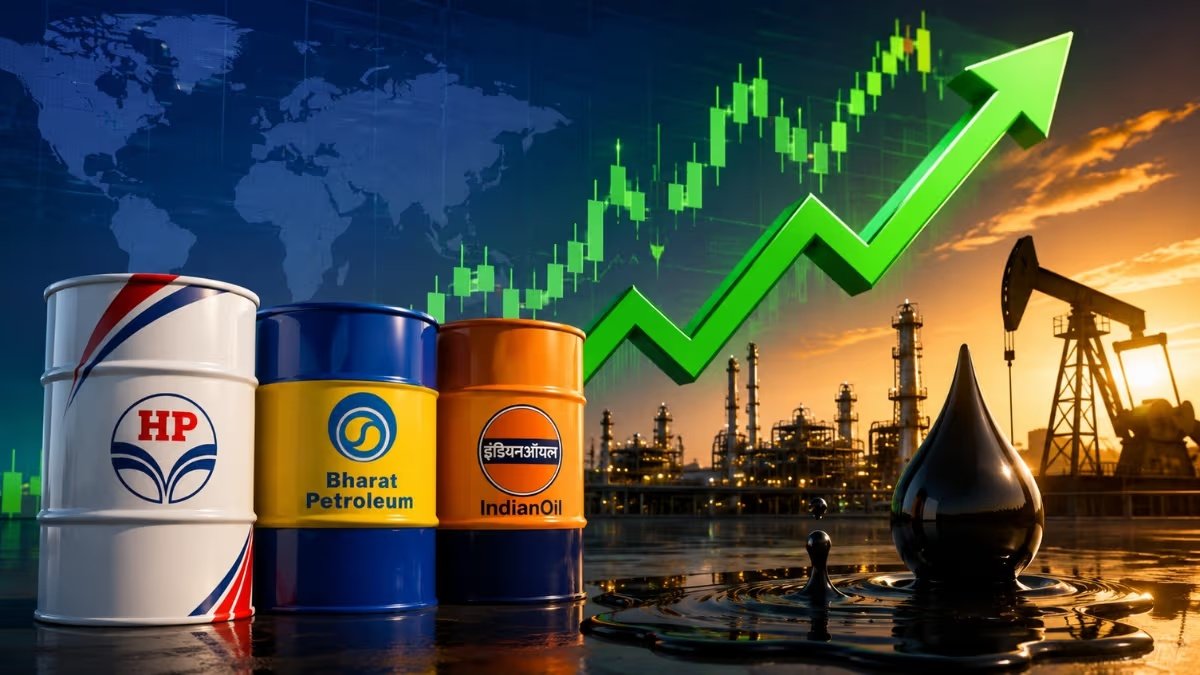
NEW DELHI — Shares of public sector Oil Marketing Companies (OMCs)—Hindustan Petroleum Corporation Limited (HPCL), Bharat Petroleum Corporation Limited (BPCL), and Indian Oil Corporation Limited (IOCL)—started the trading week on a strong footing. The stocks traded higher during early Monday deals, driven by global Brent crude prices comfortably consolidating below the $80 per barrel mark.
For Indian OMCs, a softer crude environment (currently hovering between $75–$79) drastically reduces input costs, relieves pressure on Gross Refining Margins (GRMs), and eliminates under-recoveries on retail petrol and diesel sales.
Brokerage Outlook: Upgrades with Cautious Optimism
Major brokerages have updated their stances on the sector, shifting to a more constructive yet highly measured outlook:
-
Kotak Institutional Equities: Upgraded ratings on all three OMCs from ‘Sell’ to ‘Reduce’. The brokerage noted that if crude stabilizes near $75/bbl, it will provide clear earnings visibility for FY28 and FY29, enabling these firms to self-fund critical infrastructure expansions.
-
JPMorgan: Maintains a tactical near-term outlook, noting that stock performance will remain highly correlated to daily oil volatility. Between the three, JPMorgan expressed a clearer preference for BPCL and IOCL over HPCL.
Updated Target Prices (2026 Dashboard)
| PSU Oil Marketing Company | Revised Brokerage Target Price |
| HPCL | ₹400 |
| BPCL | ₹320 |
| IOCL | ₹150 |
Sector Dynamics: Key Drivers vs. Impending Risks
While analysts generally view FY27 as a transitional year, with sustainable profitability improvements expected from FY28 onward, the sector faces a delicate balance of headwinds and tailwinds.
Opportunities & Tailwinds
-
Margin Cushion: Lower crude costs immediately translate to healthier refining and marketing margins.
-
Robust Domestic Consumption: Sustained fuel demand driven by automotive sales, aviation recovery, and overall economic expansion.
-
Green Diversification: Active capital expenditure shifting toward petrochemicals, City Gas Distribution (CGD), renewables, and electric mobility ecosystems to hedge against fossil fuel transition.
Structural Risks & Challenges
-
Geopolitical Vulnerability: The constant threat of supply-side shocks and sudden oil spikes stemming from Middle Eastern conflicts or OPEC+ policy shifts.
-
Regulatory Caps: Government intervention and pricing controls to manage domestic inflation often restrict OMCs from passing through market costs or fully retaining high margins.
-
Elevated Breakeven Costs: The baseline breakeven cost of crude for Indian refiners is fundamentally higher now than in previous operational cycles.
-
Long-Term De-carbonization: The secular, long-term consumer pivot toward green energy alongside intensifying competition from private sector fuel retail players.
