



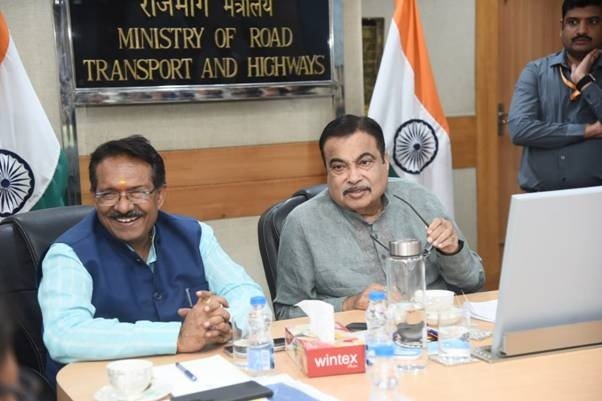
NEW DELHI — In a comprehensive move to upgrade road asset quality and ensure grid resilience ahead of the monsoon, Union Minister for Road Transport and Highways Shri Nitin Gadkari chaired high-level review meetings in New Delhi to audit the progress, maintenance, and structural safety of 7,770 kilometers of National Highway networks.
The extensive performance review evaluated 4,931 km of highways in Telangana, 2,035 km in the Union Territory of Jammu & Kashmir, and 804 km in the Union Territory of Ladakh. Minister of State for Road Transport and Highways, Shri Harsh Malhotra, was also present to streamline executive clearances.
Data-Driven Audits Powered by Public Feedback
Shifting away from routine administrative briefings, the Ministry executed this performance audit by cross-referencing official metrics with real-time field data:
-
Multi-Channel Inputs: The review combined on-ground reporting from officials at the Ministry of Road Transport & Highways (MoRTH), NHAI, and NHIDCL with direct user feedback sourced from media reports, public complaints, and social media platforms.
-
Contractor Accountability: Project developers and construction concessionaires were pulled into the review to address execution bottlenecks, construction defects, and lingering maintenance delays.
-
Technological Shift: Minister Gadkari directed executing agencies to deploy advanced construction technologies and modern engineering practices to enhance asset durability, maximize riding comfort, and lower the lifetime maintenance costs of major freight corridors.
Region-Wise Breakdown of Monitored Highway Assets
| State / Union Territory | Monitored Network Length | Primary Development & Connectivity Focus |
| Telangana | 4,931 Km | Industrial freight corridors, state-wide economic zones, and high-density commuter arteries. |
| Jammu & Kashmir | 2,035 Km | All-weather strategic routes, high-altitude border connectivity, and tourism-dependent corridors. |
| Ladakh | 804 Km | Critical geopolitical corridors, rugged high-altitude logistics, and extreme-weather resilient infrastructure. |
High-Priority Monsoon Preparedness Mandate
With the seasonal rains advancing, Minister Gadkari placed critical focus on climate-proofing ongoing and operational highway stretches to prevent seasonal economic disruptions:
-
Drainage and Slope Engineering: Officials received strict directives to complete preventive and mitigation structural works, including advanced slope stabilization in hilly terrains to prevent landslides, and effective drainage clearing along plain corridors.
-
Rapid-Response Deployment: Contractors must station emergency machinery, clearing crews, and rapid-response units at vulnerable transit chokepoints to quickly resolve weather-related disruptions.
-
Maintenance Freezes: The ministry emphasized that maintaining uninterrupted connectivity, structural resilience, and high commuters-safety baselines across these 7,770 kilometers remains a non-negotiable objective for all regional executing boards.
