



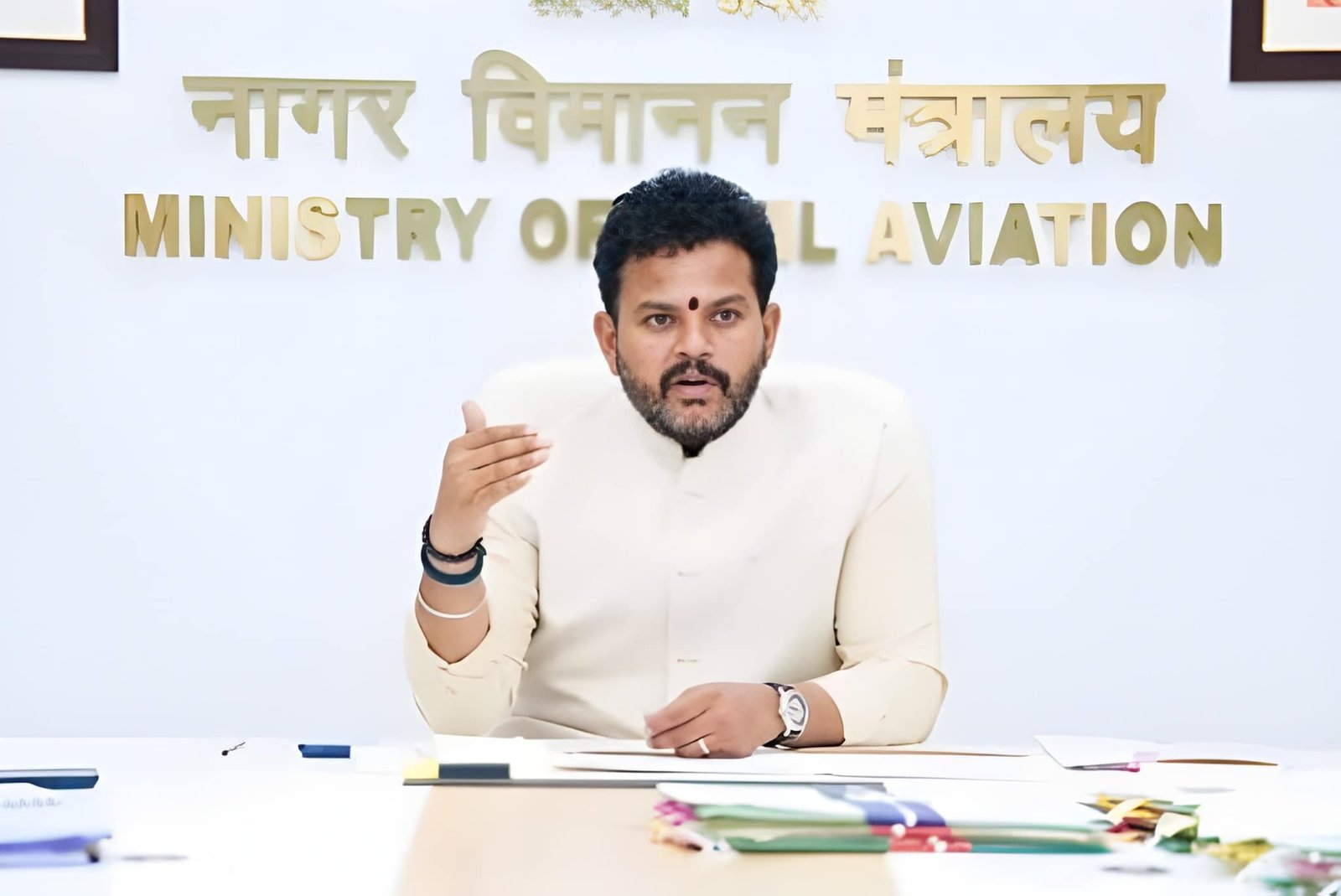
VARANASI / NEW DELHI — In a major structural shift aimed at turning India into a dominant global aviation hub, Union Minister of Civil Aviation Shri Ram Mohan Naidu Kinjarapu officially launched the nation’s first ‘Easy Connect’ flight under the newly formulated Hub-and-Spoke framework.
The inaugural flight took off from the Lal Bahadur Shastri International Airport in Varanasi on June 25, 2026. The milestone signals a broader strategic push by the Ministry of Civil Aviation (MoCA) to decentralize international travel, offering passengers from Tier-II and Tier-III cities a single-point checkout for global destinations.
Redefining the Passenger Pipeline: Single-Point Clearance
Under the newly introduced ‘Easy Connect’ framework, the domestic “spoke” airport effectively serves as the international point of origin. This mechanism significantly reduces layover friction at major metropolitan gateways:
-
Integrated Formalities: International travelers commencing their journeys from a Tier-II or Tier-III city (such as Varanasi) complete all baggage check-in, immigration, and customs clearances at the spoke airport itself before boarding.
-
Seamless Transit: Upon landing at a designated national hub airport (such as New Delhi), passengers bypass the traditional congestion of mid-transit terminal security and customs queues, transitioning straight to their international connection.
To ensure stringent operational integrity and prevent terminal intermixing, the Ministry has integrated specific security protocols. Both legs of the domestic-international route are classified strictly under international security operations. Passengers are issued separate physical boarding passes clearly marked with distinct domestic (D) and international (I) identifiers.
Economic Projections: Multi-Trillion Dollar Long-Term Vision
The Hub-and-Spoke model forms the bedrock of India’s long-term aviation roadmap, which targets capturing the bulk of home-grown international traffic by 2030 and transforming India into the preferred global transit choice by 2047.
According to comprehensive feasibility studies undertaken by the Ministry of Civil Aviation, the systemic shift to an integrated hub ecosystem is projected to yield massive economic returns:
| Target Horizon | Projected Job Creation (Direct & Indirect) | Projected GDP Contribution |
| By 2030 | ~4,00,000 (0.4 Million) | USD 30 Billion |
| By 2047 | ~16,000,000 (16 Million) | USD 1.4 Trillion |
“Today we take a major step forward towards realising our vision of making air travel more accessible and building a future-ready, self-reliant Indian aviation industry,” stated Civil Aviation Minister Ram Mohan Naidu. “Regardless of the city one lives in India, one can begin their international journey from their home city and travel across the globe with ease and confidence, on India’s own wings.”
High-Level Institutional Attendance
The inaugural launch ceremony was heavily attended by the top brass of India’s aviation and corporate sectors, underscoring the high-priority nature of the initiative. Key dignitaries present alongside the Minister included:
-
Shri Samir Kumar Sinha, Secretary, Ministry of Civil Aviation
-
Shri Puneet Kansal, Additional Secretary, Ministry of Civil Aviation
-
Shri Vipin Kumar, Chairman, Airports Authority of India (AAI)
-
Shri Campbell Wilson, CEO & Managing Director, Air India
Following the successful rollout in Varanasi, the Ministry has confirmed that advanced plans are already in motion to scale the ‘Easy Connect’ Hub-and-Spoke framework across various other Tier-II and Tier-III regional airports nationwide.
