



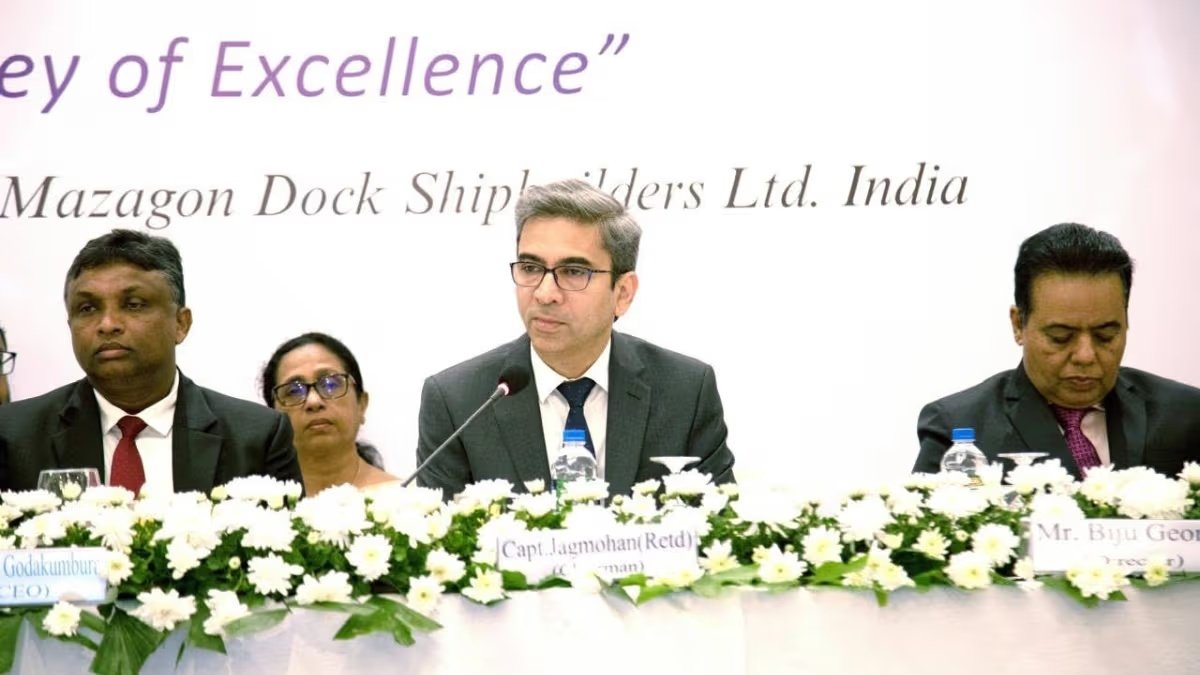
NEW DELHI — Marking a paradigm shift in Indian Ocean maritime cooperation, Colombo Dockyard PLC (CDPLC) has conducted its first Annual General Meeting (AGM) under a new Indian management framework following its landmark 51% acquisition by Mazagon Dock Shipbuilders Limited (MDL).
The transition represents a historic first, marking the inaugural cross-border acquisition of a foreign shipyard by an Indian defense Public Sector Undertaking (PSU).
Restructured Leadership and Corporate Overhaul
The AGM was spearheaded by Captain Jagmohan (Retd.), Chairman and Managing Director of MDL, who has officially taken the helm as the Chairman of Colombo Dockyard PLC.
To stabilize the Sri Lankan yard after a period of intense economic headwinds, MDL has placed a fresh executive team onto CDPLC’s board. Public and minority shareholders expressed strong optimism during the session regarding the newly integrated leadership, which is tasked with enforcing strict corporate governance and elevating production efficiency at the Colombo facility.
Immediate Commercial Successes
The synergy between MDL’s technical prowess and Colombo’s geographic location has already yielded significant financial breakthroughs:
-
$150M European Deal: The restructured shipyard recently secured its largest-ever commercial export order—a $150 million contract to construct two high-tech cable-laying vessels for European telecom giant Orange Marine.
-
Preferred Hub for Indian Fleets: CDPLC has inked a Memorandum of Understanding (MoU) with the Dredging Corporation of India (DCI) to serve as its preferred drydocking and refitting base. Advanced service talks are also underway to secure similar arrangements with the Shipping Corporation of India (SCI).
Geo-Strategic Impact in the Indian Ocean
Operational control of Colombo Dockyard gives India a permanent industrial anchorage at the Port of Colombo, a critical maritime node that handles over 50% of India’s transshipment cargo. By managing a vital commercial and naval repair hub at this location, New Delhi secures its regional supply chains and reinforces its SAGAR (Security and Growth for All in the Region) policy, cementing India’s role as the primary maritime security and infrastructure anchor in the region.
