



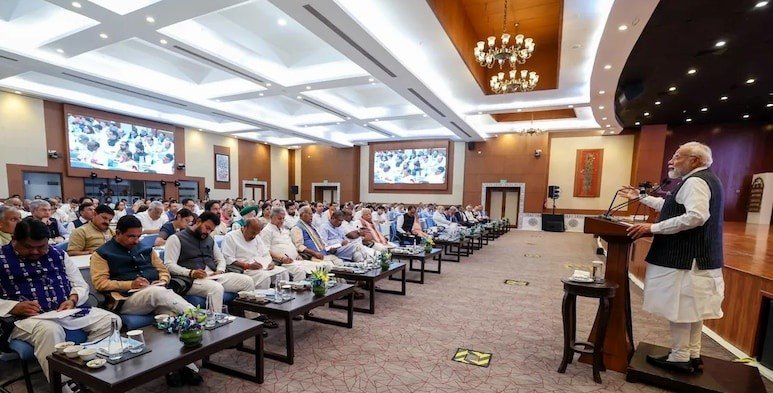
NEW DELHI — Fresh off an official diplomatic visit to Seychelles, Prime Minister Narendra Modi convened a high-stakes, closed-door assembly with the secretaries of all central ministries today.
The apex interaction functions as a vital mid-term performance evaluation and stocktaking exercise, signaling an intense, top-down push to eliminate bureaucratic bottlenecks and rapidly improve India’s ease-of-doing-business index.
Executive Alignment and Operational Velocity
This session marks the Prime Minister’s second major institutional engagement with the permanent civil service leadership in less than two months, following a comprehensive joint session of the Union Council of Ministers and central secretariats held on May 21.
During today’s deliberations, the Prime Minister explicitly directed the administrative leadership to implement lean governance practices across all Union departments.
Core Governance Directives:
-
Decisive File Movement: Eliminating redundant administrative layers to ensure policy drafts and project clearances transition rapidly through the executive chain.
-
Optimized Resource Productivity: A mandate to all central secretariats to generate high-impact regulatory output within compressed timelines.
-
Regulatory De-cluttering: Dismantling legacy operational friction points to foster a more predictable environment for domestic and foreign corporate investments.
The Administrative Architecture
The extensive review bridges the gap between high-level policy formulation and on-ground departmental execution across the vast federal machinery.
Executive Oversight Framework:
-
Chairing Authority: Prime Minister Narendra Modi
-
Core Participants: Permanent Secretaries of the Central Ministries
-
Governance Footprint: Aligning administrative objectives with a political executive branch currently consisting of 30 Cabinet Ministers, 5 Ministers of State (Independent Charge), and 36 Ministers of State.
Strategic Implications for the Corporate Ecosystem
By directly addressing the permanent bureaucracy, the Prime Minister’s office is setting an aggressive operational tempo for the second half of the fiscal year.
For industries closely monitoring India’s regulatory environment—particularly across infrastructure, digital enterprise, and manufacturing—this high-level directive indicates that upcoming policy rollouts will heavily prioritize digitized single-window clearances, minimized compliance burdens, and stricter departmental accountability for delayed project timelines.
