



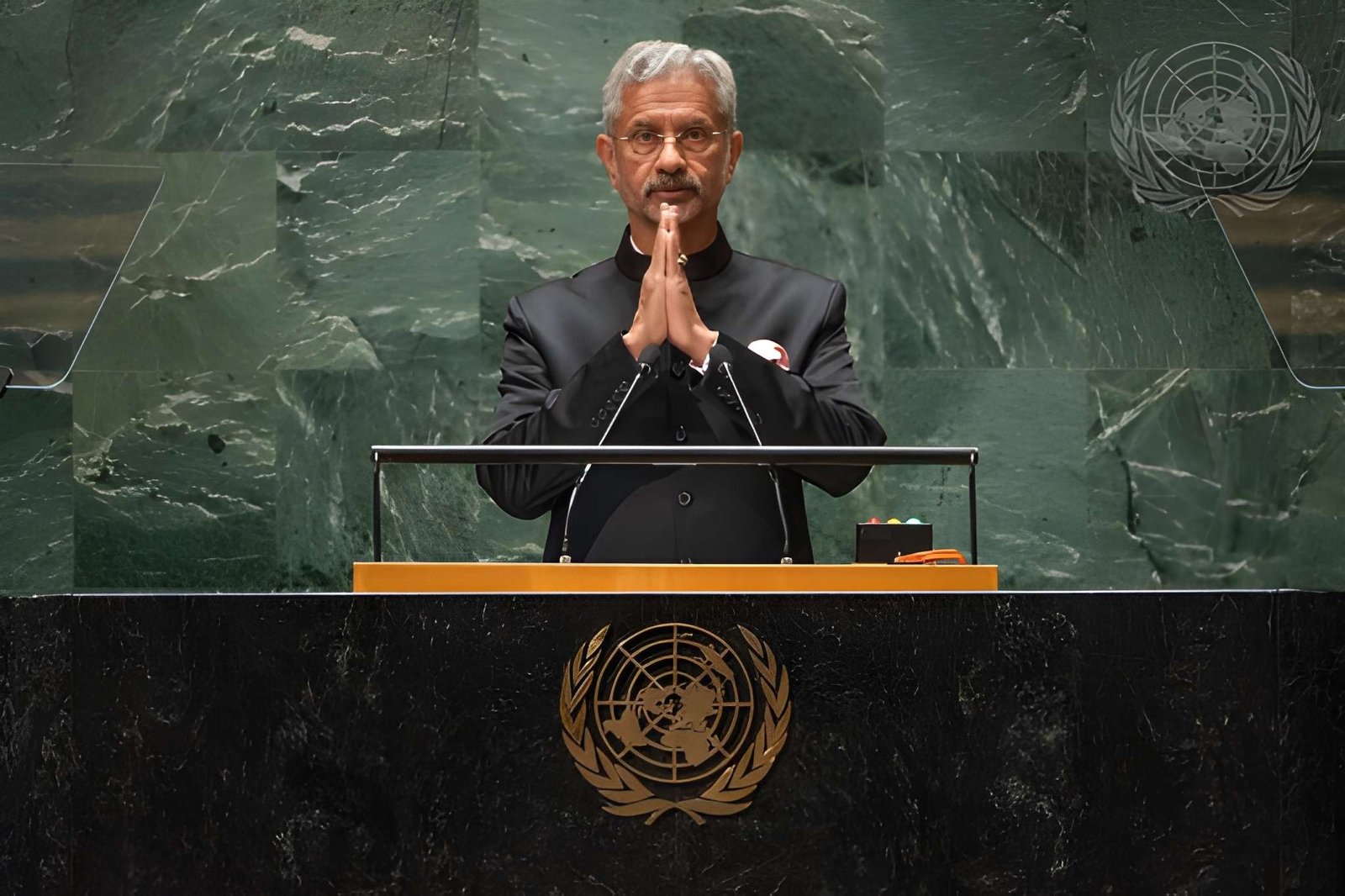
NEW YORK — India has formally entered the race for a non-permanent seat on the United Nations Security Council (UNSC) for the 2028–29 term. External Affairs Minister Dr. S. Jaishankar officially launched the national campaign, themed “SHANTI,” during a high-profile diplomatic reception at the UN Headquarters in New York.
The diplomatic push begins against the backdrop of deep global volatility, with ongoing conflicts in Europe and the Middle East highlighting the urgent need for robust, representative leadership within the UN’s primary security body.
Defining the ‘SHANTI’ Doctrine
To steer its two-year candidacy, New Delhi has introduced the SHANTI framework—a Hindi word meaning “peace”—reimagined as a multilateral guiding principle:
Securing Holistic Advancement through Norms, Trust, and Integrity.
Addressing gathered UN envoys, diplomats, and senior officials, Minister Jaishankar stated that the world is currently facing a “profound paradox” where unprecedented human capability is closely shadowed by intense conflict and instability.
Strategic Pillars of the Campaign
-
Equitable Representation: Advocating for a global order where the voices and development priorities of the Global South are systematically integrated into decision-making.
-
Modernizing Peacekeeping: Upgrading UN peacekeeping mandates to meet contemporary and future asymmetric warfare challenges. As one of the largest historic contributors, India has sent nearly 300,000 personnel to approximately 50 missions since the UN’s inception.
-
Choking Terror Networks: Driving coordinated global policies to combat international terrorism by targeting and choking the financial resources that feed it.
-
Securing Global Commons: Championing safe, unhindered transit along vital maritime lifelines and establishing clear global guardrails to prevent the misuse of emerging technologies.
The Road to the 2027 Election
If successful, this will mark India’s ninth tenure as a non-permanent member of the UNSC, with its most recent term concluded during the 2021–22 cycle.
-
The Voting Timeline: The UN General Assembly will conduct elections in June 2027 during its 82nd session.
-
The Competitor: India will face a direct contest against Tajikistan for the single coveted seat allocated to the Asia-Pacific Group category.
A Parallel Push for Structural Reform
While campaigning for the temporary seat, India continues to firmly assert that short-term non-permanent assignments do not solve the structural inertia of the 15-nation Council.
Prime Minister Narendra Modi recently reiterated to the Parliament of Indonesia that reforms to the UNSC can no longer be delayed if the body wishes to reflect modern geopolitical realities rather than those of 1945.
India has warned the international community that expanding only the non-permanent membership category would verge on a “failure”. Doing so leaves the ultimate decision-making power structure strictly concentrated within the five permanent, veto-wielding members (P5). New Delhi maintains that the “nothing is agreed until everything is agreed” approach must not be weaponized by status-quoist powers to entrench existing systemic inequities.
Diplomatic Itinerary: Following the New York launch and a bilateral meeting with UN Secretary-General António Guterres, Minister Jaishankar is scheduled to fly directly to Brussels. On July 14–15, he will co-chair the 3rd India-EU Trade and Technology Council meeting, further consolidating India’s trade and security ties with European partners.
