



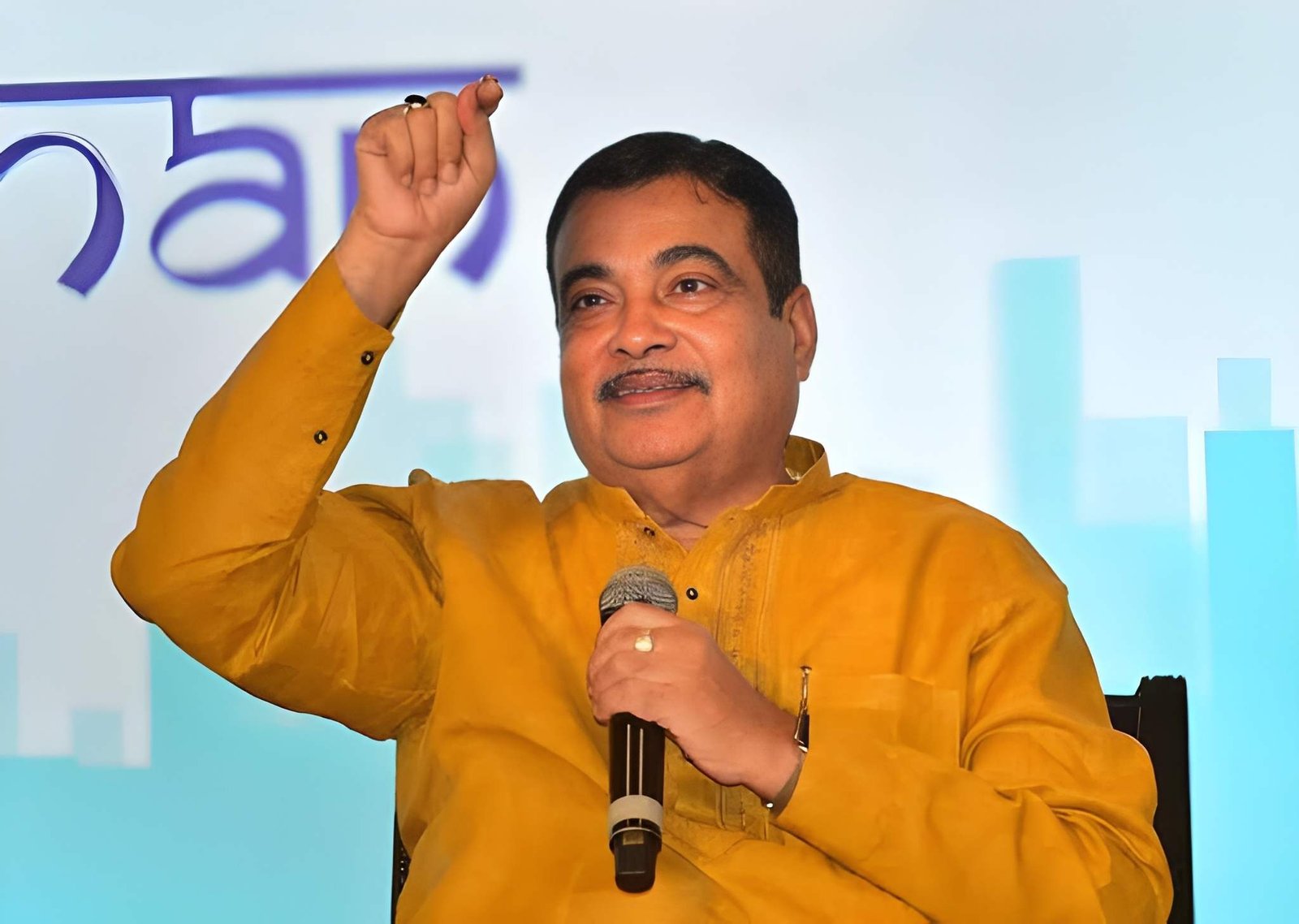
GANDHINAGAR — In a major step toward a zero-emission transport network, Union Minister for Road Transport and Highways Nitin Gadkari announced that the central government has initiated pilot trials for hydrogen-fueled commercial vehicles across 10 strategic highway corridors in India.
Speaking at the Prawaas 5.0 conference in Gandhinagar, Gujarat, Gadkari reiterated his long-standing position that green hydrogen stands as the definitive “fuel of the future” for heavy-duty, long-haul commercial transportation.
The 10 Experimental Hydrogen Corridors
The Ministry’s pilot program maps out key commercial freight and passenger routes to stress-test hydrogen infrastructure, vehicle range, and durability under varied geographic conditions:
-
Greater Noida – Delhi – Agra
-
Ahmedabad – Vadodara – Surat
-
Pune – Mumbai
-
Bhubaneswar – Konark – Puri
-
Sahibabad – Faridabad – Delhi
-
Jamshedpur – Kalinga Nagar
-
Thiruvananthapuram – Kochi
-
Kochi – Edappally
-
Jamnagar – Ahmedabad
-
Visakhapatnam – Bayyavaram (NH-16)
Revamping the Public Transit Ecosystem
The Union Minister highlighted a critical supply-demand deficit in India’s public transportation backbone. While the country structurally requires close to 3,00,000 new buses annually to support its population density, current domestic manufacturing capacity sits constrained at just 70,000 to 80,000 units.
Gadkari explicitly challenged automotive original equipment manufacturers (OEMs) to sharply ramp up capacity while introducing world-class passenger comfort features at accessible price points. He also sent a direct message to EV manufacturers regarding falling raw material costs.
“Electric bus manufacturers must pass on the financial benefits of declining global lithium-ion battery prices directly to the end consumers. The ministry is actively working on models to bring down power costs for charging heavy commercial vehicles.”
— Nitin Gadkari, Union Minister
The Economic Toll of Road Safety
Shifting focus to safety regulations, Gadkari termed India’s current accident data an ongoing national crisis. The country logs roughly 5,00,000 road accidents and 1,80,000 fatalities each year. Crucially, about 66% of these victims belong to the productive 18-36 age demographic, inflicting an economic loss equivalent to 3% of India’s annual GDP.
To streamline operations and improve compliance for the 600+ registered bus body manufacturers across the country, the Ministry introduced major ease-of-business reforms:
-
50% Reduction in mandatory vehicle testing charges.
-
Approval turnaround times slashed from 16 weeks down to 6 weeks.
The Big Picture: The policy push aligns with the immense financial expansion of the domestic automotive sector. Over Gadkari’s ministerial tenure, India’s automobile market has grown from a ₹14 lakh crore ecosystem into a massive ₹22 lakh crore industry, cementing its position as the third-largest automotive market globally.
