



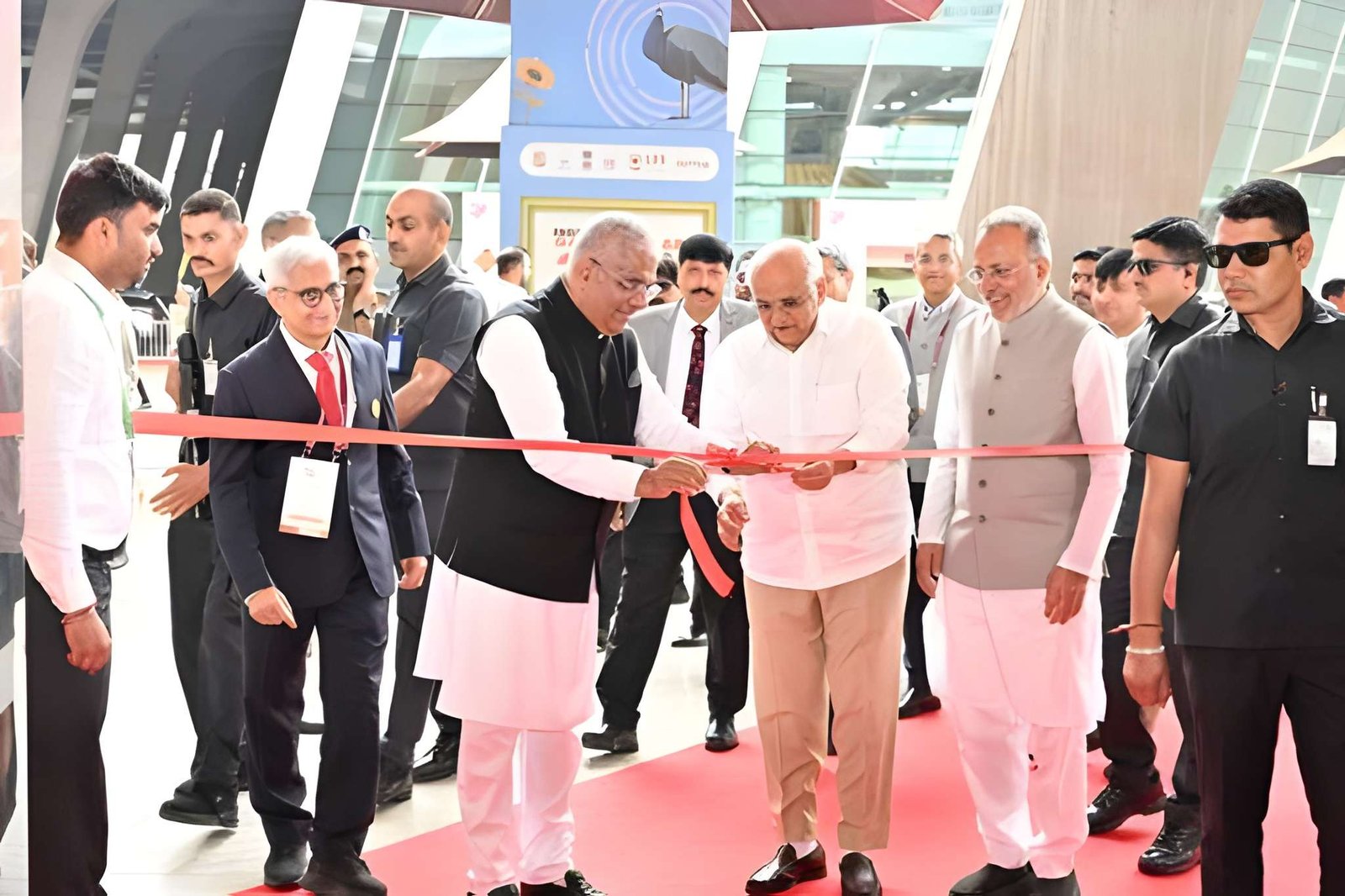
GANDHINAGAR — Union Minister for Environment, Forest and Climate Change Bhupender Yadav and Gujarat Chief Minister Bhupendrabhai Patel inaugurated the World Circular Economy Forum (WCEF) 2026 at Mahatma Mandir in Gandhinagar.
Marking the first time South Asia has hosted the global summit, the four-day event runs from September 15 to 18, 2026 under the theme “Circular Economy: Transition for People and Prosperity.”
Key Ministerial Address & Regulatory Milestones
-
India’s Circularity Philosophy: Delivering the keynote address, Environment Minister Bhupender Yadav highlighted that circular economy principles are deeply rooted in traditional Indian practice: “What we now describe in policy language as circularity was once simply common sense in everyday Indian life — repair before replace, reuse before discard, and recover before waste.”
-
Extended Producer Responsibility (EPR) Scale: Detailing India’s regulatory progress, Yadav noted that as of August 2026, over 83,000 producers and 4,802 recyclers are registered under various national EPR frameworks, processing nearly 482.24 lakh metric tonnes of waste across regulated streams.
-
Global Collaboration & Mission LiFE: Emphasizing international knowledge, finance, and technology transfers, Yadav cited India’s Resource Efficiency and Circular Economy Industry Coalition (RECEIC) launched during its G20 Presidency, alongside its current BRICS Chairship priorities aligning circularity with sustainable lifestyles.
State & Diplomatic Commitments
-
Vasudhaiva Kutumbakam: Gujarat CM Bhupendrabhai Patel asserted that WCEF 2026 must embody global unity by developing scalable, practical circular solutions, highlighting regional initiatives like converting Somnath Temple offerings into reusable resources and local employment.
-
International Participation: Senior diplomatic delegations, including Mikko Kivikoski (Ambassador of Finland to India) and Marieke Spijkerboer (Deputy Director-General, Netherlands Ministry of Economic Affairs and Climate), outlined national circular targets — including Finland’s 2035 resource caps and the Netherlands’ roadmap to become fully circular by 2050.
Forum Highlights & Event Profile
-
Global Footprint: Co-organized by India’s Central Pollution Control Board (CPCB), MoEF&CC, the Government of Gujarat, and Finland’s Sitra, the forum brings together over 3,600 stakeholders from 62 countries.
-
Exhibition & Knowledge Releases: The dignitaries inaugurated an on-site expo featuring 135 national and international exhibitors, while releasing two policy handbooks: ‘Best Practices for Reuse of Treated Sewage’ and ‘Driving Sustainability – A Guide to India’s Circular Economy and EPR Initiatives.’
