



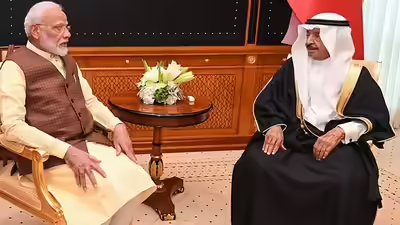
NEW DELHI — Prime Minister Narendra Modi held a high-level telephonic discussion with His Majesty King Hamad Bin Isa Al Khalifa of Bahrain on March 20, 2026. While the call was initiated to exchange Eid al-Fitr greetings, the conversation quickly pivoted to the deteriorating security situation in West Asia and its systemic threats to the global economy.
Condemnation of Infrastructure Attacks
In a pointed diplomatic statement, Prime Minister Modi condemned recent strikes targeting energy and civilian infrastructure in the region.
-
The “3F” Security Concern: The Prime Minister underscored that such attacks have a direct and adverse impact on global Food, Fuel, and Fertilizer (3F) security.
-
Economic Stability: With global oil prices nearing $100 per barrel due to regional volatility, the leaders discussed the necessity of shielding essential supply chains from military targeting.
Maritime Security & Freedom of Navigation
A central theme of the dialogue was the safety of international waters, particularly given the ongoing tensions impacting the Strait of Hormuz and the Red Sea:
-
Open Shipping Lanes: Modi reiterated India’s firm stance on ensuring freedom of navigation and keeping vital shipping lines secure for global trade.
-
Indian Interest: As a major energy importer and a key player in the India-Middle East-Europe Economic Corridor (IMEC), India has a direct stake in preventing maritime blockades.
The Indian Diaspora in Bahrain
The Prime Minister extended his gratitude to King Hamad for the continued support and well-being of the Indian community in Bahrain, which remains one of the largest expatriate groups in the Kingdom.
Strategic Context
The call comes at a time of “unmatched coordination” between India and its West Asian partners as they navigate the fallout of the U.S.-Israel-Iran conflict. By engaging with Bahrain—a key member of the GCC—India is reinforcing its role as a stabilizing force and a “Vishwa Mitra” (Global Friend) advocating for dialogue over disruption.
