



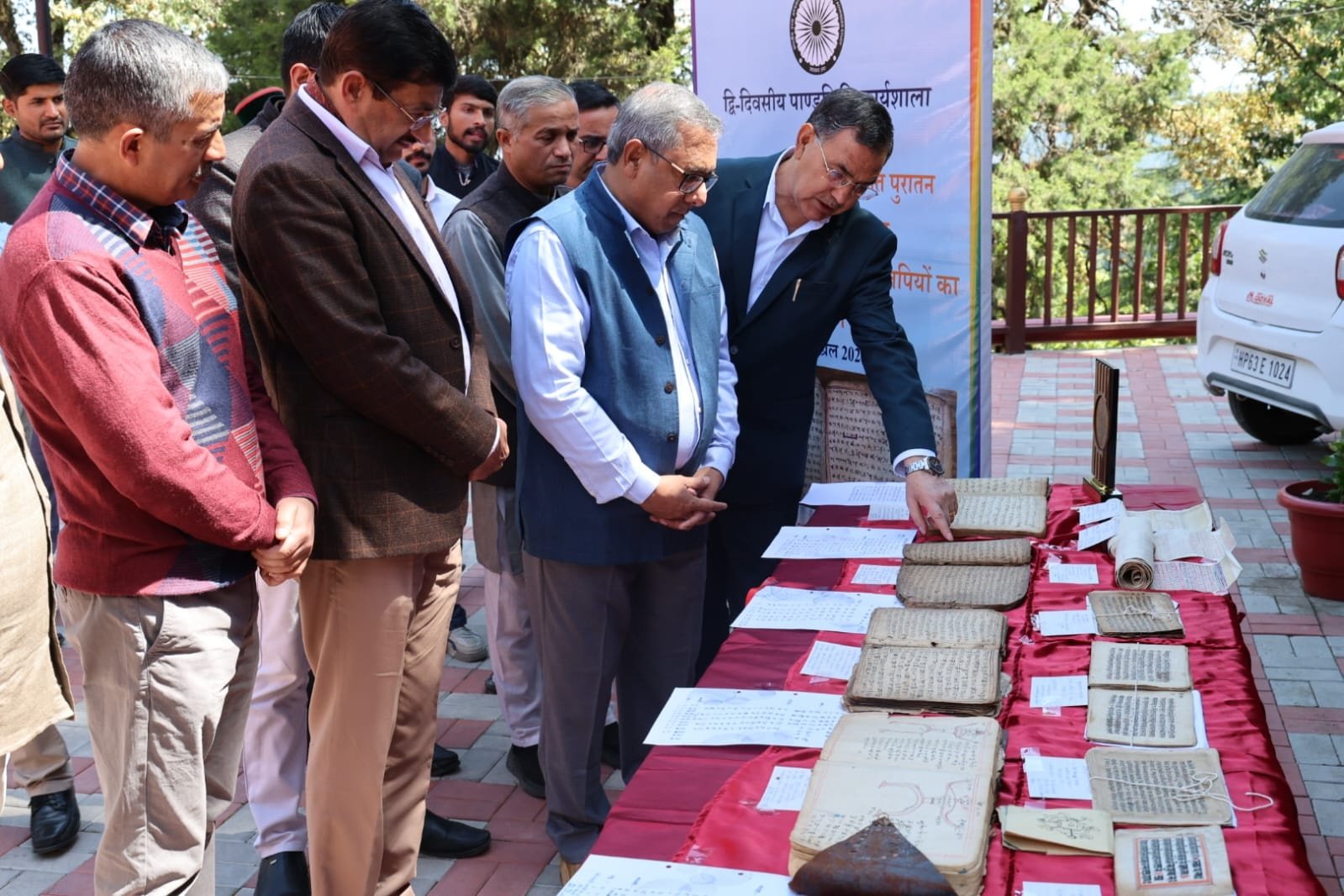
SHIMLA — A specialized two-day workshop titled “Heritage of Ancient Writing Traditions in the Western Himalaya” commenced today at the Indian Institute of Advanced Study (IIAS), Rashtrapati Nivas. The event, running from April 21–22, 2026, aims to revitalize the study and preservation of the unique linguistic heritage of Himachal Pradesh.
The workshop focuses on the evolution and conservation of manuscripts written in scripts such as Pabuchi, Tankri, Pandavani, and Chandvani—all of which trace their roots back to the ancient Sharada script.
Preserving the Indian Knowledge System
Academics and researchers at the event emphasized that these manuscripts are more than just historical artifacts; they are repositories of the Vedas, Puranas, Jyotisha (astrology), and Ayurveda.
-
Conservation & Digitization: Chief Guest Prof. Himanshu Kumar Chaturvedi underscored the urgent need for scientific study and digital archiving to protect these “living expressions” of India’s intellectual tradition.
-
Keynote Insights: Prof. R.C. Sinha elaborated on the multi-dimensional study of ancient writing, while Prof. Om Prakash Sharma highlighted the relevance of Himalayan heritage to the broader Indian knowledge system.
-
Youth Engagement: Presiding over the session, Prof. Devdutt Sharma encouraged young scholars to enter the field of paleography and script studies to ensure these traditions do not fade into obscurity.
Highlights of the Inaugural Session
The workshop opened with a rare exhibition of manuscripts, providing attendees with a physical look at the delicate writing traditions of the Western Himalayas. The upcoming sessions are set to feature technical discussions on:
-
Reading Traditions: Decoding obscure scripts that have fallen out of common use.
-
Documentation: Creating a systematic record of surviving manuscripts held in private and institutional collections.
-
Regional Traditions: Exploring the localized evolution of scripts across various Himalayan valleys.
The event, moderated by Dr. Akhilesh Pathak, concludes tomorrow with further expert-led panels on technical conservation methods and regional script history.
