



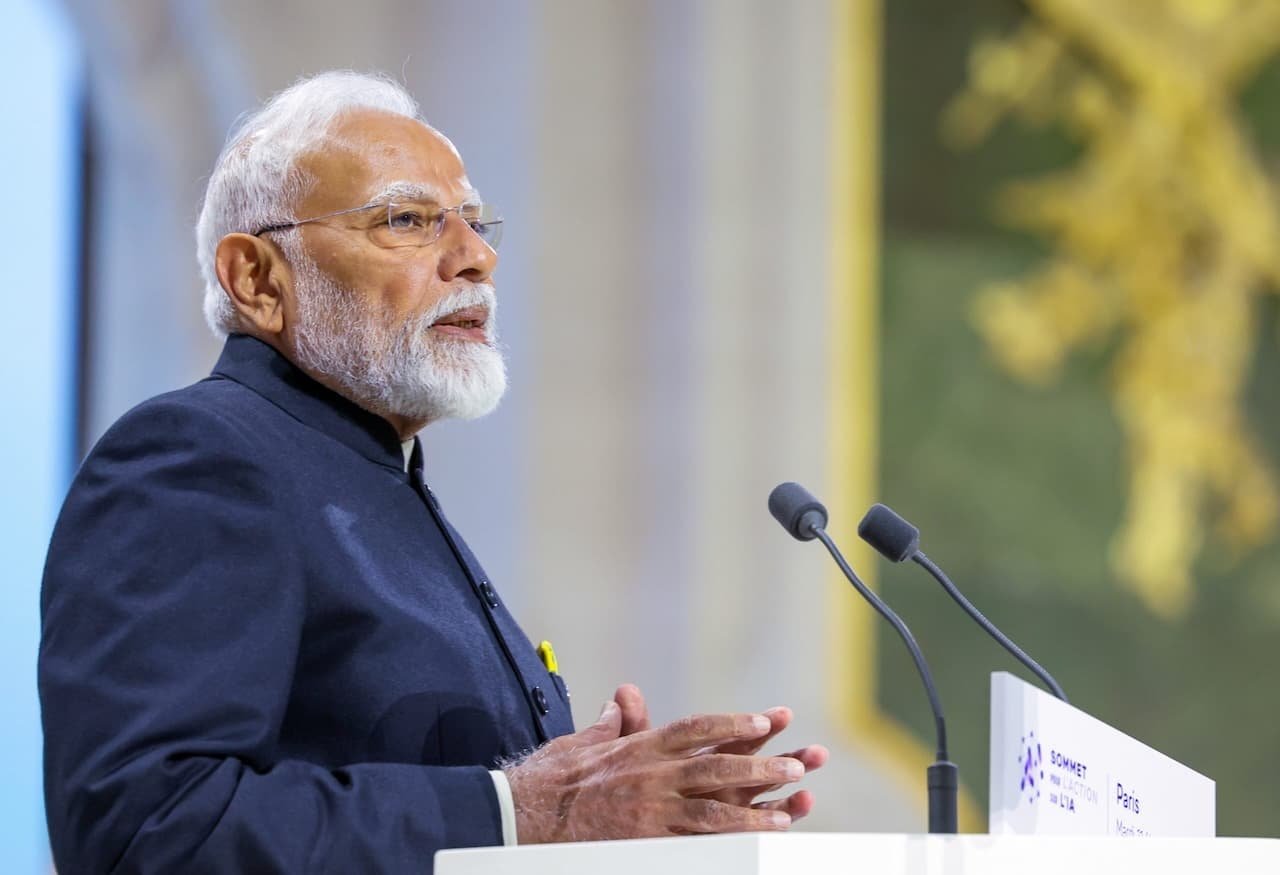
NEW DELHI: Marking a major administrative milestone, Prime Minister Narendra Modi on Monday highlighted a dozen years of sweeping socio-economic transitions across India, stating that the welfare of the poor and downtrodden has remained the absolute core of his government’s governance architecture.
The Prime Minister asserted that the administrative apparatus has been consistently guided by the philosophy of Antyodaya—the principle of prioritizing the development and upliftment of the last person standing in the socio-economic queue.
The Architecture of Dignity and Opportunity
Reflecting on the structural shift in public service delivery, the Prime Minister detailed a multi-layered matrix of flagship welfare schemes designed to shift marginalized populations from basic survival to systemic empowerment:
-
Financial & Direct Support: The deployment of Jan Dhan accounts synchronized with the Direct Benefit Transfer (DBT) pipeline to create an un-compromised financial inclusion layer.
-
Basic Infrastructure: The scaling of PM Awas Yojana (affordable housing) alongside the Swachh Bharat Mission (sanitation infrastructure) to instill residential security and public hygiene.
-
Health & Utilities: The rapid expansion of the Jal Jeevan Mission (providing piped, potable tap water to rural households) and Ayushman Bharat (the world’s largest publicly funded health assurance network).
“Every initiative has been driven by a simple objective of ensuring people have dignity and opportunity… This is how the journey of furthering Garib Kalyan has become a collective movement towards human empowerment and realising our dream of a Viksit Bharat.” — Prime Minister Narendra Modi
The Digital Antyodaya: Eradicating Intermediary Leakages
A critical theme of the Prime Minister’s assessment was the role of home-grown technology in modernizing public distribution networks. Modi emphasized that the convergence of digital public infrastructure (DPI) with fiscal transfers has permanently altered the relationship between citizens and the state.
By building direct, transparent data lines from the central treasury to the individual beneficiary bank accounts, the government has successfully eliminated structural leakages and bureaucratic delays that historically plagued rural welfare allocations.
This tech-driven efficiency, the Prime Minister pointed out, has not only optimized public spending but has significantly bolstered public trust in institutional governance, serving as the foundational floor for the broader strategic roadmap toward a Viksit Bharat (Developed India).
