



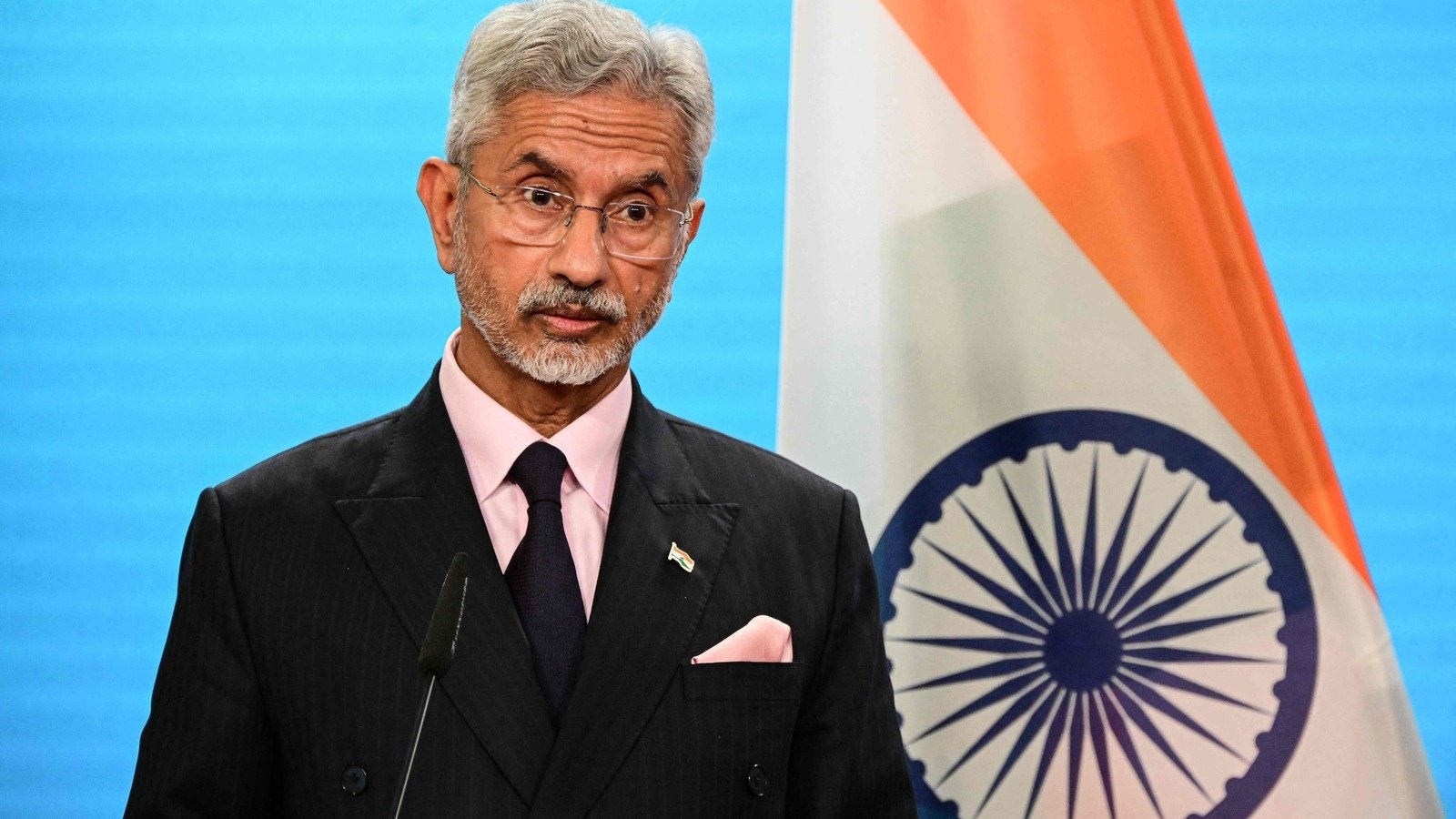
HELSINKI — External Affairs Minister S. Jaishankar has delivered a pointed critique of Western foreign policy contradictions, defending India’s decision to source Russian crude oil as a calculated move driven by global energy stability and essential national interest.
Speaking at a panel discussion on “Emerging Powers and the New Geopolitical Competition” at the Kultaranta Talks in Finland, Jaishankar rejected Western moralizing. He revealed that Washington had initially requested Indian buyers to absorb Russian supplies to prevent a catastrophic spike in global oil prices.
Exposing the Policy Logic of Global Energy
Addressing a journalist’s contention that New Delhi has been “too sympathetic” to Moscow, Jaishankar stripped away the ideological rhetoric often used to describe international energy flows. He highlighted that the United States frequently alters its stance on trade restrictions based entirely on its own economic landscape or unexpected geopolitical crises.
“Right now, if you see, after having first put tariffs on us for buying Russian oil, the US then again lifted its sanctions,” Jaishankar remarked, urging a more clear-eyed look at international trade. “Let’s not pretend there’s some great principle involved here. I mean it is on-off, on-off, do it when it suits us, don’t do it when it doesn’t suit us… We are all adults in the room, we know what the game is.”
The Foreign Minister detailed the exact structural shifts that upended traditional supply lines following the outbreak of the Russia-Ukraine conflict in 2022:
-
The Price-Control Strategy: Jaishankar revealed that in the early stages of the conflict, the U.S. explicitly encouraged India to buy Russian crude to stabilize the market and absorb supply shocks.
-
Market Displacement: “Much of the oil available in the market was from Russia because Europeans were essentially buying up the Middle East oil, which was our traditional supplier,” he explained. “Circumstances pushed us in a certain direction.”
-
Commercial Prerogative: Emphasizing that securing affordable resources is non-negotiable for a developing economy, he noted, “I buy oil based on cost and availability,” describing Russia as a highly consistent partner.
Balancing Tariffs, Waivers, and National Priority
The trade relationship between Washington and New Delhi has seen notable turbulence. The U.S. administration previously introduced heavy tariffs on Indian goods—reaching up to 50%—including an explicit 25% economic penalty aimed at India’s crude imports from Russia.
Following strategic diplomatic engagements, those duties were steadily unwound, falling first to 18% during interim trade framework discussions in February, and eventually landing at 10% following a U.S. Supreme Court ruling.
Furthermore, as new instability erupted across the Middle East and Iran, Washington issued temporary waivers on Russian seaborne oil to insulate vulnerable economies from inflation. However, New Delhi has clarified that its energy strategy remains entirely independent of Western regulatory cycles.
“Regarding the American waiver on Russia, I would like to emphasise that we have been purchasing from Russia earlier… before waiver also, during waiver also, and now also.”
— Sujata Sharma, Joint Secretary, Ministry of Petroleum and Natural Gas
Challenging Continental Defense Discrepancies
Jaishankar extended his critique to continental Europe, pointing out what he termed “moral ambiguity” regarding regional security and the global arms trade.
When questioned on why India maintains a neutral diplomatic posture toward conflicts on European soil, the minister turned the focus toward Europe’s long-standing arms export policies in South Asia.
“No European country has been attacked with Indian weapons. I wish I could say that for Europe weapons vis-à-vis India,” Jaishankar stated bluntly. “Europe sells weapons, which are used to attack India. Not just now but for many years. We Indians have never done anything to endanger Europe. I think that’s a reasonable point.”
The minister’s statements signal a deeply pragmatic era for Indian foreign policy—one rooted in strategic autonomy, supply chain resilience, and a firm refusal to let third-party sanctions dictate domestic economic choices.
