



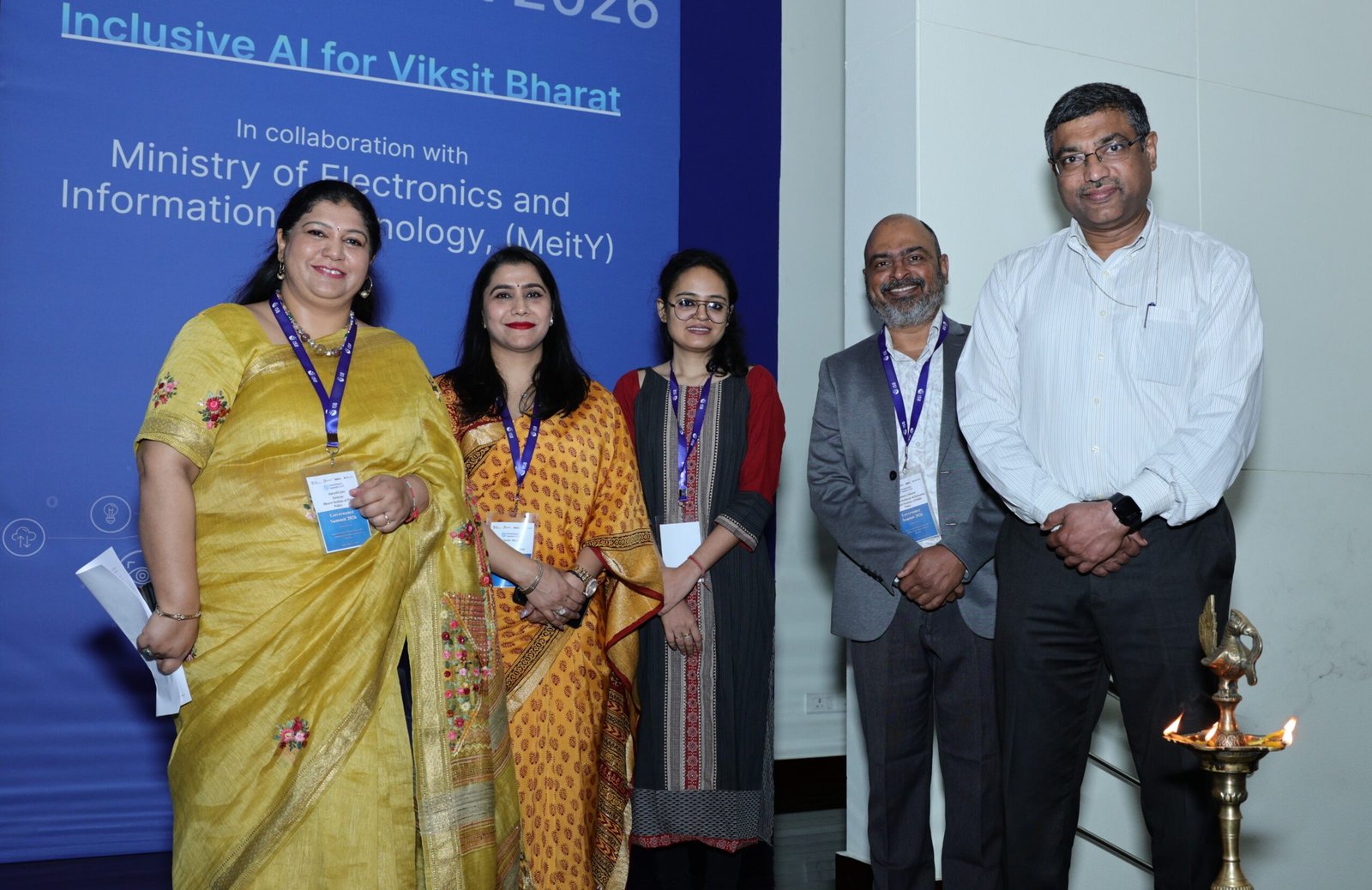
MOHALI: Moving to align artificial intelligence with national development goals, the Ministry of Electronics and Information Technology (MeitY), in collaboration with the Bharti Institute of Public Policy at the Indian School of Business (ISB), hosted the Governance Summit 2026: Inclusive AI for Viksit Bharat.
The fourth edition of the high-level, day-long summit was convened on May 23, 2026, at the ISB Mohali campus. The event brought together senior policymakers, tech executives, academics, and civil society leaders to construct actionable frameworks for deploying AI responsibly across public and private sectors.
The Vision: Equitbale Growth and Civic Safeguards
Delivering the inaugural keynote address, Shri S. Krishnan, Secretary, MeitY, reaffirmed the Union Government’s commitment to building a democratic AI architecture that reaches the margins of the digital economy:
“Artificial intelligence presents India with a transformative opportunity to enhance productivity, improve governance, and expand access across sectors such as healthcare, education, manufacturing, and financial inclusion. While concerns around the impact of AI on cognitive jobs are understandable, India is uniquely positioned to harness this technology for inclusive growth.”
Complementing the state’s vision, Prof. Ashwini Chhatre, Executive Director of the Bharti Institute of Public Policy at ISB, framed AI as a generational national mission. He highlighted that translating AI ambitions into real-world governance requires a strict focus on reducing economic inequality, capitalizing on leapfrogging opportunities, and protecting workers through robust social security mechanisms and affirmative regulatory action.
Thematic Architecture of the Summit
The summit’s agenda was divided into four distinct panel tracks and a dedicated operational roundtable, focusing on immediate socioeconomic priorities:
-
Digital Commerce Expansion: Scaling automated, vernacular, and open-network tools (such as ONDC) to onboard micro-entrepreneurs into the formal economy.
-
Online Safety for Vulnerable Groups: Developing advanced algorithmic detection systems to combat deepfakes, cyberbullying, and systemic harassment targeting women and children.
-
Healthcare Accessibility & Affordability: Deploying AI-assisted diagnostic models to rural clinics, optimizing supply chains for essential medicines, and lowering operational costs.
-
Job Creation & Digital Entrepreneurship: Restructuring skill-development programs to train the workforce for an AI-augmented job market while encouraging localized tech startups.
Last-Mile Delivery Roundtable
Running parallel to the main tracks, a specialized roundtable examined the technical and administrative hurdles of operationalizing AI for last-mile public service delivery.
The session map traced technology integration down the administrative ladder—from central ministries and state secretariats to municipal bodies and gram panchayats (village councils). The focus centered on using AI to streamline welfare distribution, automate local grievance redressal, and eliminate language barriers in accessing state documentation.
Cross-Sector Collaboration
Reflecting the multi-disciplinary approach required for national scale, the summit saw active participation from premier private corporates, public institutions, and international organizations:
-
Industry Leaders: Representatives from Reliance Retail, Mastercard, and Apollo Hospitals.
-
Academic & Research Hubs: Technical experts from IIT Madras and the host institution, ISB.
-
Law Enforcement & Development Bodies: Senior officials from the Punjab Police and delegates from UNICEF India, alongside key decision-makers from multiple central and state line ministries.
