



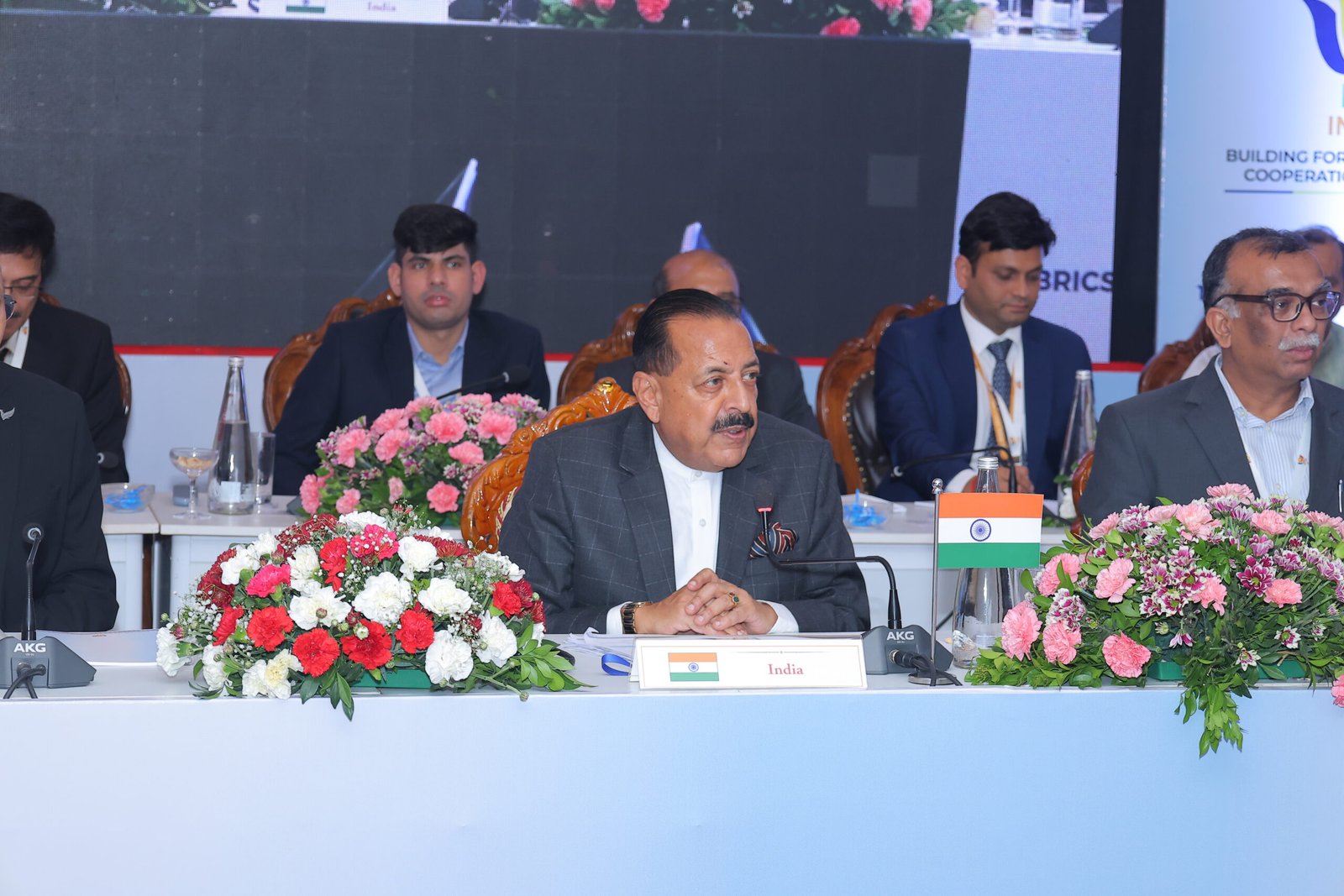
CHENNAI — The 14th BRICS Science Ministerial Meeting, chaired by India, concluded with the unanimous adoption of the landmark Chennai Declaration, establishing a humanity-first framework for multilateral cooperation in science, technology, and innovation (STI).
Union Minister of State Dr. Jitendra Singh announced the consensus, emphasizing a focus on sustainable development, capacity building for the Global South, and expanded mobility for young researchers. The declaration consolidates progress across 14 thematic working groups and establishes structural initiatives, including shared mega-science research networks and startup financing mechanisms, leading into China’s incoming chairship in 2027.
Key Commitments & Institutional Outcomes
-
The Chennai Consensus Framework: Establishes a people-centered STI agenda prioritizing sustainable growth, social inclusion, and accessible technology deployment across BRICS member states.
-
Shared Research Infrastructure: Operationalizes the BRICS Global Research Advanced Infrastructure Network (BRICS GRAIN) to facilitate cross-border access to mega-science facilities, joint technology development, and talent mobility.
-
BRICS Science & Research Repository: Launches a digital public good platform to map research institutions, open-access datasets, scientific talent, and collaborative project opportunities across member countries.
-
Entrepreneurship & Youth Innovation: Advances the BRICS Youth Startup Platform, expands the Young Scientist Forum, and outlines plans for a proposed BRICS Startup Innovation Fund to seed early-stage technology ventures.
-
Strategic Priority Sectors: Targets joint research across frontier domains, including High-Performance Computing (HPC), Artificial Intelligence, quantum technologies, biotechnology, ocean and polar sciences, and clean energy.
