



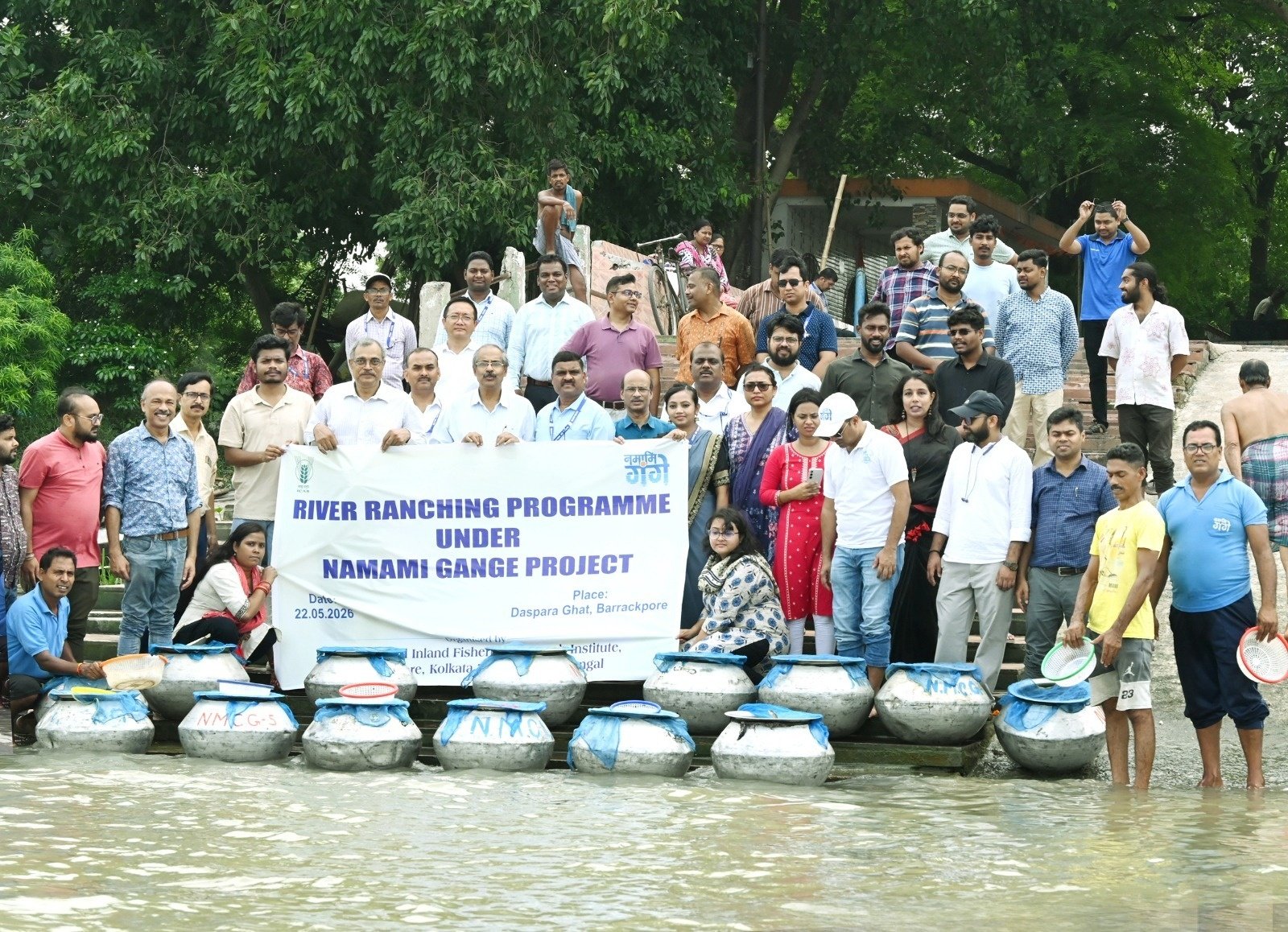
KOLKATA: Commemorating the International Day for Biological Diversity 2026, the ICAR-Central Inland Fisheries Research Institute (ICAR-CIFRI) executed a large-scale river ranching program at Daspara Ghat in the Lower Ganga.
The conservation drive, held on May 22, 2026, was conducted under the National Mission for Clean Ganga (NMCG) Phase-III project. The initiative highlights the central government’s science-driven approach to replenishing aquatic biodiversity and stabilizing riverine fisheries livelihoods along the Ganga basin.
Key Takeaways
-
Massive Fingerling Deployment: To restore severely depleted indigenous fish stocks, scientists and local fishers ranched approximately 250 kg of Indian Major Carp (IMC) fingerlings. In total, nearly 35,000 fingerlings—comprising native species such as Rohu, Catla, Mrigal, and Bata—were released into the Lower Ganga.
-
Global Theme Alignment: The drive aligned with the International Day for Biological Diversity 2026 theme, “Acting Locally for Global Impact”. The project demonstrates how localized, research-backed ecological interventions can directly support global environmental goals.
-
Leadership and Community Participation: The program was spearheaded by Dr. S. K. Manna (Project Coordinator, NMCG Phase-III) in the presence of Dr. Pradip Dey (Director, ICAR-CIFRI). The event bridged institutional research with grassroots governance, drawing in scientists, project scholars, administrative staff, and a large contingent of traditional local fishers.
Strategic Context: Blue Economy and Livelihood Resilience
Speaking at the ranching site, Dr. Pradip Dey underscored the need to merge aquatic conservation with national river restoration and economic policies.
The initiative delivers benefits across three distinct areas:
-
Ecological Rebalancing: Reintroducing native carp varieties helps suppress invasive species, limits algal blooms, and restores the natural food web of the river system.
-
Blue Economy Acceleration: Bolstering the wild fish population directly translates into sustainable catch volumes for inland artisanal fishermen, securing long-term economic stability.
-
Livelihood Shielding: By focusing on high-value, native commercial species, the program acts as a safety net for regional fishing communities vulnerable to environmental degradation and climate shifts.
Future Roadmap
The successful execution of this drive reinforces ICAR-CIFRI’s ongoing commitment to the sustainable management of India’s inland open-water resources. Moving forward, the institute plans to continue its focus on data-backed, participatory fisheries governance, strategic institutional partnerships, and continuous monitoring of the Ganga’s biological health under successive phases of the NMCG framework.
