



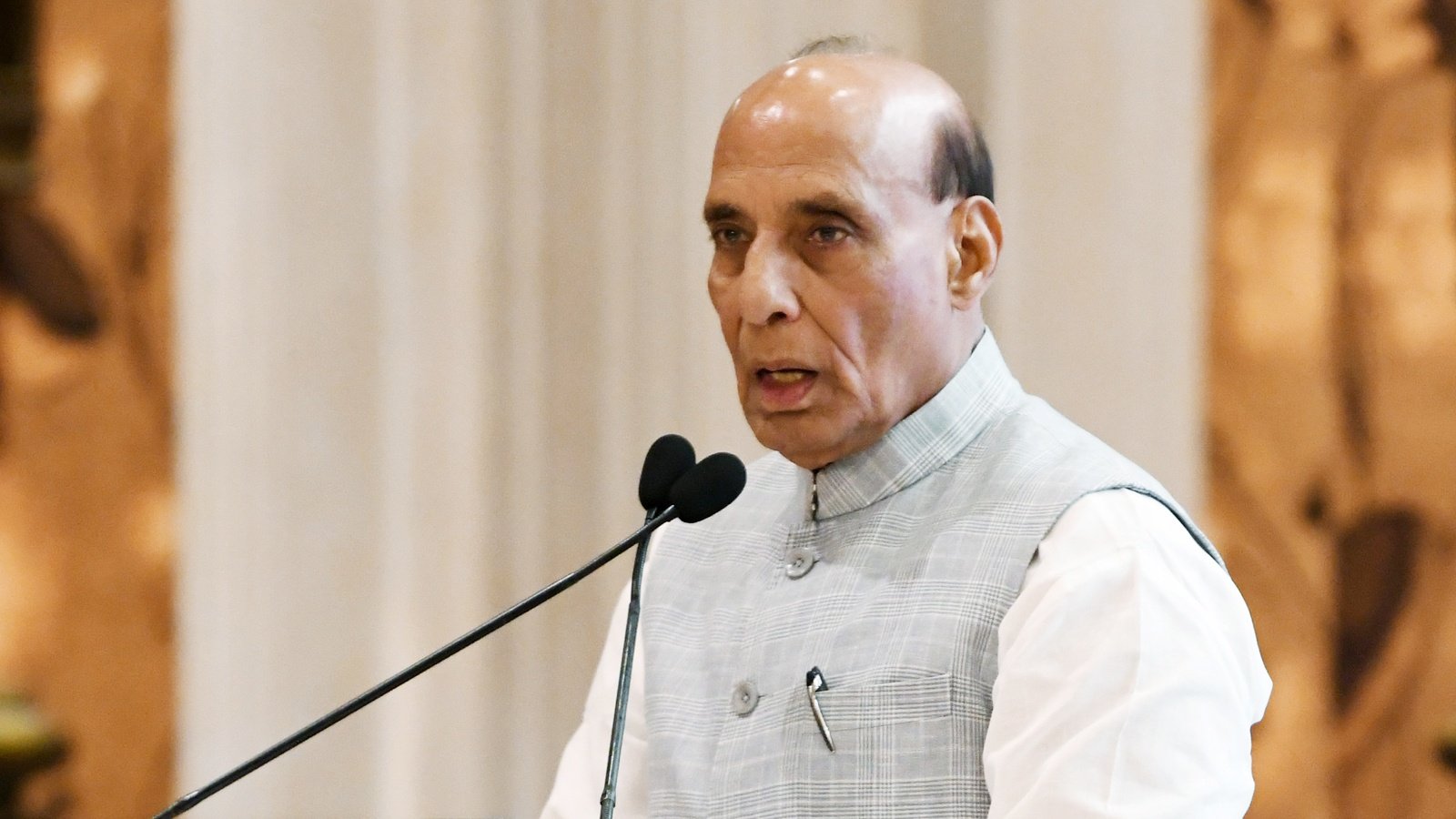
HYDERABAD — In a major assertion of its hydro-diplomatic strategy, India has explicitly linked downstream water access under the 1960 Indus Waters Treaty (IWT) to regional security. Defence Minister Rajnath Singh announced that the federal government will continue to block Indus River system waters from reaching Pakistan as long as Islamabad provides sanctuary to cross-border militant factions.
Speaking at a policy and civic assembly in Hyderabad, the Defence Minister made it clear that New Delhi has abandoned its historical policy of separating transboundary water sharing from active state-sponsored security threats.
The New National Security Doctrine: “Operation Sindoor”
The ongoing enforcement, executed under the security mandate of Operation Sindoor, marks a sharp departure from decades of diplomatic precedent. The strategy firmly establishes that bilateral agreements are nullified by hostile ground realities:
-
The Abeyance Mandate: Following a severe cross-border terror strike in Pahalgam, India exercised its sovereign rights under international law to place the long-standing IWT into absolute abeyance, halting regular treaty mechanisms.
-
A Stern Resource Warning: Addressing the water embargo, Singh delivered an uncompromising statement: “Those whose tears have dried up should not expect water from us. We will not let the waters of the Sindhu reach the patrons of terrorists and enemies of humanity.”
-
The Red Line: The enforcement makes good on the security doctrine that cross-border hostility and resource cooperation cannot coexist. India maintains that the suspension will remain firmly in place until Pakistan takes verifiable, permanent steps to dismantle its regional terror infrastructure.
Twelve Years of Internal and Legislative Consolidation
Singh contrasted India’s firm stance on external security with a summary of internal stabilization and structural growth achieved over the past twelve years:
-
Jammu & Kashmir Integration: The Defence Minister cited the abrogation of Article 370 as a successful stabilization milestone. He highlighted clear markers of normalization in the Kashmir valley, including booming tourism, fresh corporate capital inflows, and the peaceful, public revival of long-dormant cultural and religious processions.
-
Neutralizing Internal Insurgencies: On the domestic defense front, the administration noted that targeted security campaigns have pushed the Naxalite movement across central India to the brink of near-total elimination.
-
Institutional Overhauls: The security briefing was balanced against long-term fiscal and judicial updates. Singh credited the nationwide Goods and Services Tax (GST) framework, complete rural electrification, and the total modernization of India’s penal and criminal codes with cementing the nation’s internal stability.
The Defence Minister concluded by stating that India’s geopolitical posture has transitioned into an active deterrence model—one where downstream natural resource privileges are strictly conditional on upstream peace.
