



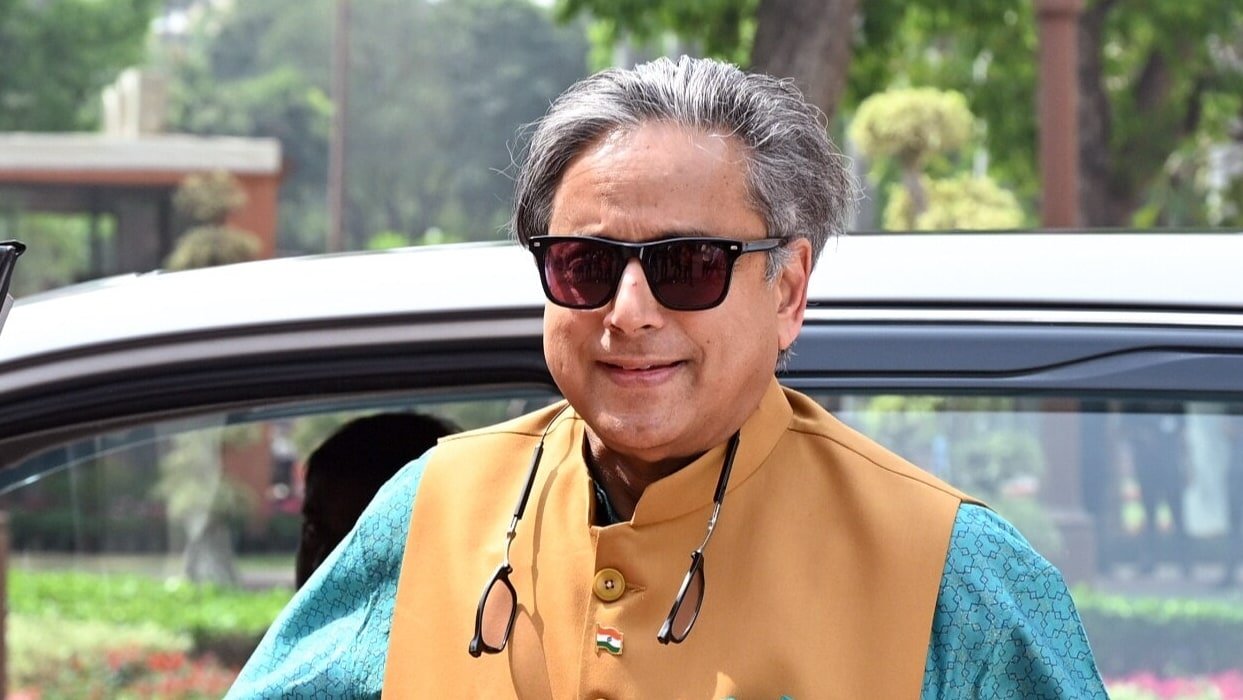
KATHMANDU — Congress MP Shashi Tharoor underscored the core durability of India’s constitutional machinery during his address at the NDTV World Anviksha Summit, contrasting the country’s democratic adaptability with the severe political instability that has swept across South Asia over the past decade.
Examining youth-led demonstrations across six neighboring nations, Tharoor argued that while several political systems faltered or collapsed under popular pressure, India’s democratic structure demonstrated a swift self-correcting capacity.
Divergent Responses Across South Asian Political Systems
Tharoor highlighted how different state structures across the region responded when confronted by youth anger and widespread public demonstrations:
-
Regime Failures: Unrest in Sri Lanka and Bangladesh led to the collapse of state authority, forcing political leaders to flee their respective countries.
-
Military Takeovers: In Myanmar and Pakistan, popular protests resulted in direct military intervention, leading to junta rule or controlled administrations.
-
Constitutional Realignment: Nepal absorbed public discontent by holding fresh democratic elections to facilitate a peaceful transition of power.
Systemic Flexibility and Self-Correction in India
Highlighting the Indian experience, Tharoor pointed out that the nation’s democratic framework was able to absorb public frustration and deliver timely accountability:
-
Swift Policy and Leadership Adjustments: The government demonstrated agility by directly addressing youth grievances, highlighted by the resignation of Union Education Minister Dharmendra Pradhan during the nationwide paper leak protests.
-
Flexibility Over Rigidity: The ability to heed public reality without triggering institutional failure proved that the Indian political model possesses the necessary flexibility to survive intense popular pressure.
-
Implications for Democratic Engagement: Tharoor noted that this responsiveness provides encouragement for the parliamentary opposition, proving that public movements retain the ability to compel accountability within a robust democratic framework.
