



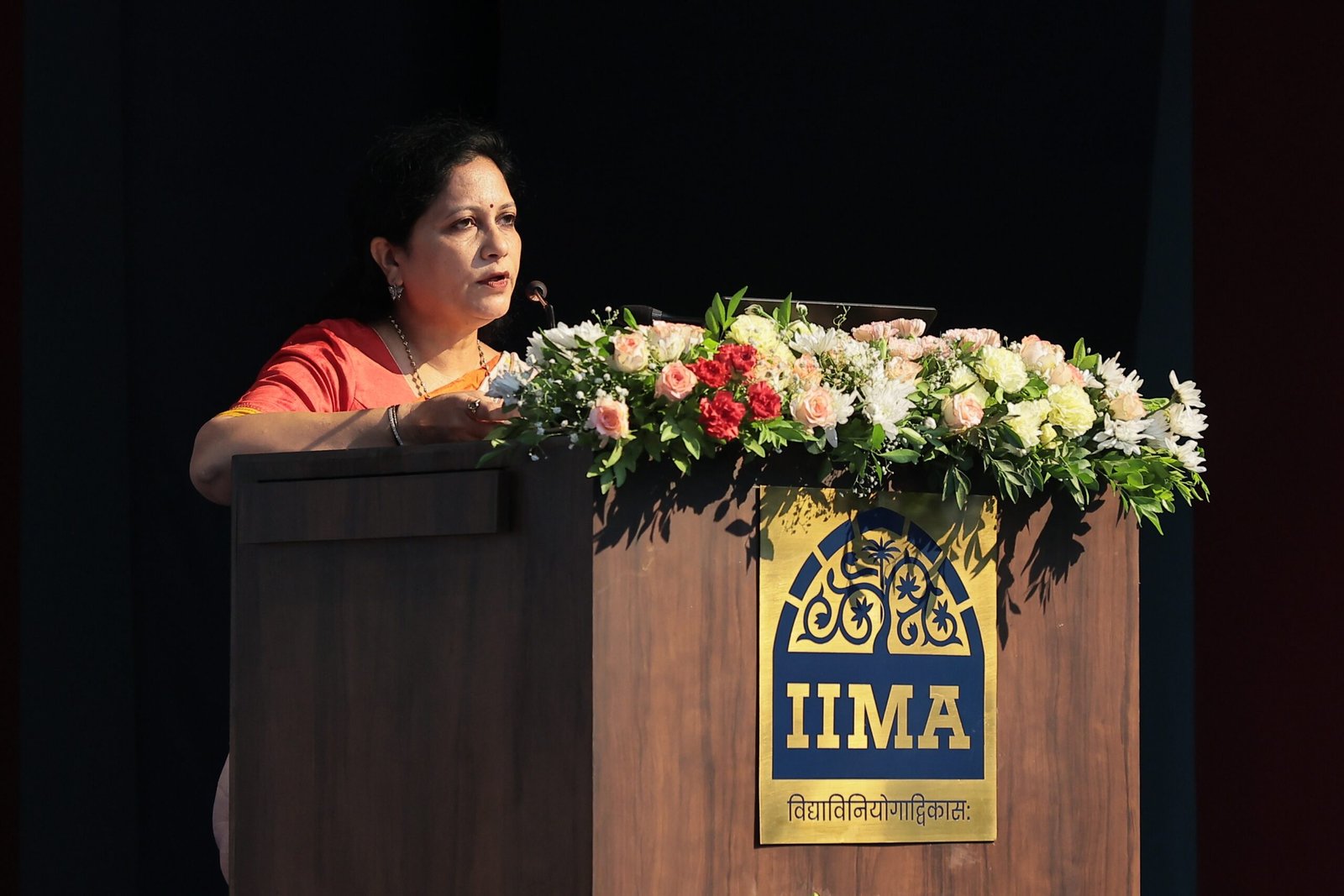
AHMEDABAD — NITI Aayog, in collaboration with IIM Ahmedabad and the Gates Foundation, today hosted a high-level workshop focused on Sustainable Development Goal-5 (Gender Equality). The event marked a critical milestone with the launch of the SDG-5 Gender Equality State and District Reports, aimed at driving data-led policy interventions at the grassroots level.
A Vision of “Women-Led Development”
Joining the workshop virtually, Union Minister for Women and Child Development Annapurna Devi emphasized that India is shifting from women’s development to “Women-Led Development.” She highlighted that technology and real-time data, such as the Poshan Tracker App, are now the backbone of impactful policy-making, currently monitoring the health of over 10 crore mothers and children.
Key National Achievements
The Minister shared significant data points reflecting the progress of Indian women:
-
Workforce Participation: Increased sharply from 23.3% (2017–18) to approximately 41% (2023–24).
-
Financial Inclusion: Under the Matri Vandana Yojana, over 4.25 crore women received more than ₹20,000 crore via Direct Benefit Transfer (DBT).
-
Rural Empowerment: More than 10 crore women are now part of Self-Help Groups (SHGs), while 14 lakh elected women representatives are leading rural governance.
-
Safety Ecosystem: Mission Shakti has established a robust support network through One Stop Centres, Fast Track Courts, and Safe City Projects.
Gujarat: A Model for Gender Budgeting
Gujarat’s Minister for Women and Child Development, Manisha Vakil, highlighted the state’s aggressive approach to gender equity:
-
Gender Budgeting: For FY 2026-27, Gujarat has allocated ₹1.62 lakh crore (nearly 40% of the total state budget) toward women-sensitive policies.
-
Health Success: Institutional deliveries in the state have reached a staggering 99.94%, while maternity benefit coverage rose from 8.9% to 97.7%.
The Road to “Viksit Bharat”
The workshop concluded with a consensus among delegates—including representatives from the United Nations—that gender equality is not just a social goal but the foundation for a “Viksit Bharat” (Developed India). The focus moving forward will remain on digital inclusion, promoting women’s entrepreneurship, and shifting social mindsets to create safer, more equitable workplaces.
