



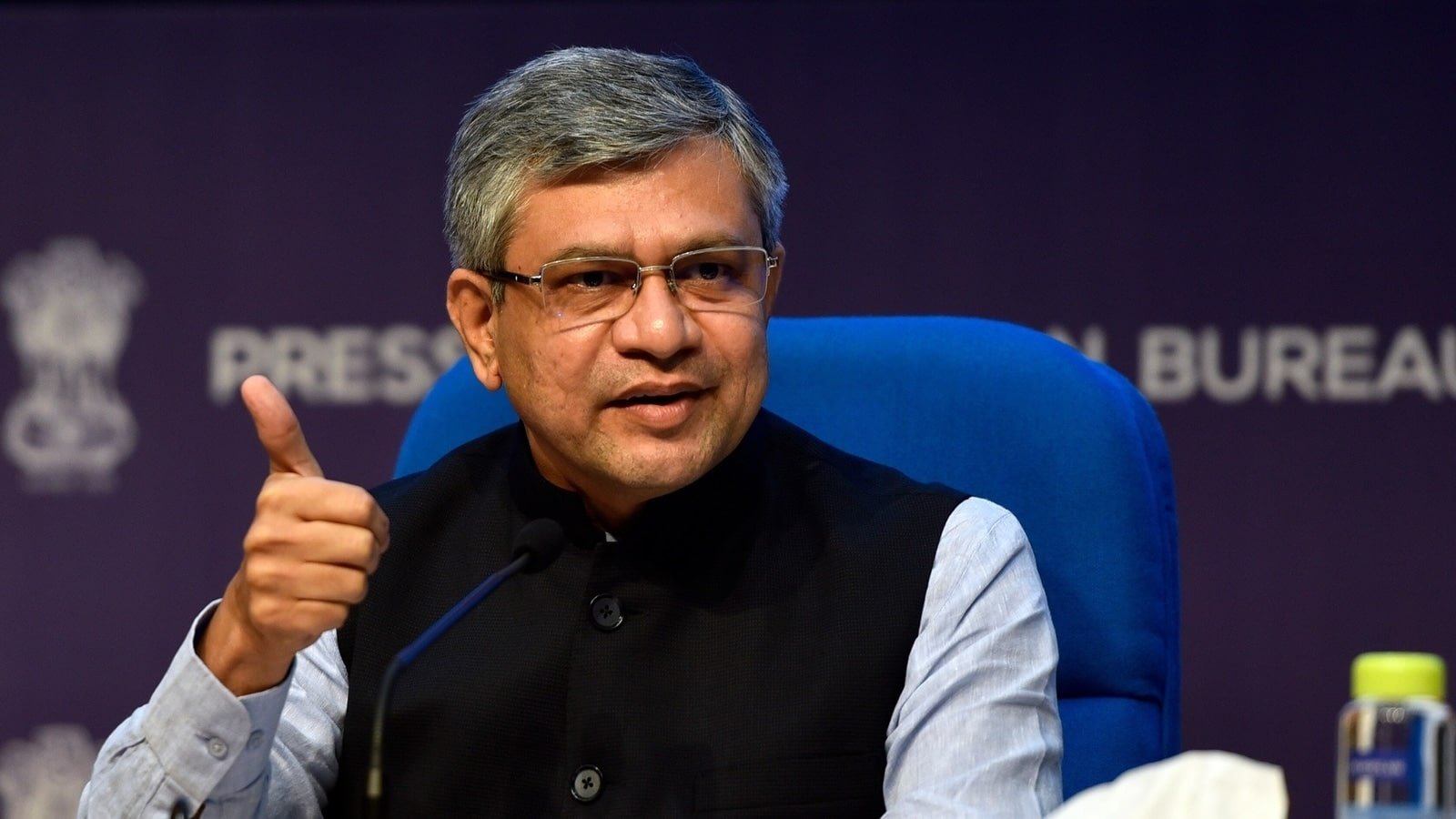
NEW DELHI: In a major push to align Indian technical education with rapidly evolving global tech landscapes, the Government of India is executing a comprehensive overhaul of its Artificial Intelligence (AI) academic curriculum. Union Minister for Electronics & IT, Shri Ashwini Vaishnaw, spearheaded a high-level review meeting in New Delhi with the designated AI Curriculum Taskforce to finalize the structural roadmap.
The Taskforce—working in tandem with industry veterans and the National Association of Software and Service Companies (NASSCOM)—conducted a baseline evaluation of existing Bachelor of Technology (B.Tech) Computer Science and allied engineering programs across Indian educational institutions. While the evaluation acknowledged expanded AI coverage, it flagged deep structural gaps in pedagogy, infrastructure, and hands-on exposure regarding advanced domains like Generative AI, Machine Learning Operations (MLOps), and foundational model development.
Key Pillars of the Revamped AI Curriculum
To bridge these gaps, the Taskforce has outlined a complete departure from traditional lecture-heavy frameworks, focusing instead on industry integration from the very first semester:
-
Aggressive Practical Exposure: The framework mandates a massive shift in hands-on training, escalating practical exposure from the current 25–30 percent up to 40–75 percent, varying by degree type and specialization.
-
Application-Oriented and Industry-Integrated Pedagogy: Learning will be structurally anchored in real-world industry use cases. Students will engage in capstone projects, end-to-end AI solution engineering, and practical implementation utilizing low-code and no-code tools.
-
Credit-Linked Continuous Tracks: AI coursework will be formally embedded into academic credit systems with a strict semester-wise rollout. Furthermore, Responsible AI and AI Governance will be taught continuously across all semesters rather than as disconnected, standalone modules.
-
Flexible Entry-Exit Pathways: To accommodate diverse learner needs, the curriculum introduces a flexible progression model offering a Certificate after Year 1, a Diploma after Year 2, an Advanced Diploma after Year 3, and a full Degree upon completion.
Transforming Faculty into Industry-Ready Mentors
Recognizing that updating textbooks is ineffective without equipped educators, the consultation placed faculty capacity building at the absolute center of the execution plan. The approved faculty development interventions include:
-
Implementation of structured “Train-the-Trainer” programs alongside curated, industry-vetted course content.
-
Deployment of standardized assessment frameworks and modernised laboratory facilities synchronized with current market tools.
-
Introducing focused mechanisms to hire seasoned industry professionals as adjunct faculty, replicating the practitioner-led educator model successfully utilized by premier business schools.
A National Shared Infrastructure Model
Addressing the high costs associated with AI development, participants proposed a national-level shared AI infrastructure. Built on a “triple helix model,” this shared infrastructure will be jointly funded and supported by the industry, the Government, and academic bodies. The initiative aims to provide colleges and universities nationwide with equitable access to Graphics Processing Unit (GPU) compute power, advanced edge devices, software stacks, and premium subscription-based tech platforms.
Immediate Next Steps
The high-level consultation concluded with a unified consensus on four immediate operational workstreams to drive deployment:
-
National Resource Estimation: Projecting precise requirements for compute capacity, infrastructure networks, faculty availability, and total learner volumes across the country.
-
AICTE Collaboration: Coordinating directly with the All India Council for Technical Education (AICTE) to formally integrate the revamped curriculum into semesters five through eight for ongoing batches, alongside immediate full adoption for incoming first-year batches.
-
Corporate Practitioner Pathways: Finalizing the faculty roadmap to create streamlined transition pipelines for corporate technology practitioners to step into classrooms as educators.
-
Parallel Track for Non-STEM Fields: Launching a completely separate workstream dedicated to cultivating foundational AI literacy, AI awareness, and applied AI tools for non-technical, non-STEM academic disciplines.
