



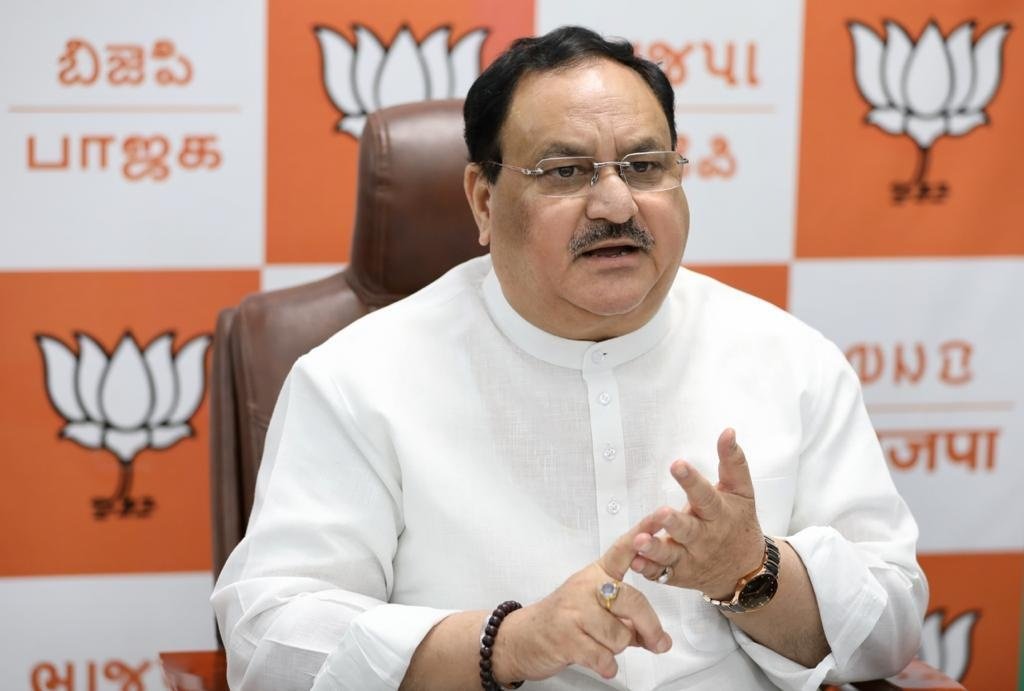
NEW DELHI: In response to escalating international alerts, Union Minister of Health and Family Welfare Shri Jagat Prakash Nadda chaired a high-level review meeting on Monday to evaluate India’s public health preparedness and surveillance infrastructure against the Ebola virus.
The emergency review follows the World Health Organization (WHO) classifying the current outbreak in Africa as a Public Health Emergency of International Concern (PHEIC), alongside a corresponding declaration of a Public Health Emergency of Continental Security (PHECS) by the Africa CDC.
While emphasizing that India has not reported any case of Bundibugyo Ebola disease till date, Minister Nadda directed central health departments, research institutions, and state divisions to place their defensive containment systems in a permanent state of high readiness.
Zero-Tolerance Border Screenings and Travel Restrictions
To prevent the accidental import of the lethal pathogen, the Centre has established a multi-layered screening network at all key points of entry (PoEs):
-
Airport and Immigration Interventions: Enhanced visual and thermal screening protocols have been deployed at all international airports and maritime ports in coordination with the Ministry of Civil Aviation and Immigration authorities.
-
Travel Advisories: Reflecting a tightening defensive stance, the government officially issued a travel advisory on May 24, 2026, urging citizens to avoid all non-essential travel to high-risk zones, explicitly naming the Democratic Republic of the Congo (DRC), Uganda, and South Sudan.
-
Syndromic Monitoring: The Airport Health Organizations (APHOs) and the Integrated Disease Surveillance Programme (IDSP) have been ordered to aggressively isolate and track any international traveler presenting with unexplained febrile illness (high fever) arriving from or transiting through East and Central Africa.
Mobilizing Central Scientific and Defensive Machinery
The Union Minister issued direct containment, tracking, and diagnostic instructions to the core leadership of India’s health administration, including Union Health Secretary Smt. Punya Salila Srivastava, DG ICMR Dr. Rajiv Bahl, and DGHS Dr. Sunita Sharma.
Under these directives, the National Centre for Disease Control (NCDC) has been tasked with scaling up real-time contact tracing loops and rapid response team deployment protocols across all states. Concurrently, the Indian Council of Medical Research (ICMR) has been ordered to ready its specialized Biosafety Level-4 (BSL-4) laboratory network to ensure fast, high-security diagnostic testing of blood samples.
At the regional level, state and Union Territory health units have been instructed to immediately activate dedicated hospital isolation wards and enforce standardized infection control checklists.
Rigid SOPs and Clinical Realities of the Bundibugyo Strain
The ongoing mobilization is backed by a series of highly specific operational guidelines issued by the Ministry over the past week:
-
Infection Control & Quarantine: On May 21 and 22, the government distributed formal Standard Operating Procedures (SOPs) to all states. These documents detail strict protocols for hospital isolation facilities, bio-waste management, and the safe, dignified, and sealed handling of human remains to eliminate secondary transmission lines.
-
The Clinical Challenge: The current outbreak is driven by the Bundibugyo Ebola virus strain, a severe viral hemorrhagic fever with an historically high mortality rate. Health authorities highlighted the extreme importance of early quarantine, as there are currently no approved vaccines or specific antiviral treatments available for this particular sub-strain, making strict boundary containment the nation’s primary line of defense.
