



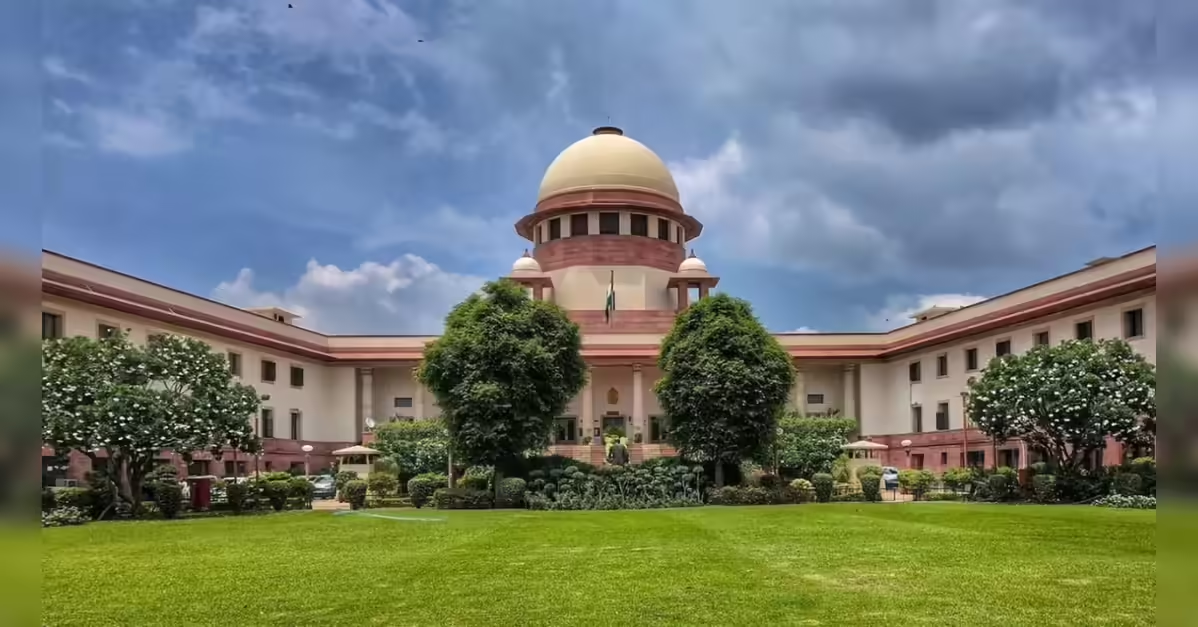
NEW DELHI — In a significant legal development, the Supreme Court of India has granted regular bail to Muppidi Avinash Reddy, a key accused in the alleged ₹3,500 crore Andhra Pradesh liquor scam. The order, delivered on March 20, 2026, saw the Bench invoking its extraordinary plenary powers under Article 142 of the Constitution to convert a plea for anticipatory bail into one for regular bail.
The Judicial Intervention
A Bench comprising Chief Justice Surya Kant, Justice Joymalya Bagchi, and Justice Vipul M. Pancholi provided relief to Reddy following his compliance with previous court mandates.
-
The Shift: The Court utilized Article 142—which allows the Supreme Court to pass any order necessary for doing “complete justice”—to bypass standard procedural hurdles and grant regular bail directly.
-
Compliance as a Factor: The Bench noted that Reddy had followed the Court’s February 24 directive to return to India and surrender. Having undergone custodial interrogation, the Court felt further detention was unnecessary at this stage.
-
Trial Conditions: While granting bail, the apex court left it to the trial court’s discretion to impose “stringent conditions” to ensure Reddy’s presence during the ongoing proceedings.
The Allegations: A ₹3,500 Crore Exchequre Loss
The case, registered by the CID Police Station, Mangalagiri, involves grave charges under the IPC (Sections 409, 420, 120B) and the Prevention of Corruption Act:
-
The Syndicate: Investigators allege that between 2019 and 2024, an organized syndicate manipulated supply orders within the Andhra Pradesh State Beverages Corporation Limited.
-
The Mechanics: The accused reportedly gave preferential treatment to specific liquor brands in exchange for massive kickbacks, causing an estimated loss of ₹3,500 crore to the state.
-
Co-Accused Parity: The Court took into account that several other co-accused in the matter had already been granted bail, justifying a similar relief for Reddy.
Precedent Clarification
The Bench was careful to specify that this order was issued under the “peculiar facts and circumstances” of this specific case. To prevent a flood of similar petitions, the Court clarified that this ruling should not be treated as a binding precedent for other bail matters.
